













Older rooms, ageing panels and tired floors
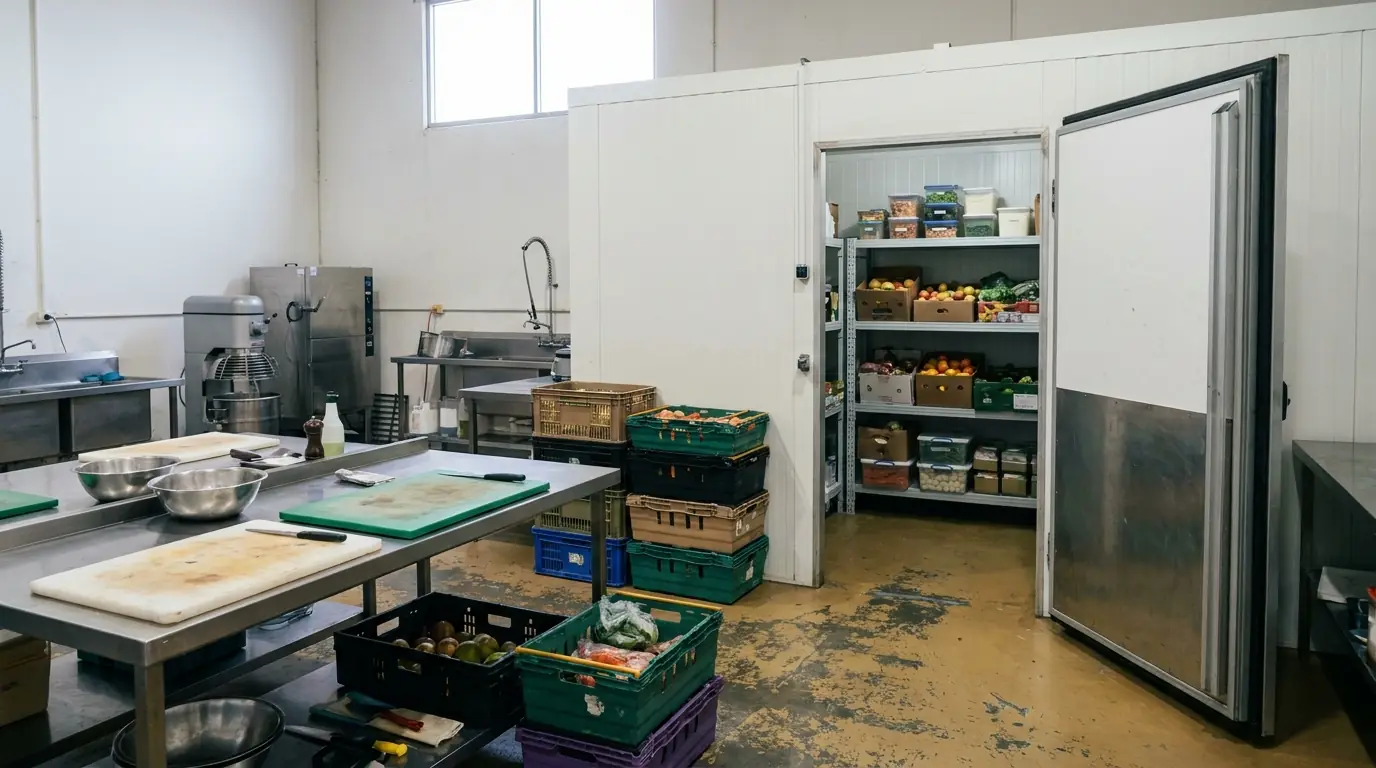
Much of Maddington's industrial area was built up a long time ago, and a lot of the cool rooms in it are original. The refrigeration plant may have been replaced once or twice, but the insulated panels, doors and floors have often been there since day one. That is where many Maddington faults really start.
Insulated panels lose performance when their joints open, their skins are punctured by forklifts or their seals dry out. Warm, humid air leaks in, and the moisture shows up as frost on the ceiling, ice around the door frame or water dripping from a light fitting. The refrigeration system then runs longer to make up the difference, and gets blamed for a room that is really leaking.
Freezer rooms add another layer. A freezer room on a concrete slab needs a heated or ventilated floor to stop the ground below it freezing. When those heater cables fail, ice can slowly form under the slab and lift it, cracking the floor and twisting the door frame. It is a slow fault, often noticed only when the door will not close properly.
Cool room repairs for Maddington businesses
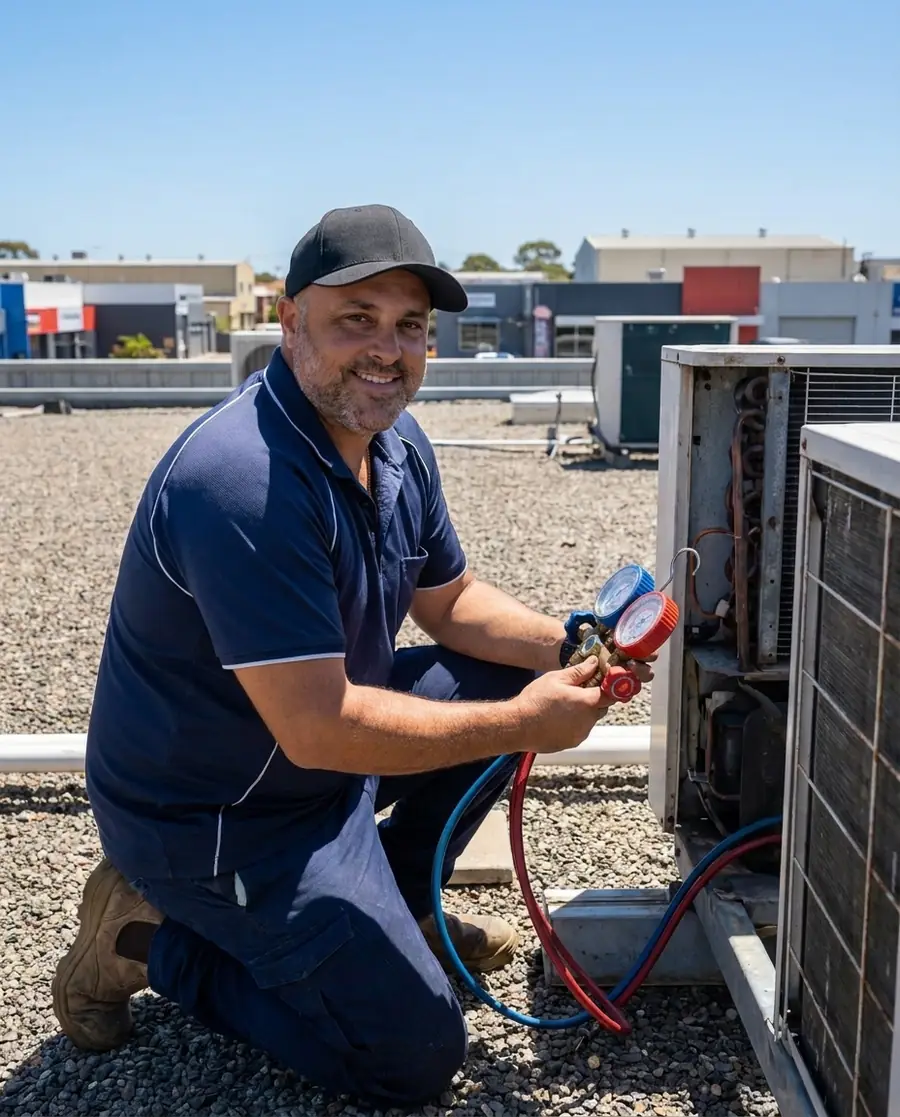
Maddington is about 16 km from the Perth CBD, on Albany Highway between Cannington and Kelmscott. Sam Celesti, lead technician at Commercial Refrigeration Perth, repairs cool rooms and freezer rooms here for industrial sites and retailers alike. He has 20+ years of commercial refrigeration experience, an ARCtick licence (AU55592) and a simple way of working: a free phone assessment, a fixed quote once he has seen the equipment, and no subcontractors.
Industrial units, Maddington Central and the highway
The Maddington and Kenwick industrial area holds food processors, wholesalers, caterers, trade suppliers and plenty of small businesses in strata units. Many run a single cool room or freezer room, sometimes bought second hand and moved in. Closer to the residential side, Maddington Central and the shops along Albany Highway bring supermarkets, butchers, bakeries, takeaways and bottle shops, each with its own mix of walk in rooms and display and reach in fridges.
Across both, the faults Sam sees most often are:
- Ice build up on walls and ceilings from worn door seals and open panel joints.
- Broken door heater wires on freezer rooms, so the door freezes shut or will not seal.
- Refrigerant leaks on old pipework and fittings.
- Compressors and fan motors worn out after many years of hard running.
Strata units bring one more wrinkle. The cool room may belong to the tenant while the switchboard, roof access and the spot where the condensing unit sits are controlled by the owner or the strata manager. Sam is happy to deal with both, explain the fault in plain terms and put the fixed quote in writing so whoever pays for it can approve the work. Where a room has been relocated from another site, he also checks that the plant was sized for the room it now serves, since a second hand room and a second hand condensing unit are not always a good match.
While the room is warm
- Keep the door shut and check it is sealing. If the door will not close properly, hang a heavy curtain or tarp across it as a stopgap.
- Note the controller reading. Write down the temperature, any alarm code and the time.
- Deal with the risky stock first. Under FSANZ guidance, potentially hazardous food kept between 5°C and 60°C for under 2 hours can be chilled again, between 2 and 4 hours should be used straight away, and after 4 hours it must be thrown out.
For the wider picture, see how Sam handles cool room repairs across Perth. If the room is beyond saving, he can also quote on a replacement cool room.