












Signs your system is low on refrigerant
A refrigeration system that is short of gas rarely fails all at once. It usually struggles for a while first, and the warning signs are easy to miss when you are busy running a kitchen, shop or warehouse. Watch for these:
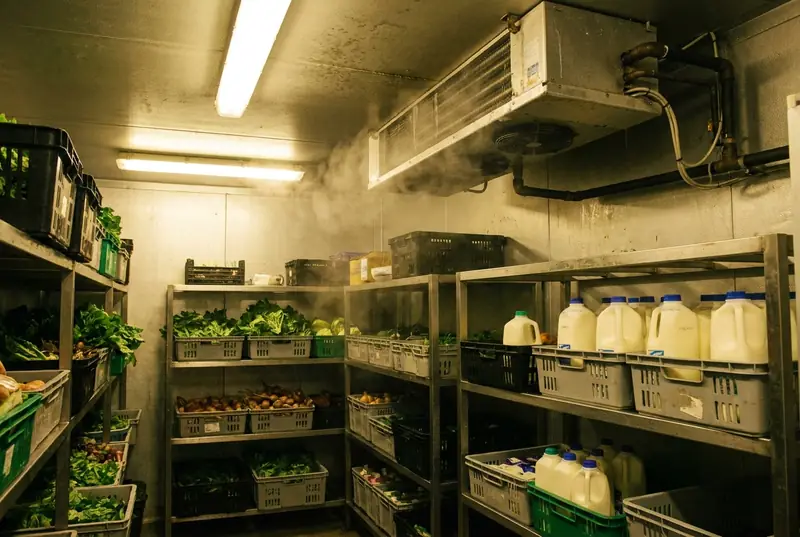 Slowly rising temperatures. The cool room still feels cold, but the display reads a degree or two higher each week, and it takes longer to recover after deliveries.
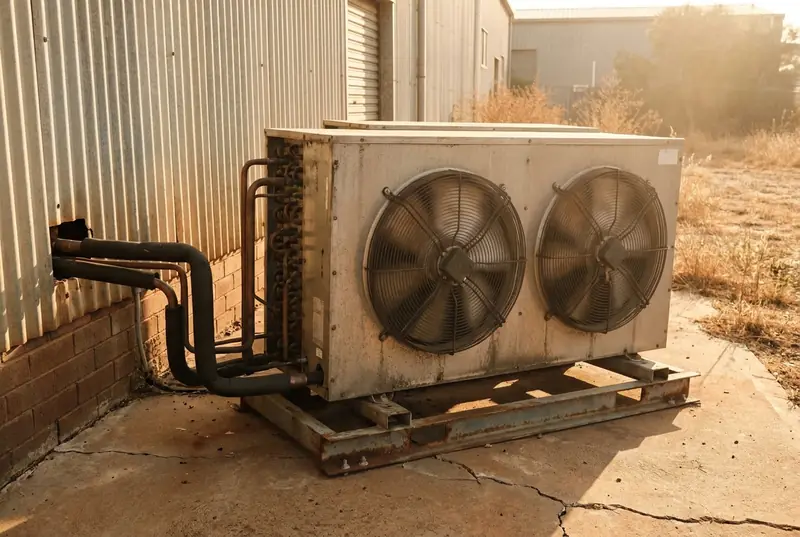 A compressor that never rests. The condensing unit outside runs almost nonstop because the system cannot move enough heat with a reduced charge.
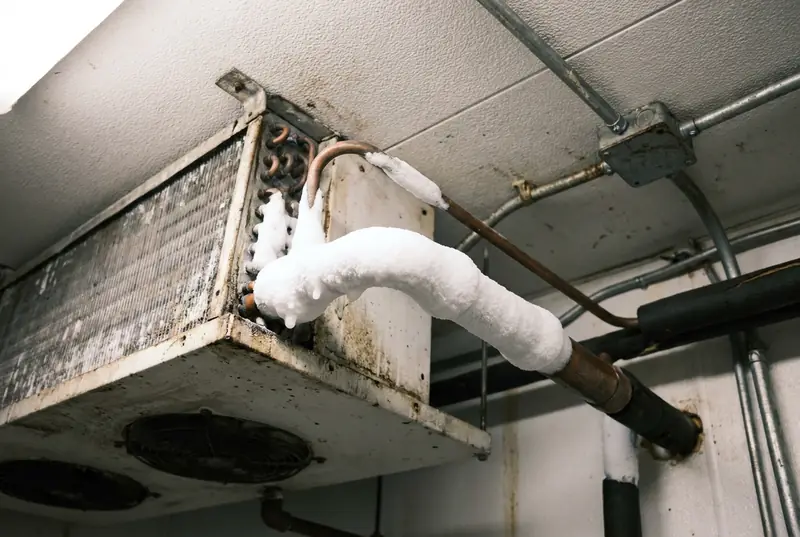 Ice in the wrong places. Frost or ice on the evaporator coil, or on the insulated suction line leaving it, is a classic symptom of low gas.
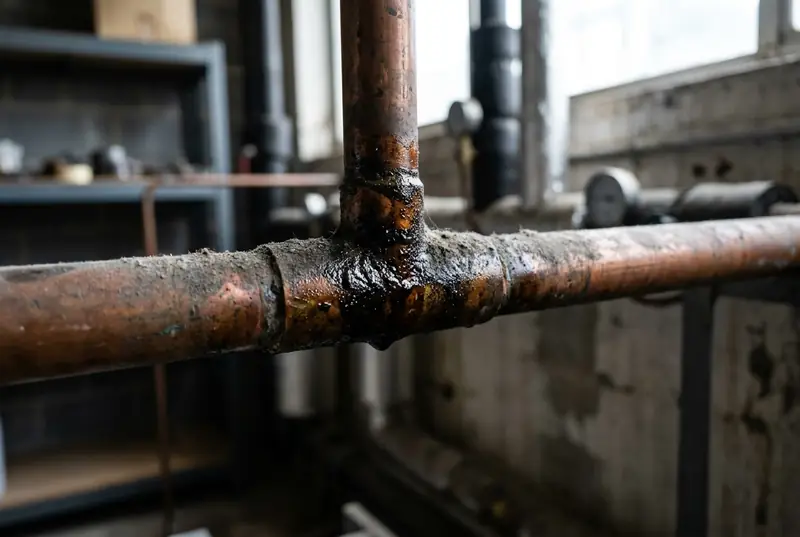 Oily marks at joints. Refrigerant carries compressor oil around the circuit, so a leak often leaves a greasy, dust-coated patch at a fitting, valve or brazed joint.
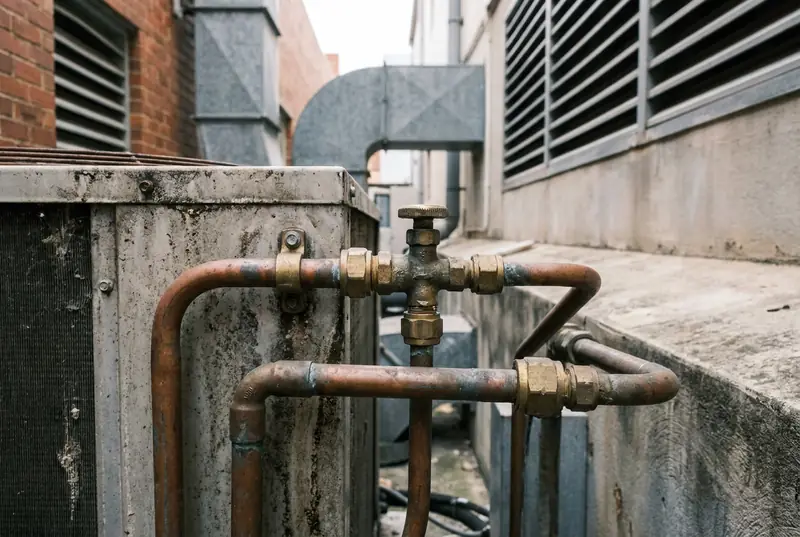 Hissing. A larger leak can sometimes be heard near the pipework or the unit itself.
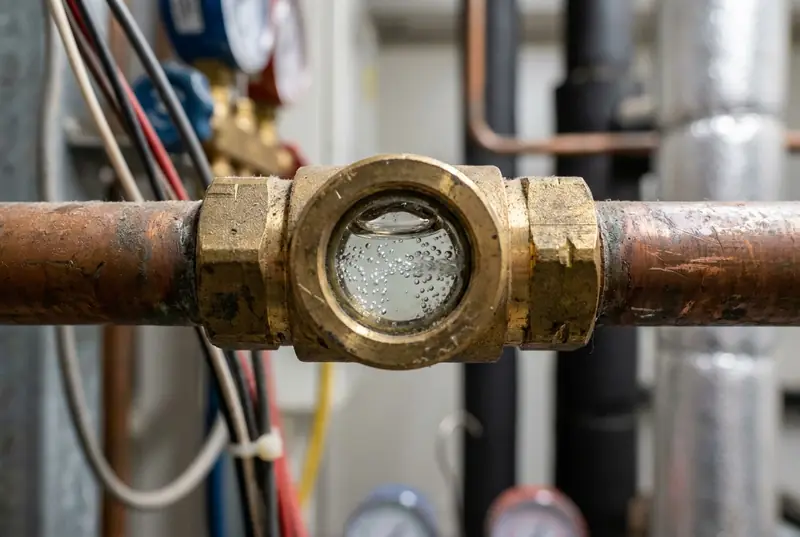 Bubbles in the sight glass. If your system has a sight glass on the liquid line, a steady stream of bubbles while it runs can indicate a short charge.
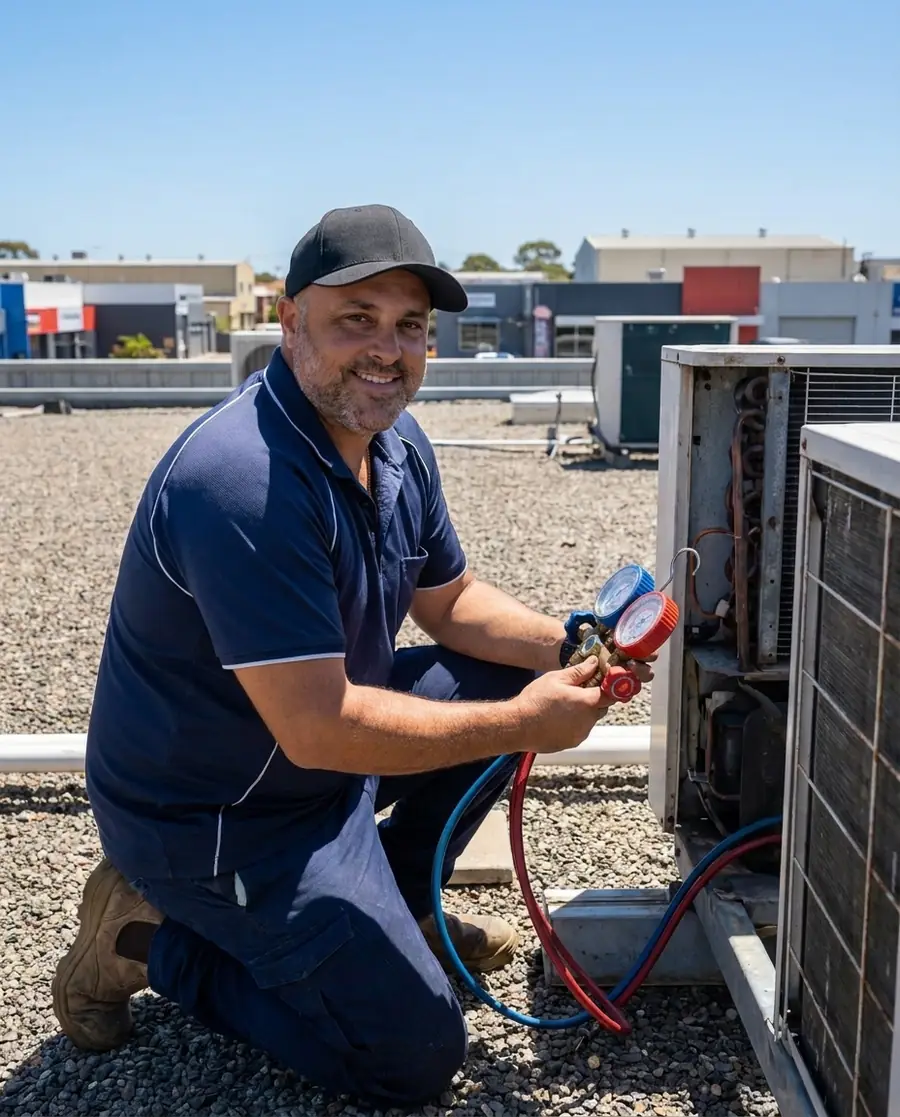
None of these signs proves a leak on its own. A blocked condenser, a failing fan or a faulty expansion valve can look similar. That is why Sam checks pressures and temperatures with gauges before anyone talks about adding refrigerant.
Why a top-up on its own is wasted money
The most common bad advice in this trade is "just top it up". It sounds cheap and quick, but it misunderstands how refrigeration works.
Refrigerant is not fuel. It circulates in a sealed loop, changing from liquid to vapour and back again, and it does not get used up. A system that was charged correctly when installed should hold that charge for its whole working life. If the charge is low, gas has escaped, and it will keep escaping until the hole is found and sealed.
Add gas without fixing the leak and you are paying for refrigerant that will end up in the atmosphere, often within weeks. Meanwhile the system runs short again, the compressor works harder and your stock is back at risk. Repeated top-ups also make it harder to know how much refrigerant is really in the system.
Doing it properly follows a set order:
- Find the leak.
- Repair it.
- Pressure test the repair to prove the system is sealed.
- Evacuate the system with a vacuum pump to remove air and moisture.
- Recharge by weight, to the amount the system needs.
It costs a little more on the day than a quick squirt of gas, but you pay for the refrigerant once.
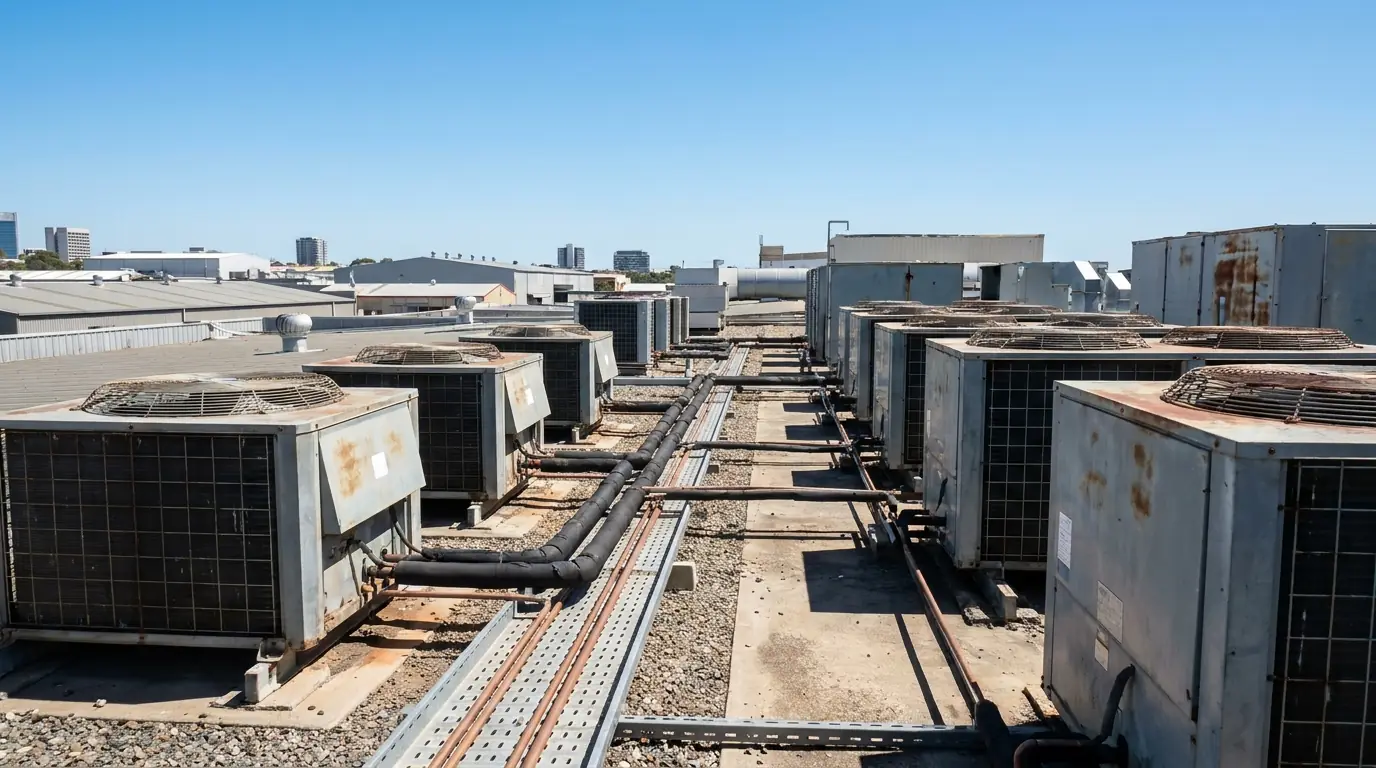
How Sam finds and fixes a leak
Leak finding is the part of the job that takes skill and patience. Some leaks are obvious. Others are pinholes inside a coil or a joint that only weeps when the system is warm and under pressure. Sam uses a combination of methods to track them down.
Electronic leak detection
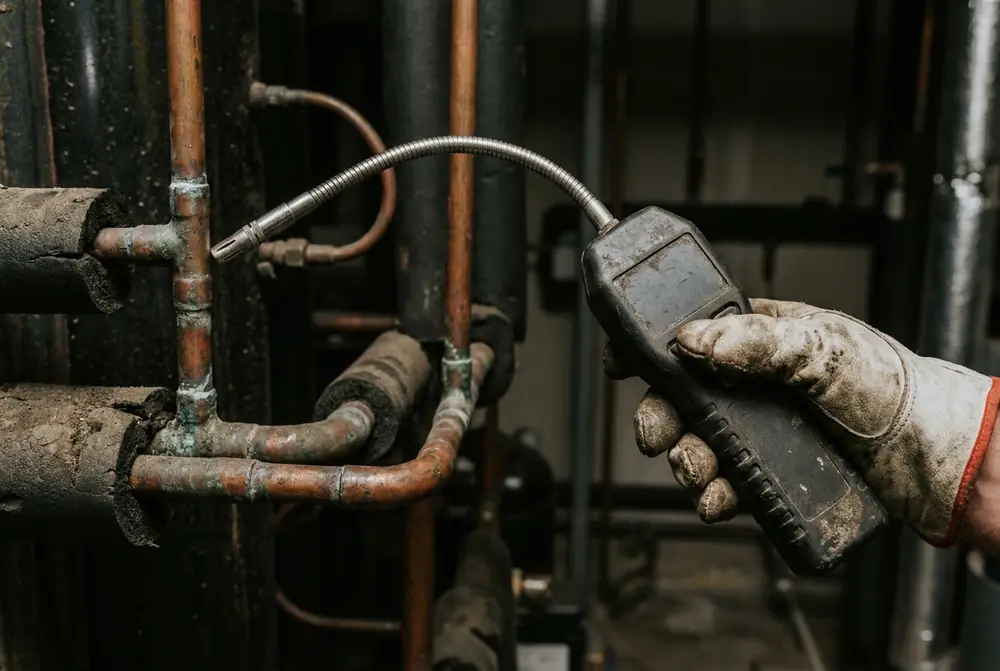
A sensitive electronic detector is run slowly along the pipework, joints, valves and coils. It picks up very small traces of refrigerant in the air and narrows the search to a particular area.
Bubble testing
Once the detector points to a likely spot, a bubble solution is applied to the suspect fitting or joint. Escaping gas forms bubbles, which pinpoints the exact location so the repair goes in the right place.
Nitrogen pressure testing
Where a leak is hard to find, or after a repair is made, the system is filled with dry nitrogen at pressure. A pressure drop over time confirms a leak is present, and a steady reading confirms the circuit is sealed. Nitrogen is inert and cheap, so no refrigerant is lost while testing.
The repair, vacuum and recharge
Leaking joints are typically brazed or remade, and failed flares, valve cores or components are replaced. With the repair proven tight, Sam pulls a deep vacuum to boil off moisture and remove air, both of which damage refrigeration systems. The correct refrigerant is then weighed in on scales rather than guessed by pressure.
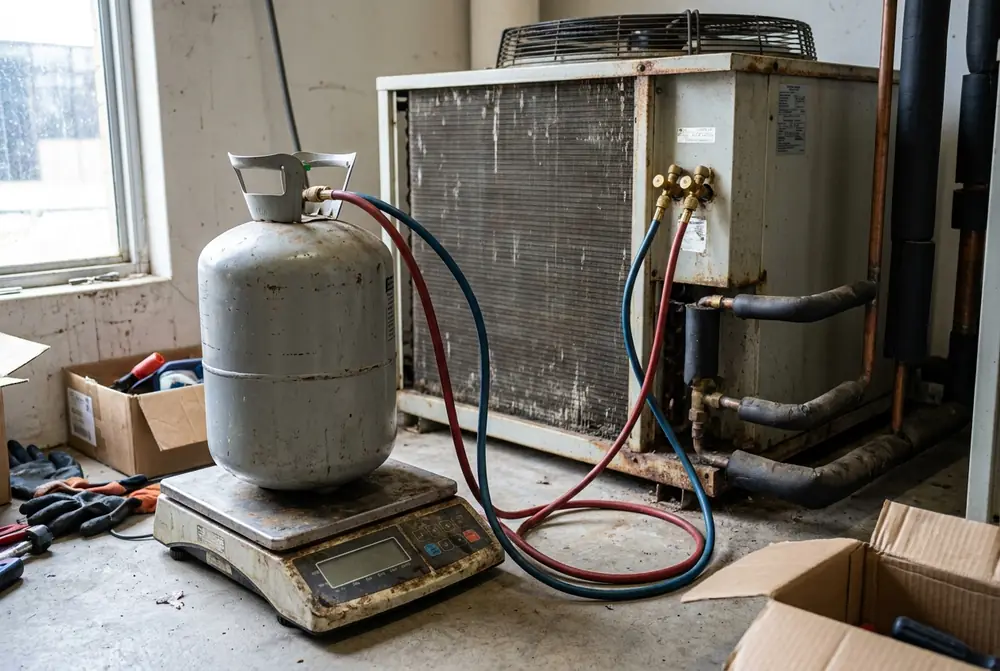
Finally he runs the system and checks superheat and operating temperatures, so you know the room is pulling down as it should and the compressor is protected. You get a plain explanation of what was found and what was done.
R404A and the HFC phase-down: what it means for your cool room
Many older Perth cool rooms and freezer rooms run on R404A, a hydrofluorocarbon (HFC) refrigerant. If yours does, you may have heard it is "being phased out". Here is the accurate picture.
Australia began phasing down bulk HFC imports on 1 January 2018. Imports are managed through quotas and step down over time, reaching 15 per cent of the baseline by 2036. This is a phase-down, not a ban. HFCs such as R404A are still available and your system can still be serviced, but supply is tightening year by year.
The federal environment department has also consulted on further limits for high-GWP refrigerants in commercial and industrial refrigeration, with options including restrictions on R404A and on new equipment such as cool rooms. No final decision on those options has been announced, so treat any firm "ban date" you hear with caution.
There is a rule already in force that matters for every regas. Since 1 January 2020 it has been an offence to charge refrigeration or air conditioning equipment with a refrigerant that has a higher global warming potential (GWP) than the one it was designed for. Charging with a lower-GWP refrigerant is allowed. For example, R404A (GWP 3922) can be replaced with R452A (GWP 2139) where the system suits it.
For an R404A cool room, that leaves three realistic options:
- Keep repairing. If the system is in good condition and the leak is a one-off, a proper repair and recharge with R404A is legal and sensible.
- Retrofit to a lower-GWP refrigerant. Where the equipment is suited, a replacement such as R452A can be used. This needs full recovery of the old refrigerant and a leak test, and is quoted after an assessment.
- Plan a replacement unit. If the system is old or keeps leaking, a new refrigeration unit may be the better long-term spend. See our cool room installation page.
Not sure which refrigerant your system uses? Check the compliance plate on the condensing unit. It lists the design refrigerant, and that is the one that sets the legal limit for any recharge.
Licensed and legal
Refrigerant work in Australia is regulated, because refrigerant released into the air harms the environment.
Under the Ozone Protection and Synthetic Greenhouse Gas Management Regulations 1995, any individual or business that buys, stores or disposes of fluorocarbon refrigerant must hold a Refrigerant Trading Authorisation (RTA) from the Australian Refrigeration Council. The technician working on the system also needs a refrigerant handling licence (RHL). Sam's business holds ARCtick authorisation ARC LO90020 and AU55592.
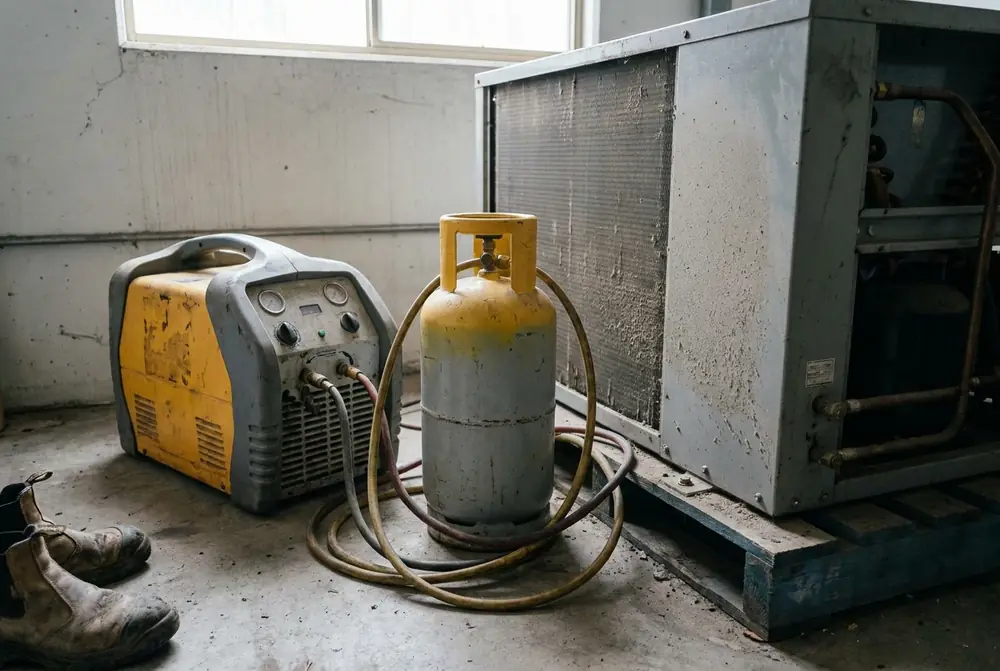
Being licensed means refrigerant removed from your system is recovered into proper cylinders, not vented to the air. It also means the design refrigerant rule is followed: your system will only be charged with its design refrigerant or a suitable lower-GWP alternative. If anyone offers to fill an unfamiliar system with "whatever gas is on the van", that is a warning sign.
If a system is converted to a refrigerant in a higher hazard class, such as A2L or A3, the equipment must also be converted to meet the relevant codes and standards. Sam will tell you upfront if a proposed change falls into that category.
When a regas is not worth it
Sometimes the honest answer is that putting more money into an old system does not add up. Sam will tell you when he thinks that is the case. Common situations include:
- An old system with a tired coil. Corroded evaporator or condenser coils tend to develop new pinholes as soon as one is fixed.
- Repeated leaks. If the same system has needed gas several times, the pipework or components may be at the end of their life.
- A failing compressor. Running short of gas for a long period can overheat and wear a compressor. Recharging a system with a compressor on its way out only delays a bigger repair.
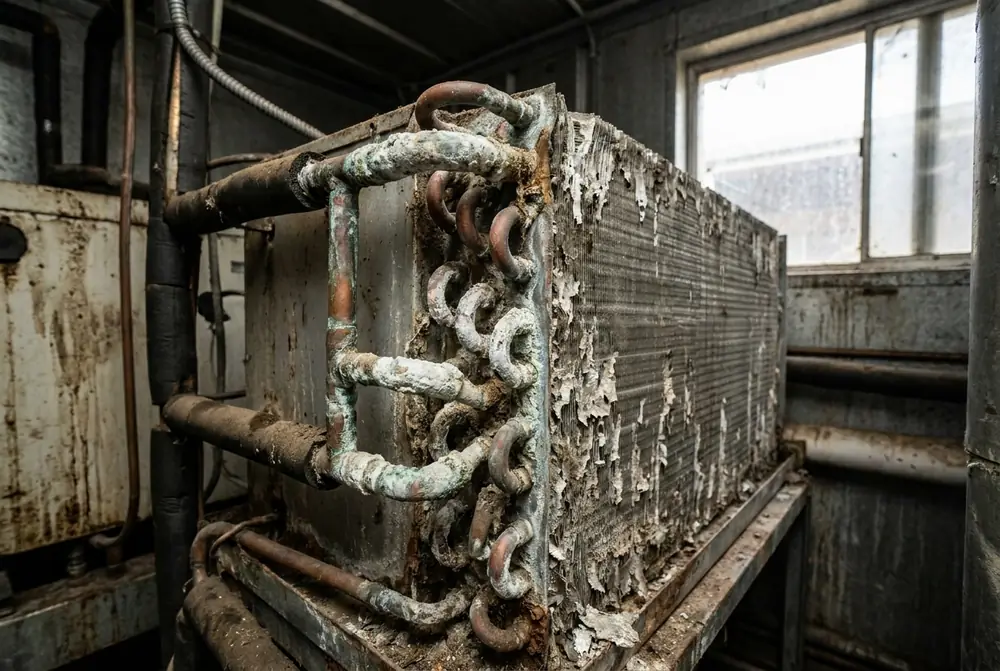
In those cases Sam will walk you through the repair or replace conversation, with fixed quotes for each option so you can compare them properly. For other faults, see cool room repairs and commercial fridge repairs. Ice machines are covered on our ice machine repairs page. If the room is warming fast and stock is at risk, call for emergency refrigeration repairs.
Regular servicing is the best way to catch a small leak before it costs you stock. A technician checking pressures and joints on a schedule will often spot an oily fitting long before the room starts warming. Find out more about commercial refrigeration maintenance, or head back to the home page.
Sources: DCCEEW, rules on charging refrigeration and air conditioning equipment; Australian Refrigeration Council, Refrigerant Trading Authorisation; ARC Cool Change, Australia's HFC phase-down.