














Most cool room breakdowns start as something small that nobody noticed: a door that stopped closing on its own, a box stacked against the fan, a gasket split at the corner. This checklist gives your team a short routine to spot those things early. It suits walk-in cool rooms and freezer rooms, and most of it applies to upright and display fridges too.
Print the page, pin it inside the kitchen or storeroom, and have whoever does each check write their initials in the last column.
How to use this checklist
Give one person ownership of each room. Shared jobs tend to become nobody's job, especially on a busy weekend. The daily rows take a couple of minutes at opening, the weekly rows fit into the cleaning roster, and the monthly rows are best done by a supervisor.
- Print a fresh copy for each room, each week or month.
- Write the date and your initials in the "Done / initials" column as you go.
- If a check fails, note what you found in the margin and tell the manager the same day.
- File the completed sheets with your temperature records so you can see patterns over time.
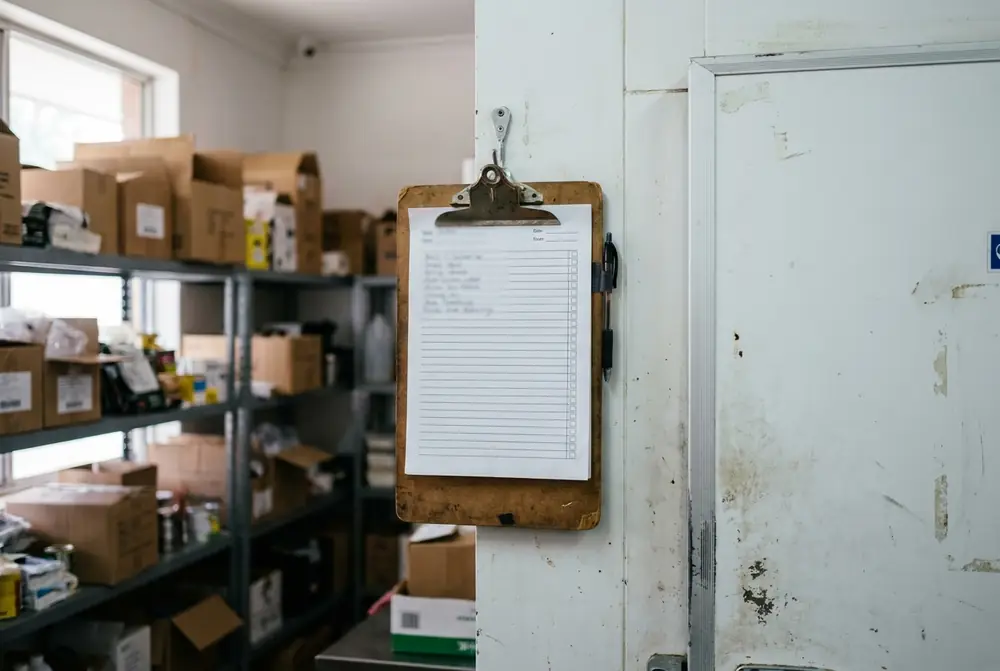
The tables cover tasks that need no tools and no access to the sealed refrigeration system. Anything that does is listed separately further down.
Daily checks
Food Standards Australia New Zealand (FSANZ) says chilled food should be kept at 5 degrees C or colder. FSANZ also recommends a digital probe thermometer for measuring food, because infrared guns only read the surface. So the daily reading should come from inside a product, not just from the display on the door.
| Check | What good looks like | Done / initials |
|---|---|---|
| Record the temperature | Probe a product near the door and one at the back. Chilled stock at 5 °C or below, frozen stock frozen hard. Write both readings down. | |
| Door closes and seals | The door swings shut on its own and the gasket meets the frame all the way round. | |
| Evaporator airflow clear | Nothing stacked within reach of the fan coil, and cold air can be felt coming off it. | |
| No ice build-up | Only light frost on the coil. No solid ice on the fins, fan guard or ceiling. | |
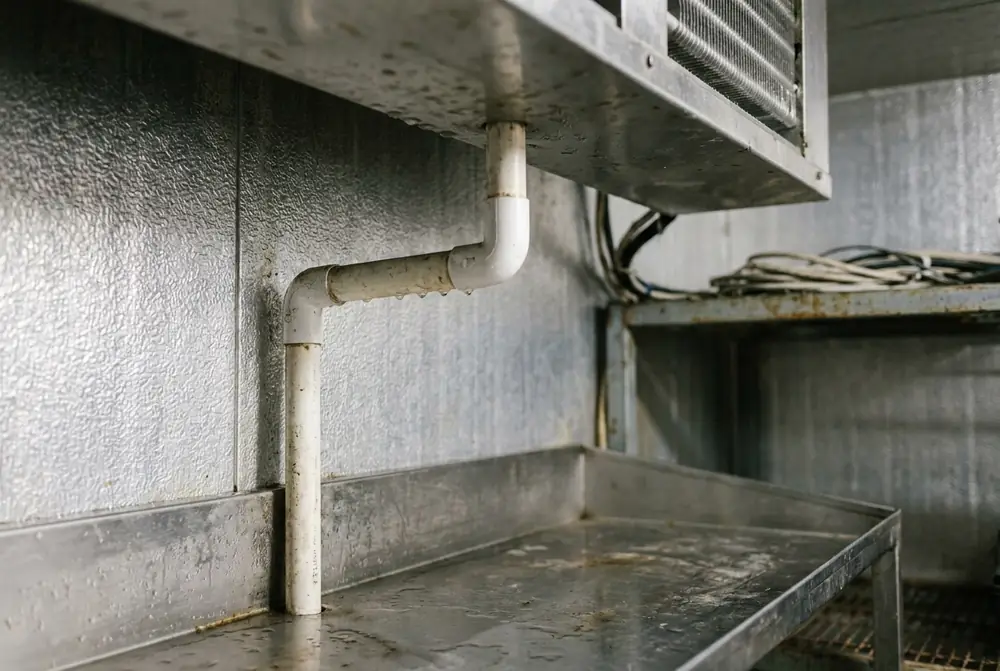
| Floor and drain | Floor dry and clear of spills. No water pooling under the coil or around the drain outlet. |
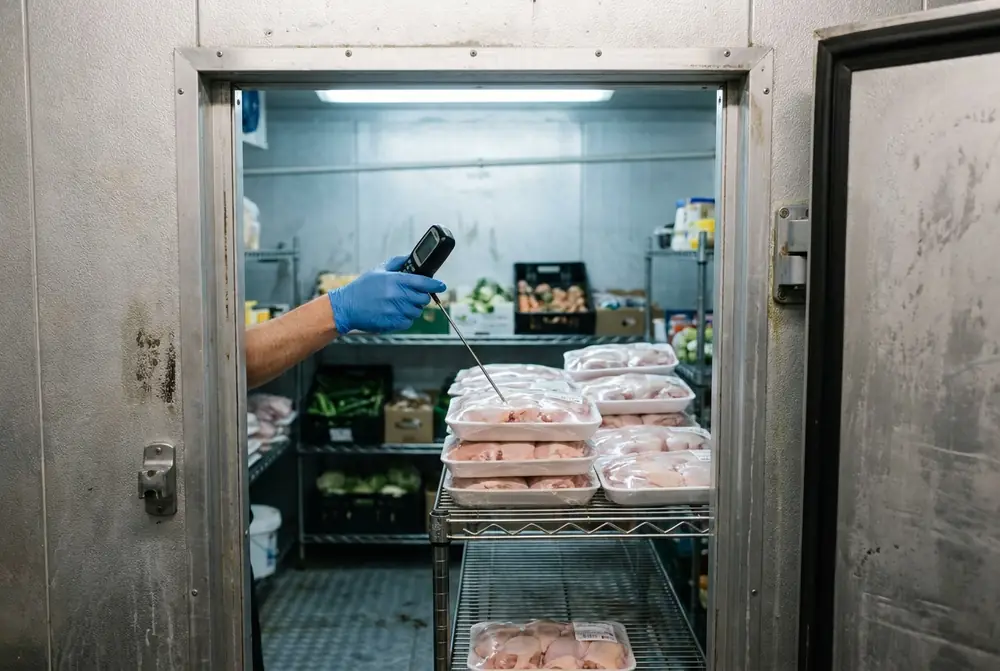
If the product reading and the display disagree by more than a degree or two, trust the probe and treat the display as suspect. Our cool room temperature guide explains where to set the controller and why air and product temperatures differ.
Weekly checks
These are the jobs that slip when the kitchen is short staffed. Put them on a fixed day, such as the quietest morning of the week, so they actually happen.
| Check | What good looks like | Done / initials |
|---|---|---|
| Clean and inspect gaskets | Wipe the door seal with warm soapy water and dry it. Look for splits, flattened sections and mould in the folds. | |
| Condenser area clear | Boxes, mops and rubbish kept well away from the condensing unit so it can breathe. | |
| Shelving spacing | Gaps left between stock and walls, and between stacked crates, so cold air can circulate. | |
| Strip curtains | All strips hanging, none torn or missing, and none tied back. | |
| Alarms | Temperature alarm and the inside door release or alarm button tested and working. |
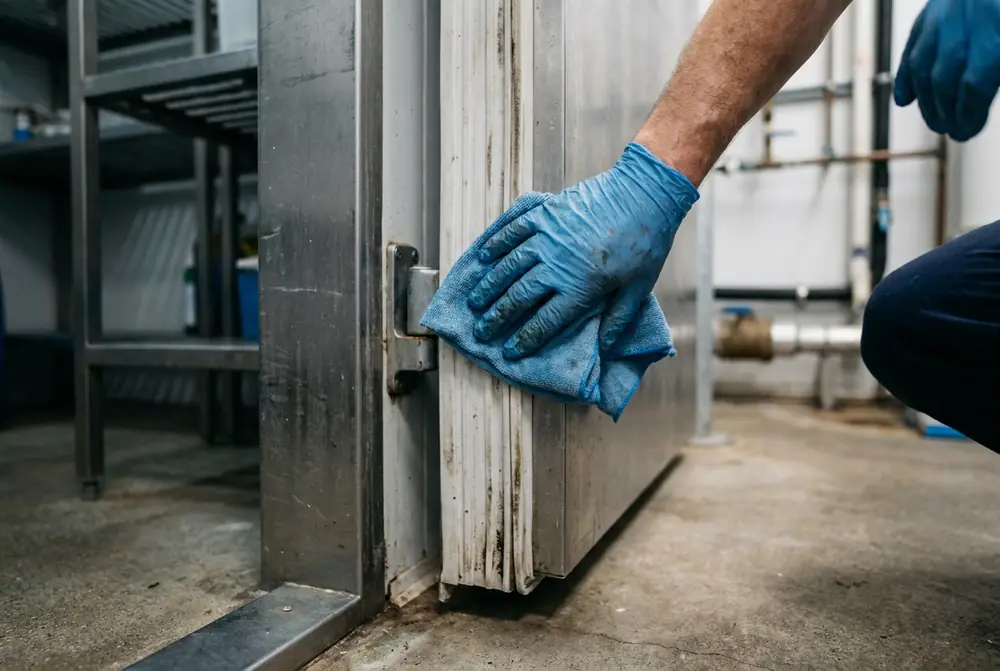
A torn gasket or a missing curtain strip lets warm, humid air into the room every time the door opens. That moisture freezes onto the coil and makes the compressor run longer.
Monthly checks
FSANZ asks food businesses to keep a thermometer that reads accurately to within 1 degree C and to have it calibrated regularly. A monthly comparison against a second thermometer you trust is an easy way to catch one that has drifted.
| Check | What good looks like | Done / initials |
|---|---|---|
| Condenser coil surface clean | Where staff can reach it safely, power isolated, loose dust brushed off the face of the coil with a soft brush. | |
| Drain line | Defrost water runs away freely. No slime, smell or overflow at the outlet. | |
| Door hinges and closers | Hinges firm, screws tight, the closer pulls the door shut without slamming or sagging. | |
| Probe thermometer check | Reading agrees with a reference thermometer to within 1 °C. Replace or calibrate it if not. | |
| Review the logs | Look back over the month of readings for slow upward drift, repeated alarms or one room that runs warmer than the rest. |
Safety first. Always isolate the power before cleaning near a condenser, and follow the manufacturer instructions for your unit. Fans can start without warning and the fins are sharp. Never use a pressure washer, solvents or degreasers on a coil, and do not remove covers or panels.
Leave these to a licensed technician
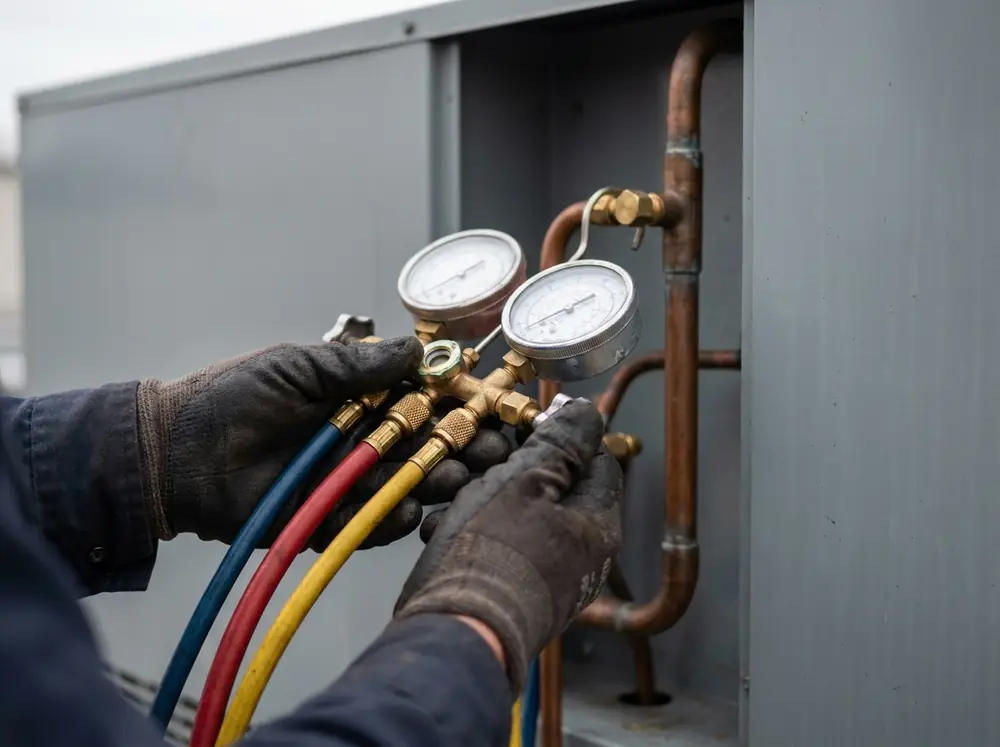
Some jobs look simple but need instruments, training and, in the case of refrigerant, a licence. The Australian Refrigeration Council (ARC) says a refrigerant handling licence is required for any activity involving a risk of a refrigerant emission, and that includes servicing and maintaining refrigeration equipment. In practice that is the ARCtick licence, and any work on the sealed system needs someone who holds one.
| Task | Why staff should not attempt it | Done / initials |
|---|---|---|
| Refrigerant charge and leak checks | Needs gauges, leak detection and an ARC refrigerant handling licence. A low charge always means a leak somewhere. | |
| Electrical checks | Terminals, contactors and current draw must be tested live by a qualified person. | |
| Compressor | Noise, overheating, tripping or short cycling need diagnosis with proper instruments. | |
| Evaporator coil deep clean | Means working inside the room near the fans and heaters, often with panels off. Wrong chemicals can corrode the coil. | |
| Controller and defrost settings | Changing set points or defrost timing without measuring the system can cause icing or warm product. |
These items are part of professional servicing, where Sam Celesti, an ARCtick licensed technician with more than 20 years in commercial refrigeration, works through the whole system and records what he finds.
When a check fails
A checklist only helps if a failed row leads to action. Here is what each common result usually points to, and what to do next.
- Product above 5 °C. Check the door has not been left open and that the evaporator fan is running. Move high risk stock to another fridge if you can, and call a technician if the reading does not come down.
- Solid ice on the coil. Look for a door that does not seal or a torn curtain. Repeated icing usually points to a defrost or fan fault that needs a technician.
- Water on the floor. The drain may be blocked or iced. Mop it up straight away to avoid a slip, and report it.
- Display and probe disagree. Check your probe against a reference first. If the probe is right, the controller sensor needs checking.
- Alarm will not test. Treat it as urgent. A silent alarm means the next failure could go unnoticed overnight.
For a room that has stopped holding temperature, book cool room repairs. The same goes for smaller cabinets, with reach-in and display fridge repairs across Perth, including same-day emergency callouts.
Pairing staff checks with professional servicing
The routine above and a scheduled service do different jobs. Staff see the room every day and notice changes in how it behaves. A technician sees it every few months, but with gauges, meters and the training to read them. Together they cover far more than either one alone.
Bring your completed sheets to each service visit. A log that shows the back of the room creeping up by a degree every afternoon gives the technician a head start. It also gives you a clear record for your food safety program.
If your cool room has not had professional servicing in the last six months, now is a good time to book one, ideally before the hottest weeks of a Perth summer. You get a fixed quote before any work, and a callback within 30 minutes when you request a quote.