













Cool room or freezer down right now?
Call first, then read the rest of this page. A phone call gets the job moving while you work through the checks below, and Sam may be able to tell you what the fault is before he has left for your site. The phone assessment is free.
Have this ready when you ring 0417 253 338:
- What is down. Walk-in cool room, freezer room, upright, underbench, display case or ice machine, and the make if you can see a badge or compliance plate.
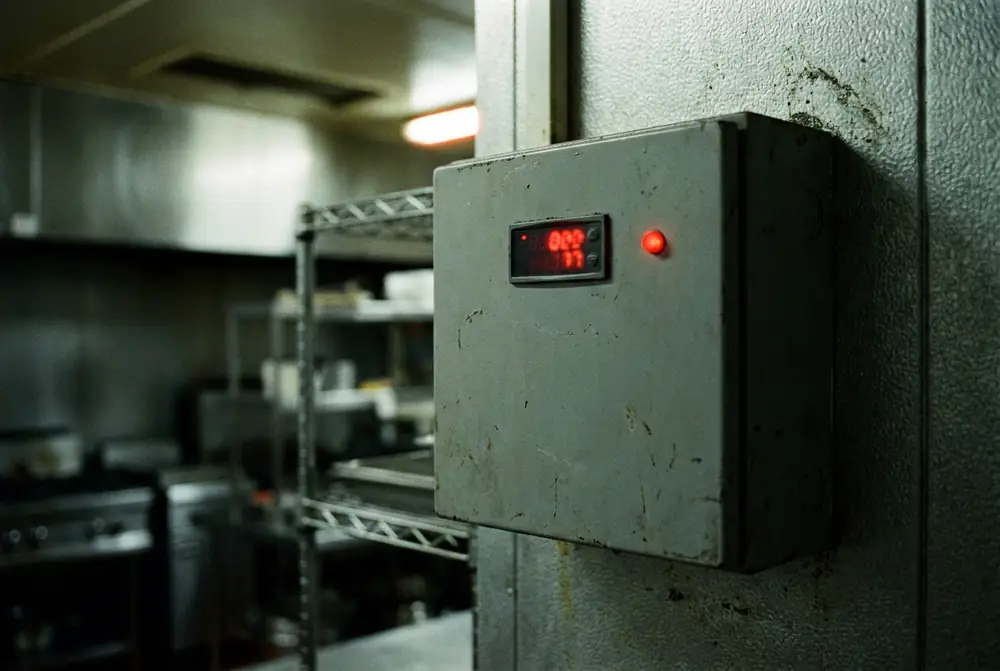
- The controller reading. The temperature on the display and any alarm or error code flashing on it. A photo on your phone is fine.
- What you can hear. Is the condensing unit outside running, cycling on and off, humming without starting, or silent? Are the fans inside the room turning?
- Ice or water. Ice built up on the evaporator coil inside the room, or water pooling on the floor.
- When it started. When the room was last known to be at temperature, and whether anything changed since: a power cut, a delivery with the door propped open, a hot afternoon.
That information decides which parts go in the van and saves time once Sam is on site.
Five minutes of triage before the van arrives
Some breakdowns are not breakdowns at all. Work through this list while you wait. If one of these fixes it, ring back and tell us, and keep probing the stock to make sure the room is actually pulling down.
- Power and isolator. Check the switchboard for a tripped breaker or RCD, and check the isolator switch next to the condensing unit has not been knocked off. Reset a tripped breaker once only.
- Controller display. A blank controller points to a power or wiring fault. A controller showing a high temperature alarm with the unit running points to a refrigeration fault. Note any code before you touch anything.
- Door and seals. A door left ajar overnight or held open by a pallet is the most common cause of a warm room. Look for torn or flattened seals and a door that no longer closes on its own.
- Iced evaporator. Look at the coil and fans inside the room. A coil caked in ice cannot move air, so the room warms up even though the system is running.
- Condenser and fan. Go to the outdoor unit. If the fan is not spinning, or the fins are matted with dust, leaves or grease from a kitchen exhaust, the unit cannot get rid of heat.
What not to do: do not hose or chip ice off an evaporator coil, and do not keep resetting a compressor or breaker that trips again. Repeated restarts on a failing compressor or a shorting motor can turn a contactor or fan replacement into a compressor replacement. One reset, then leave it for the technician.
Protecting your stock while you wait
The refrigeration can be repaired. Stock that has sat too long out of temperature cannot be saved, so the hour before Sam arrives matters.
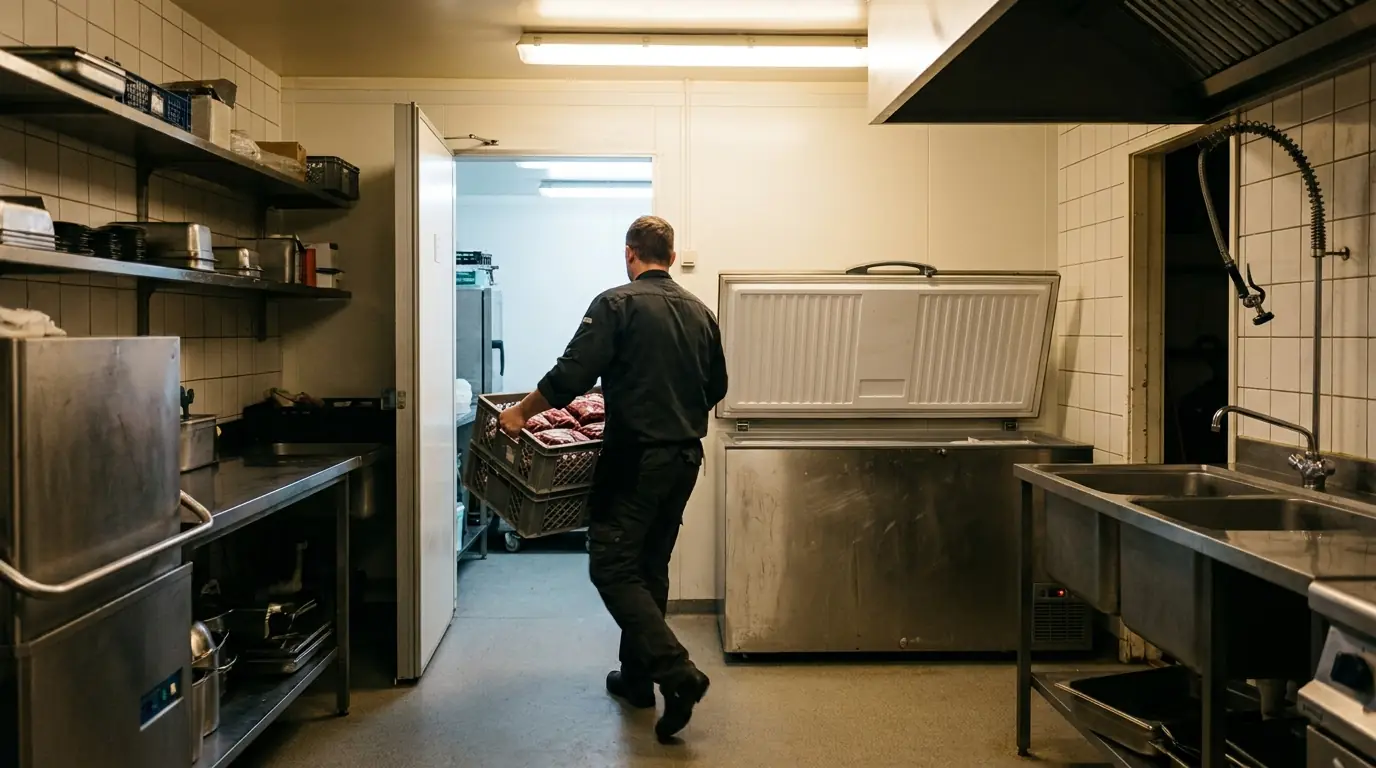
- Keep the doors shut. Every opening lets cold air fall out the bottom of the doorway. Plan what you need, get it in one trip and close up.
- Move high-risk stock first. Raw meat, seafood, dairy, cooked rice, prepared salads and anything ready to eat goes into a working fridge or freezer before anything else. Drinks and whole fruit can wait.
- Probe and log. Use a probe thermometer on a few products in different parts of the room, not the air reading on the controller. Write down the time and temperature every 30 minutes.
- Talk to your insurer. Many business policies cover spoiled stock after a breakdown. Your temperature log, photos and the repair invoice are what they will usually ask for, so start keeping them now.
The 2-hour / 4-hour rule
Food Standards Australia New Zealand says potentially hazardous food should be kept at 5°C or colder (or hotter than 60°C). The time food spends between 5°C and 60°C adds up across every period it has been out of temperature, including the time it spent on the bench before the room failed.
| Total time between 5°C and 60°C | What you can do with it |
|---|---|
| Under 2 hours | Use it, sell it, or put it back under refrigeration |
| 2 to 4 hours | Use it or sell it, but do not refrigerate it again |
| 4 hours or more | Throw it out |
WA Health notes the rule applies to ready-to-eat potentially hazardous food, and a business relying on it needs records to show it. That is another reason to probe and write readings down. You may have seen other refrigeration companies quote a "5 degrees for 5 hours" rule. That is not the FSANZ guidance. When in doubt, throw it out. Sources: FSANZ 2-hour/4-hour rule and WA Health food temperature control.
What causes most refrigeration breakdowns
Perth summers do most of the damage. A condensing unit rated for a mild day is asked to reject heat into 40°C air, often on a roof or in a laneway with no shade, and every weak point shows up at once. The usual suspects:
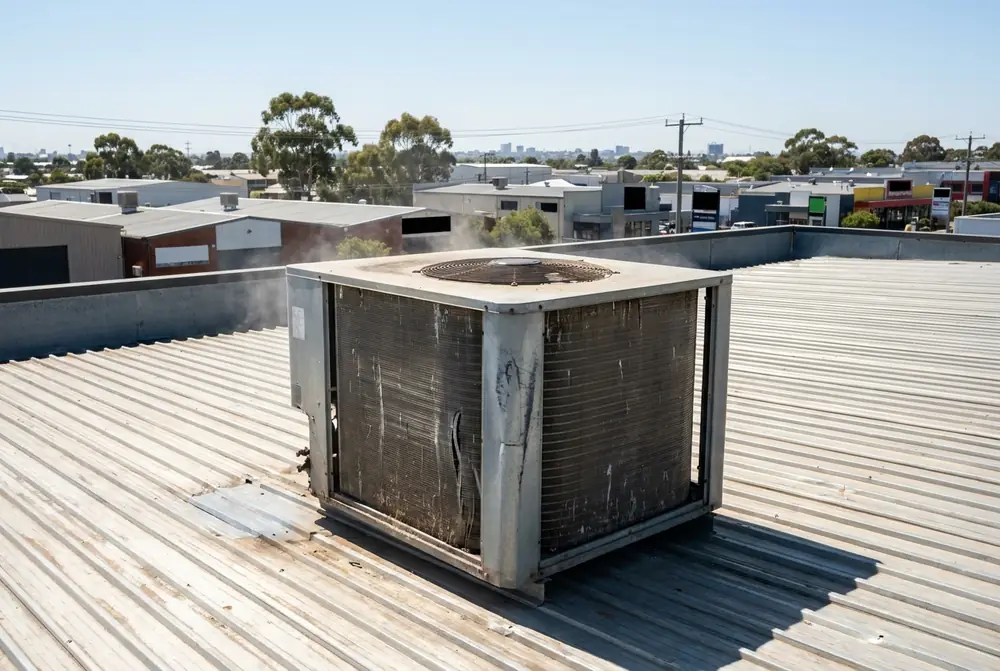 Overloaded condensers. Dirty fins and a hot day push head pressure up until the unit trips on its high pressure safety, or the compressor overheats.
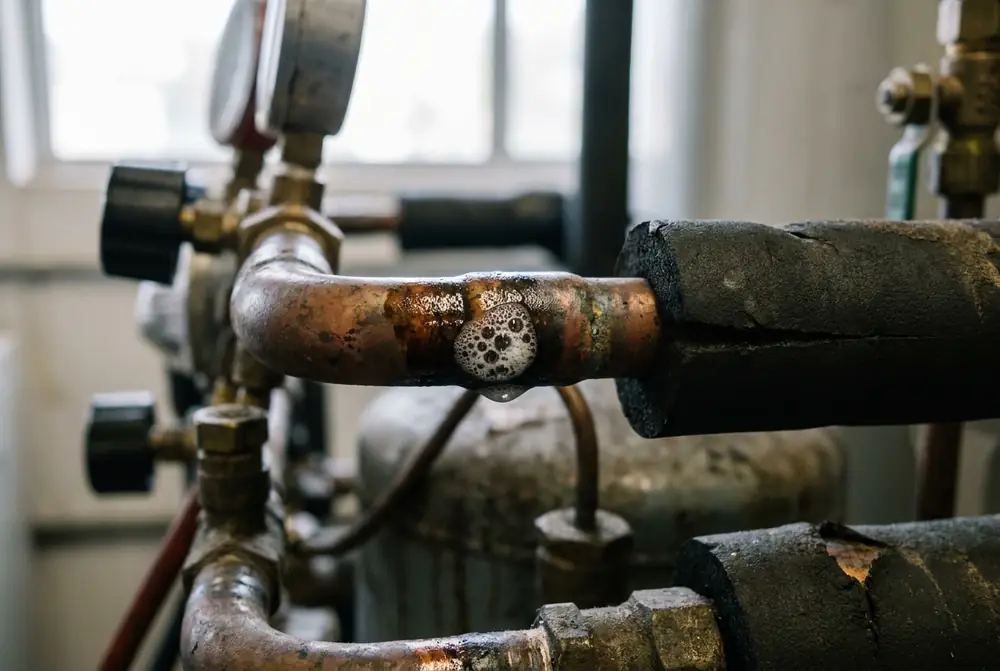 Gas leaks. A slow leak shows up as a room that runs constantly and never quite gets down to temperature, then fails on the first hot day. See leak detection and regas.
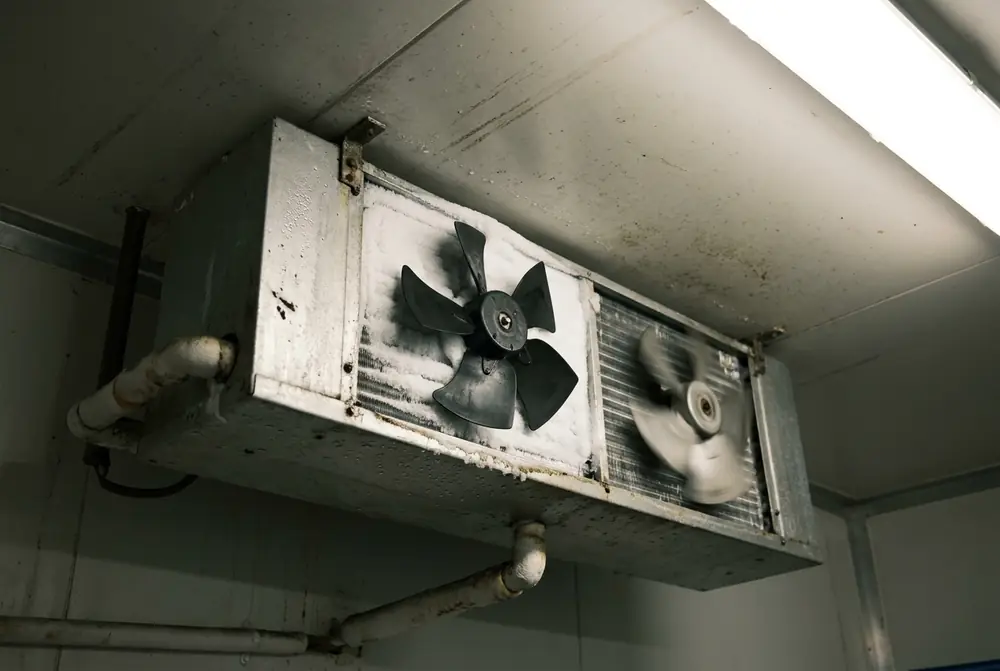 Failed fans. An evaporator fan motor that stops turns the coil into a block of ice. A dead condenser fan trips the system on heat.
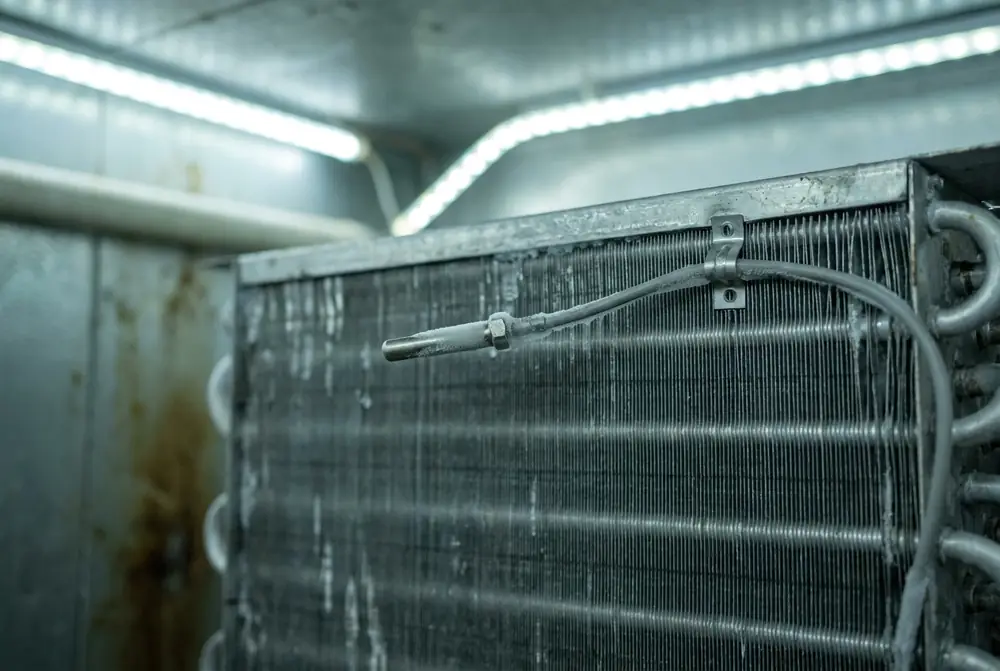 Controllers and sensors. A faulty probe or controller can stop the defrost cycle, or tell the system the room is cold when it is not.
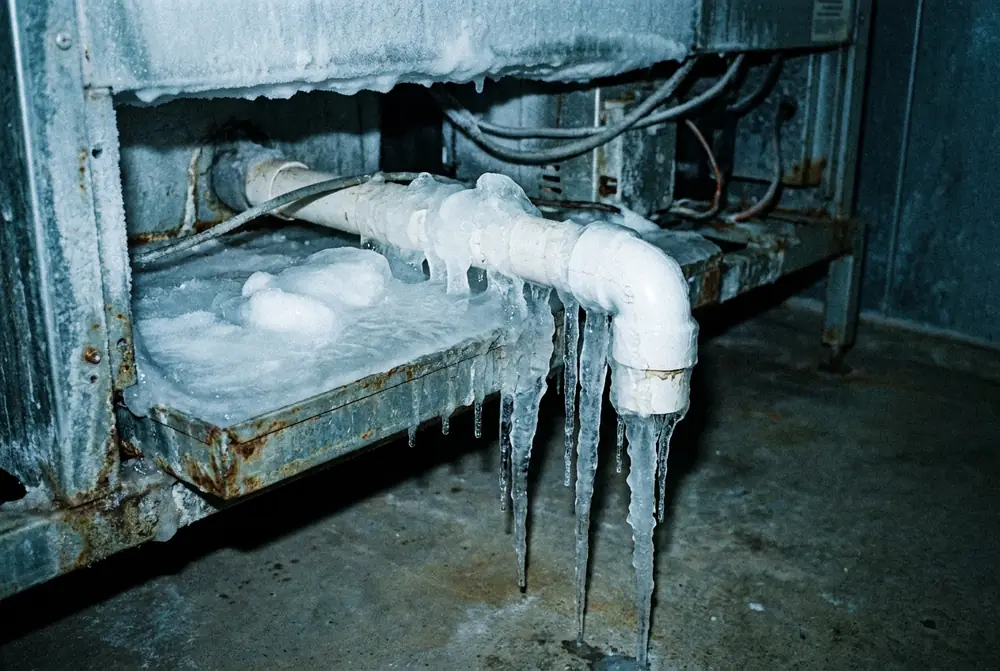 Blocked drains. A frozen or blocked defrost drain backs water up into the coil, where it freezes and spreads.
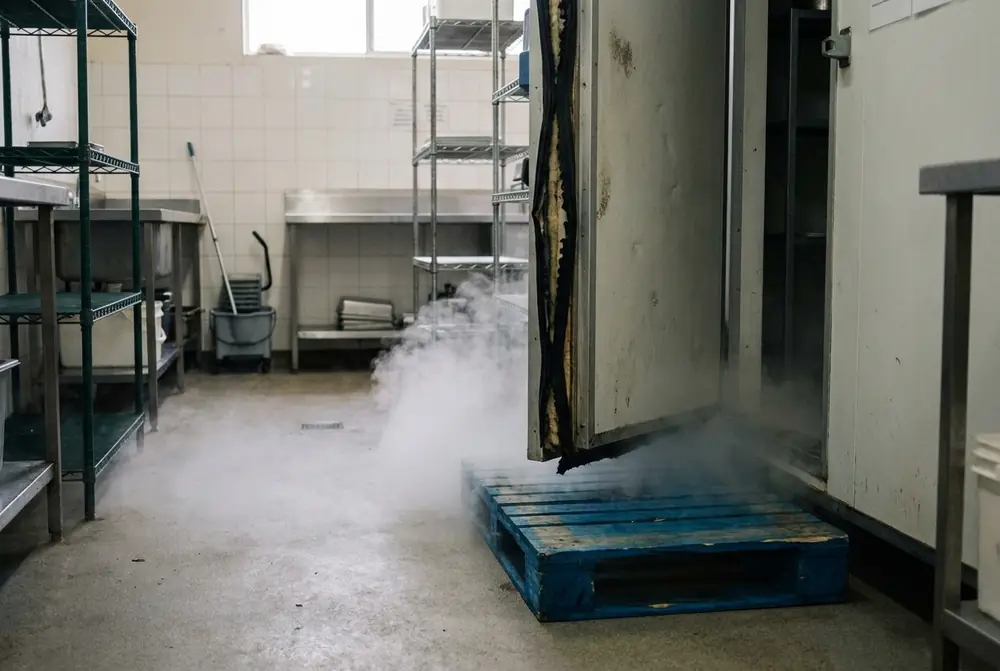 Doors and seals. Worn seals let warm, moist air in all day, which loads the system and builds ice.
Each type of equipment has its own weak points. For more detail, see cool room repairs, commercial fridge and freezer repairs and ice machine repairs.
What an emergency call-out looks like with Sam
You deal with one company from the first phone call to the finished repair. There are no subcontractors and no call centre passing your job along.
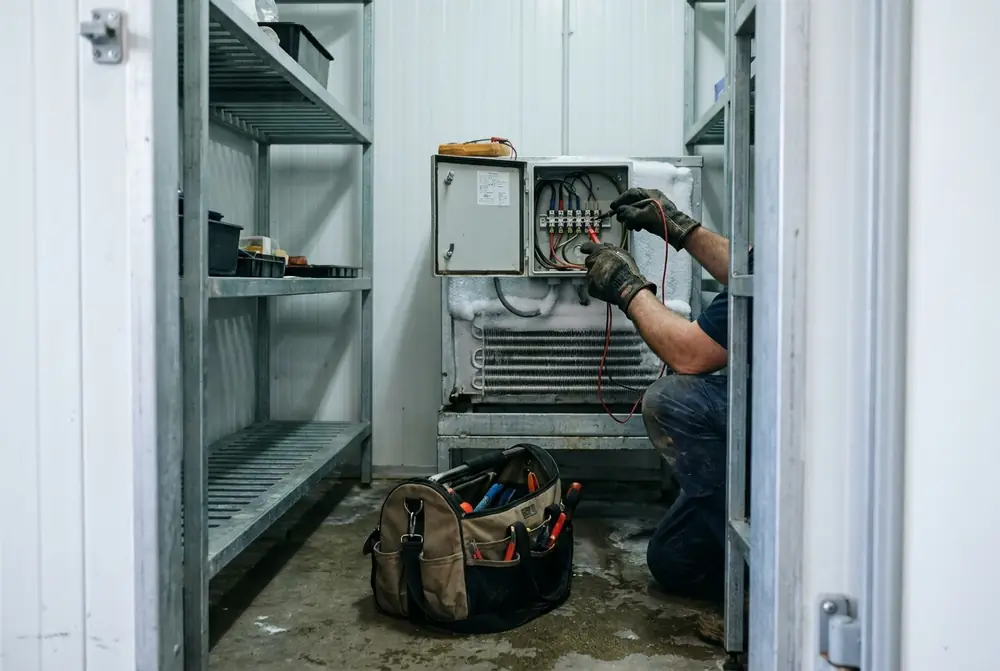
- Phone assessment. You describe the symptoms, Sam tells you what it probably is, what to do with your stock in the meantime, and confirms the after-hours rate if it applies.
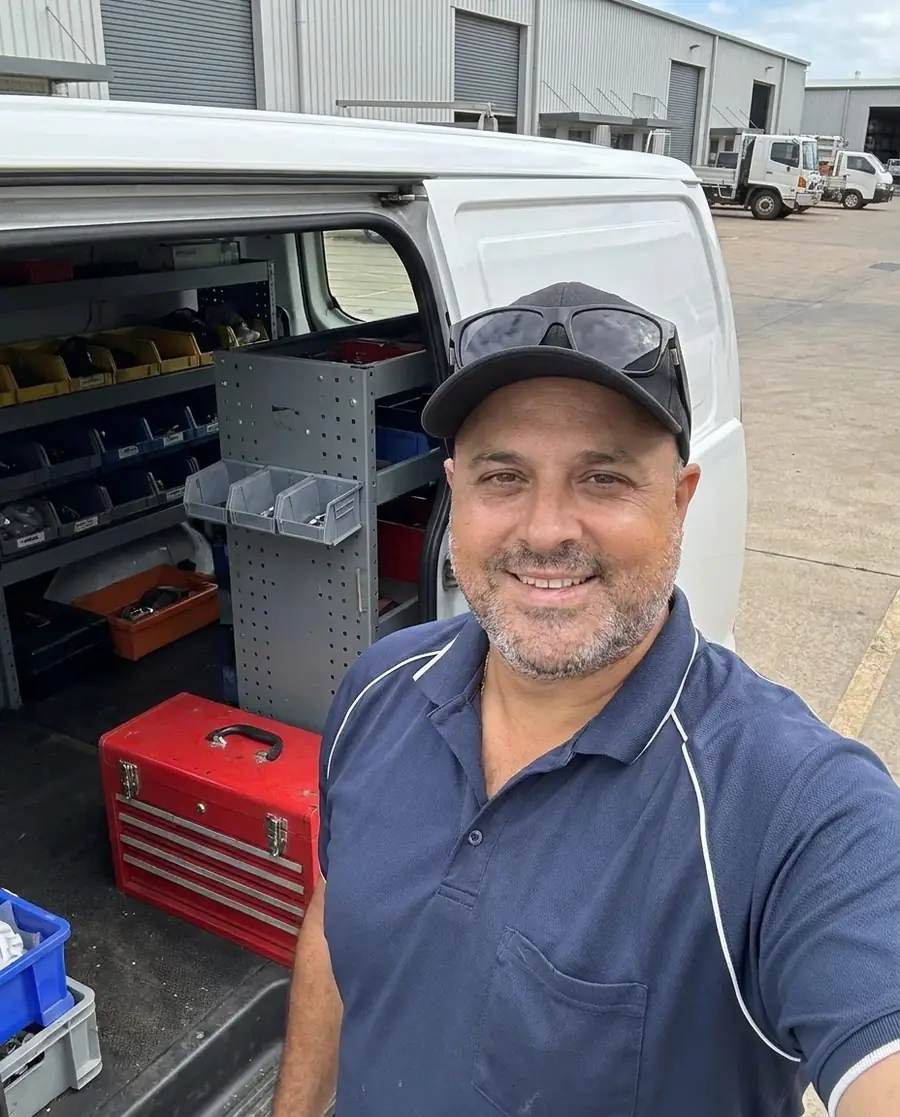
- Arrival. Sam comes out in a fully equipped service van and starts by finding the actual fault, not guessing at it.
- Diagnosis. He checks the electrical side, pressures, fans, controller and defrost system to find the cause, not just the symptom that tripped the unit.
- Fixed quote. You get a fixed price for the repair before any work starts. You decide whether to go ahead.
- Repair or make safe. If the part needed is on the van, the repair can go ahead straight away. If a part has to be ordered, Sam will look at getting the room running safely in the meantime, or help you plan where the stock goes.
- Follow-up. Once the room is back at temperature, you get an explanation of what failed and why, and what would stop it happening again.
Sam has more than 20 years in commercial refrigeration and holds ARCtick refrigerant handling licence AU55592, so gas work and regassing are done legally and recorded properly. We cover the whole metro area; see the areas we service.
Fewer emergencies next summer
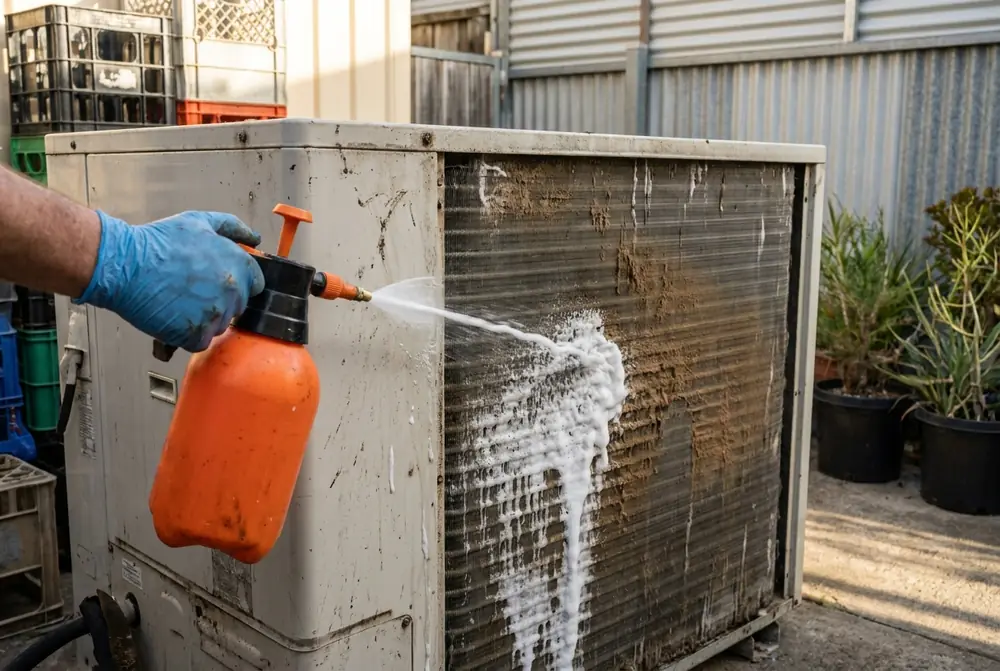
Most of the faults above give warning signs weeks before they become a breakdown: a condenser running hot, a fan bearing starting to grind, a coil that ices up a little more each day, a room that takes longer to recover after a delivery. A service visit before the hot weather catches them while the fix is still a clean and a part, not a lost weekend of stock.
A typical pre-summer service cleans the condenser and evaporator coils, checks refrigerant pressures for early signs of a leak, tests fans, contactors and the defrost system, clears the drain line and checks the door seals. If you have had one emergency this year, a scheduled maintenance plan is the cheapest insurance against the next one.
If your room is warm right now, stop reading and ring Sam on 0417 253 338.