














When a walk-in cool room stops holding temperature, the problem is rarely the room itself. It is one part of the refrigeration system around it: a compressor, a fan, a seal, a sensor or a few grams of refrigerant escaping from a joint. Cool room repairs come down to finding that part quickly, fixing it properly and checking the room pulls back down before anyone leaves.
Sam Celesti has spent more than 20 years on commercial refrigeration in Perth and holds an ARCtick licence (AU55592). Every coolroom repair is done by Sam's own team, with no subcontractors. This page covers the faults we see most, what each symptom usually means, how to protect your stock until we arrive and what a callout involves.
Cool room faults we fix
A cool room is a refrigeration circuit wrapped in insulated panels. Heat is pulled out of the room by the evaporator inside, carried by refrigerant to the condensing unit outside and dumped into the air there. Any weak link in that loop shows up as a warm room.
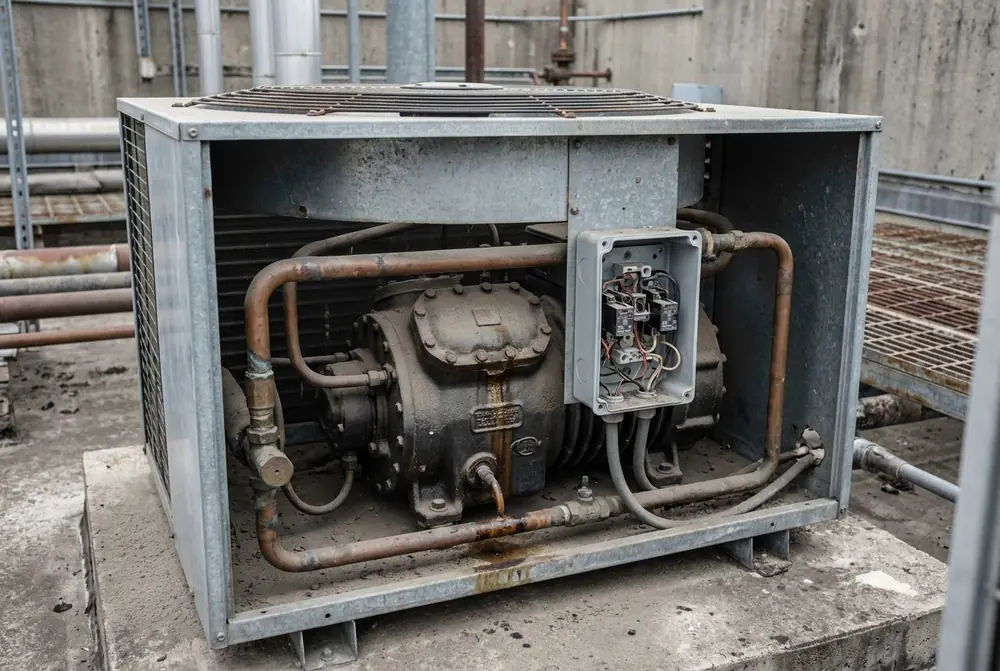 Compressor faults. Failed start components, contactors, overloads, worn valves and seized motors. We test windings and pressures before calling a compressor dead, because a cheap relay often gets blamed for an expensive failure.
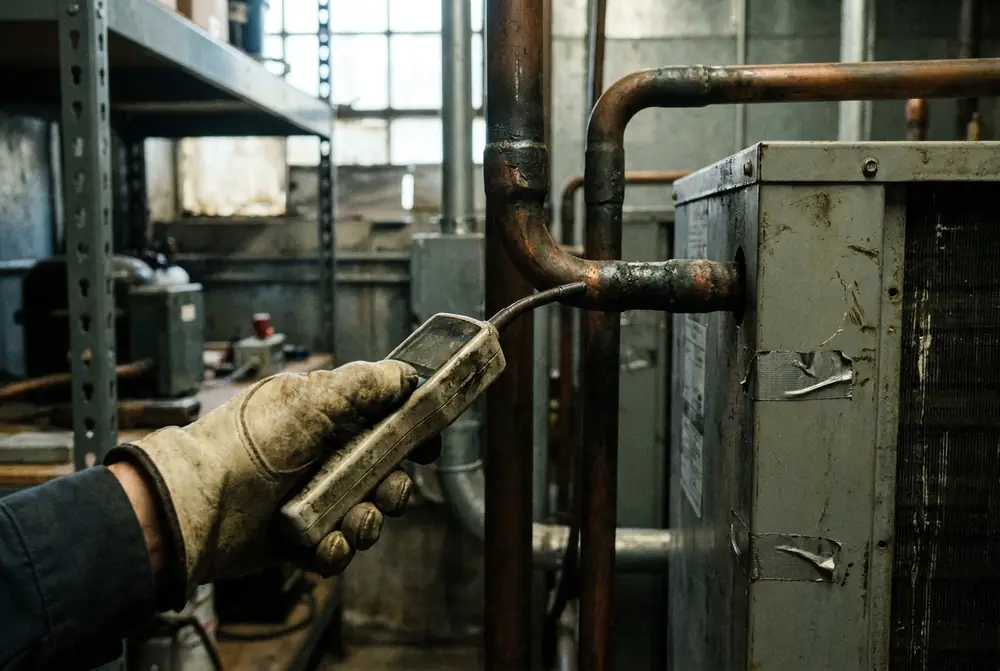 Refrigerant leaks. Electronic leak detection, repair of the leaking joint or coil, pressure testing, evacuation and a correct recharge. Topping up gas without finding the leak only buys a few weeks.
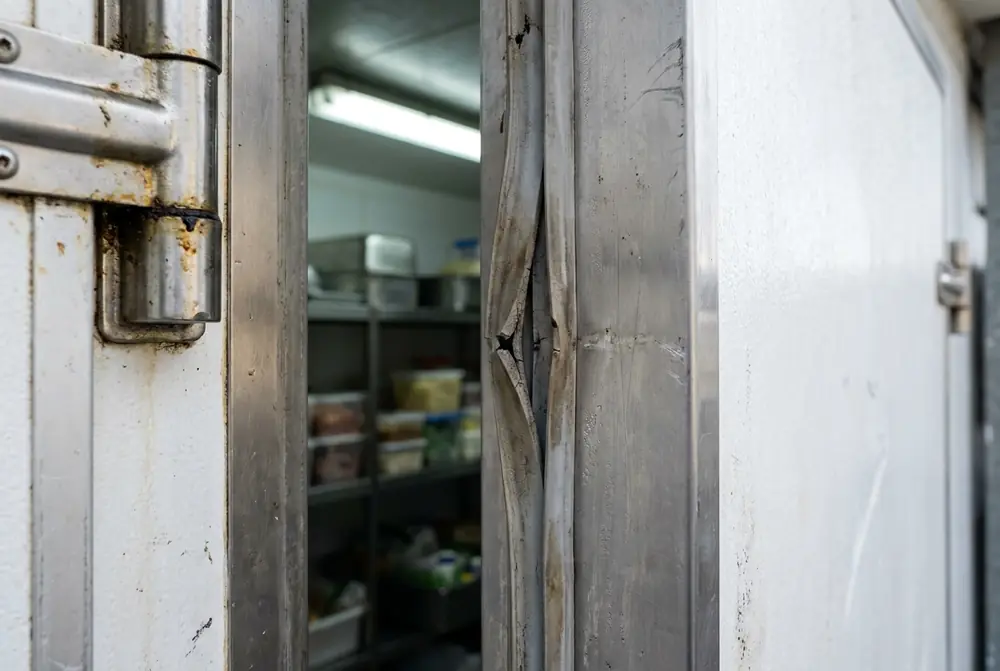 Door seals and heater strips. Torn or flattened gaskets, sagging hinges, broken strip curtains, worn closers and failed frame heaters on freezer room doors that let ice build up around the opening.
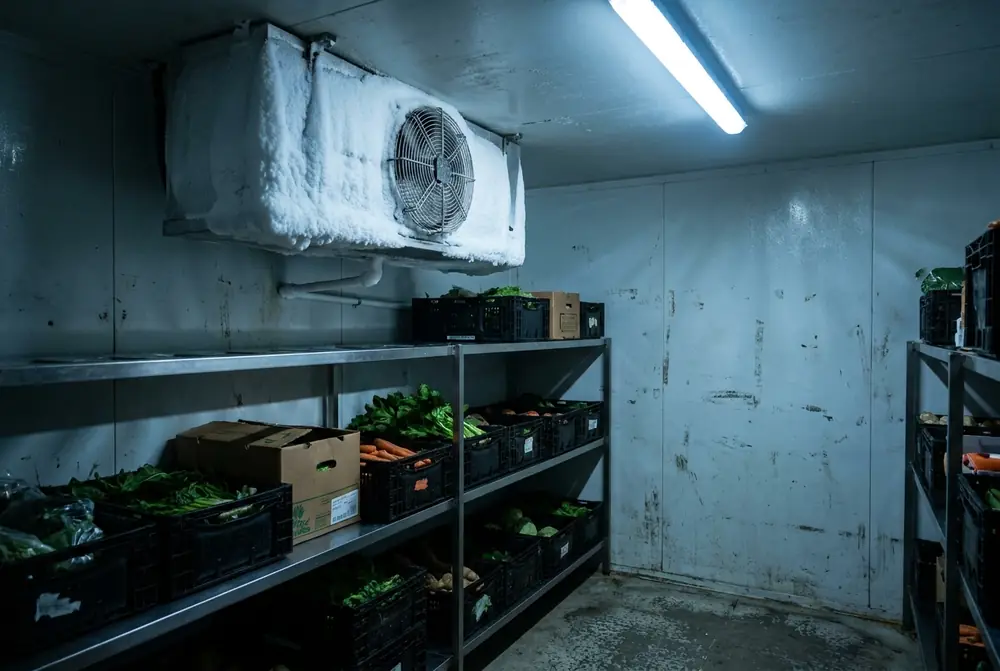 Evaporator fans and defrost. Fan motors and blades, defrost heaters, termination probes and drain line heaters. When defrost fails, the coil turns into a block of ice and airflow stops.
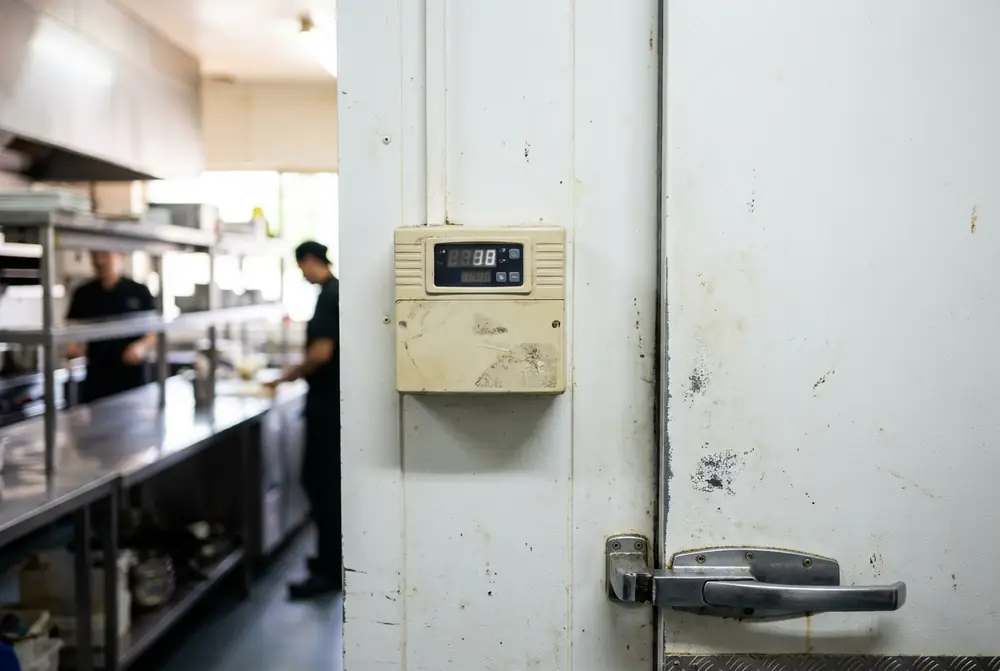 Controllers and sensors. Faulty probes, drifting setpoints, wrong defrost settings and dead controllers. We set them up to suit what you store and how often the door opens.
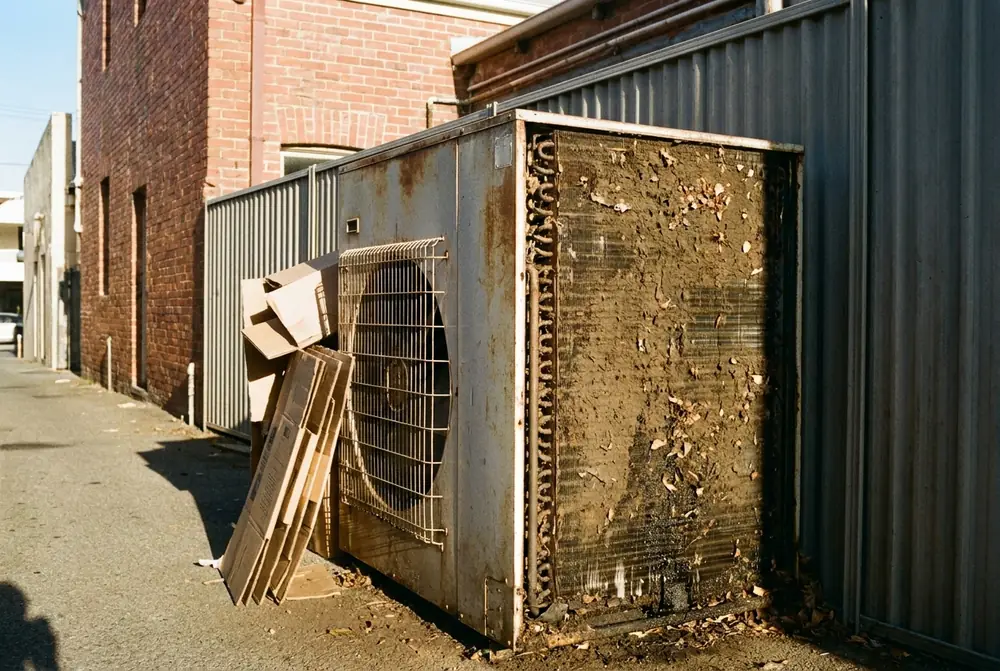 Condenser airflow. Blocked or dirty condenser coils, failed condenser fans and units boxed in by stock or rubbish. A choked condenser makes everything else work harder and is behind many summer breakdowns.
Symptom, likely cause, what to do now
Use this table to narrow down what is happening and what you can safely do before the technician arrives. It is a guide, not a diagnosis: several faults share the same symptom.
| Symptom | Likely cause | What to do now |
|---|---|---|
| Room is warm, unit running or silent | Low refrigerant from a leak, compressor or contactor failure, condenser fan stopped, tripped breaker | Check the isolator and switchboard, clear anything blocking the condenser, keep the door shut, probe your stock and call |
| Ice on the evaporator coil | Defrost heater or probe failure, evaporator fan stopped, low gas charge, door left ajar letting moist air in | Do not chip the ice. If your controller has a manual defrost, start one. Note whether the fans are turning and call |
| Unit short cycling (starts and stops every few minutes) | Dirty condenser tripping the high pressure switch, low charge tripping the low pressure switch, faulty probe or controller | Check the condenser is clean and has room to breathe. Write down how long each run lasts and tell us when you ring |
| Water on the floor | Blocked or frozen drain line, cracked drain tray, failed drain heater in a freezer room, coil ice melting off | Mop up so nobody slips, keep stock off the wet floor, look for ice in the drain pipe and call |
| Noisy compressor or rattling unit | Worn compressor bearings or valves, liquid returning to the compressor, loose mounts, a fan blade hitting its guard | If the noise is loud grinding or banging, switch the unit off at the isolator to save the compressor, move high-risk stock and call |
| Door not sealing or iced at the frame | Damaged gasket, sagging hinges, failed door closer, frame heater failure on a freezer door | Keep the door firmly shut, tape a split gasket as a stopgap and avoid propping the door during deliveries |
| Alarm or error code on the controller | High temperature alarm, door alarm, probe fault, defrost timeout or a pressure switch trip | Photograph the display and the code, check the door, then call. Do not keep resetting it: the code tells us where to look |
Protecting your stock while you wait
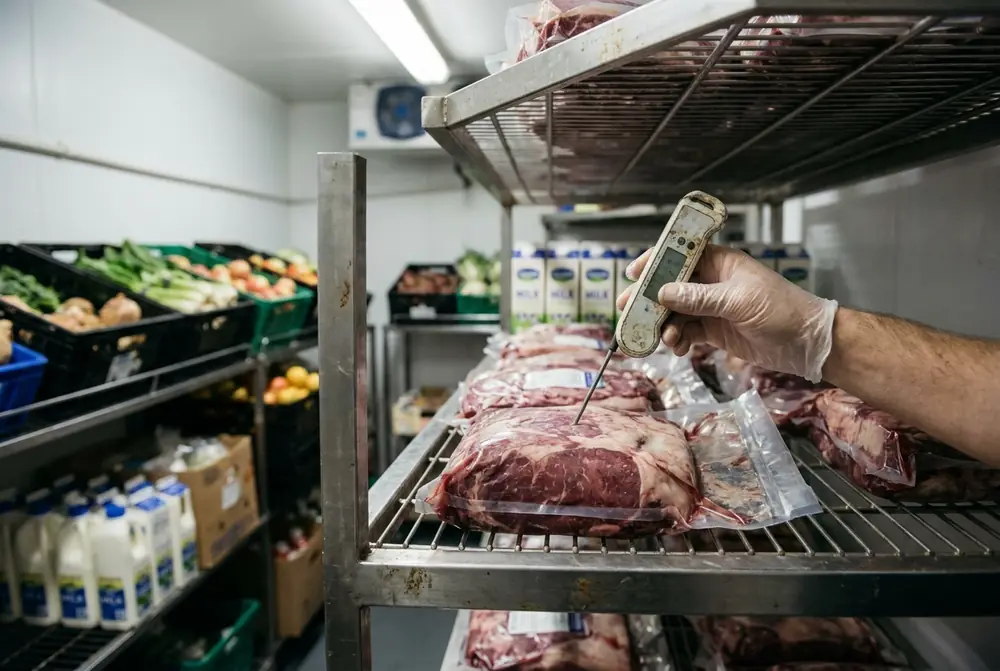
The Food Standards Australia New Zealand code says chilled food must be kept at 5 degrees C or below and frozen food must stay frozen hard. A broken cool room is when that rule gets tested, so spend the first few minutes on the stock rather than the unit.
- Keep the door closed. A shut, well-insulated room holds its temperature for a surprising time. Every opening costs you cold air.
- Measure the food, not the air. Use a clean probe thermometer in a few products near the door and at the top of the room, where it warms first. Air readings swing; product temperature is what counts.
- Move the high-risk stock first. Raw meat, seafood, dairy, cooked rice and pasta, and prepared meals go to working fridges or freezers. Drinks and whole produce can wait.
- Write it down. Record the time you noticed the fault and each temperature you take. FSANZ guidance treats food held between 5 and 60 degrees C for under 2 hours as fine to refrigerate or use, 2 to 4 hours as use now, and over 4 hours as discard. Your notes decide which side of the line you are on.
- Check frozen stock by feel. Product that is still frozen hard is fine. Anything that has softened should be treated as chilled food and handled under your food safety plan.
How a cool room repair callout works
- You call. Tell us the business, the address and what the room is doing. Quote requests through the form get a call back within 30 minutes.
- Phone triage. We ask for the room temperature, what the unit sounds like, any controller code and the brand on the condensing unit. Sometimes that points to a simple fix you can make straight away; otherwise it tells us which parts to bring.
- On site. Sam checks pressures, electrical supply, airflow, defrost and controls to find the cause rather than the first thing that looks wrong.
- Fixed quote. You get a clear explanation and a fixed price before any work starts. Nothing extra is added without your approval.
- Repair and pull-down. Once the fault is fixed, we watch the room come back down towards its setpoint and check the controller settings so it stays there.
Repair or replace?
Most cool room breakdowns are worth repairing. Fans, seals, probes, controllers and leaks are routine jobs, and a well-built room with sound panels can outlast two or three refrigeration units. Replacement starts to make sense when several of these line up:
- The condensing unit is well over a decade old and the compressor has failed.
- The system runs on R404A and keeps leaking. Australia is phasing down high global warming refrigerants like R404A, so each recharge costs more and lower impact options are now standard on new equipment.
- You have had several callouts for different faults in the past year.
- The panels are damaged, the floor is cracked or a freezer room has ice forming inside the walls.
- The room is now too small or badly placed for how the business works.
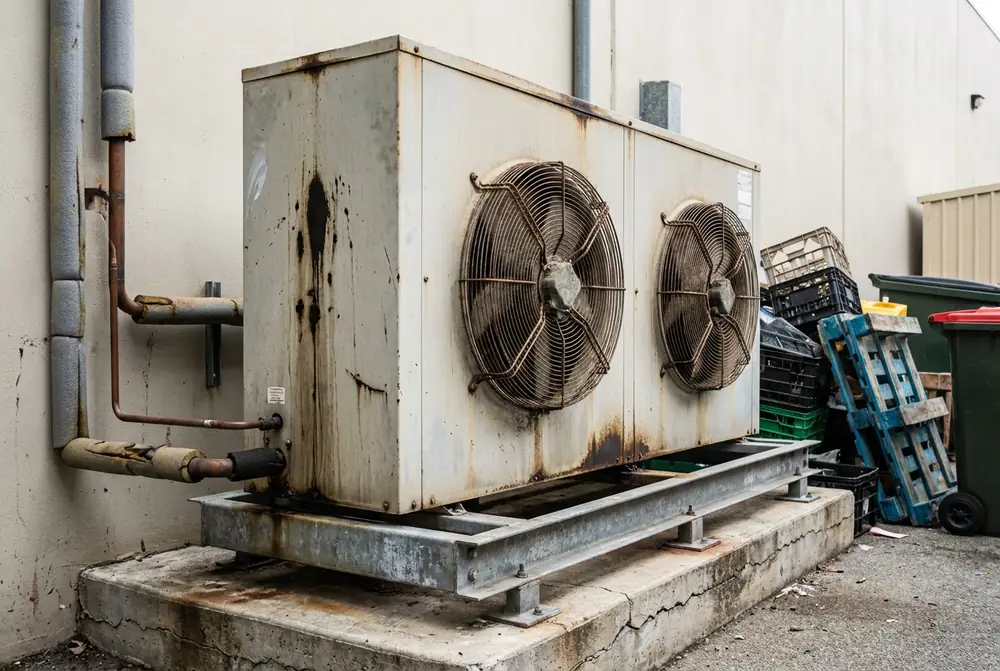
Sam will tell you straight which side of the line your system sits on. If it is time for something new, we can quote on replacing the refrigeration unit or building a new cool room. To push that day further away, scheduled cool room servicing catches worn fans, dirty coils and slow leaks before they become breakdowns.
Cool rooms we look after
Sam repairs walk-in cool rooms and freezer rooms for:
- Restaurants and cafes, where the cool room holds the prep for every service.
- Supermarkets and independent grocers, with produce, dairy and meat rooms running around the clock.
- Medical facilities, where stored product and temperature records both matter.
- Hotels with central kitchens, banquet rooms and bar stores.
- Bars, pubs and bottle shops, where the keg room is the cool room.
- Industrial sites, including food processors and distribution stores.
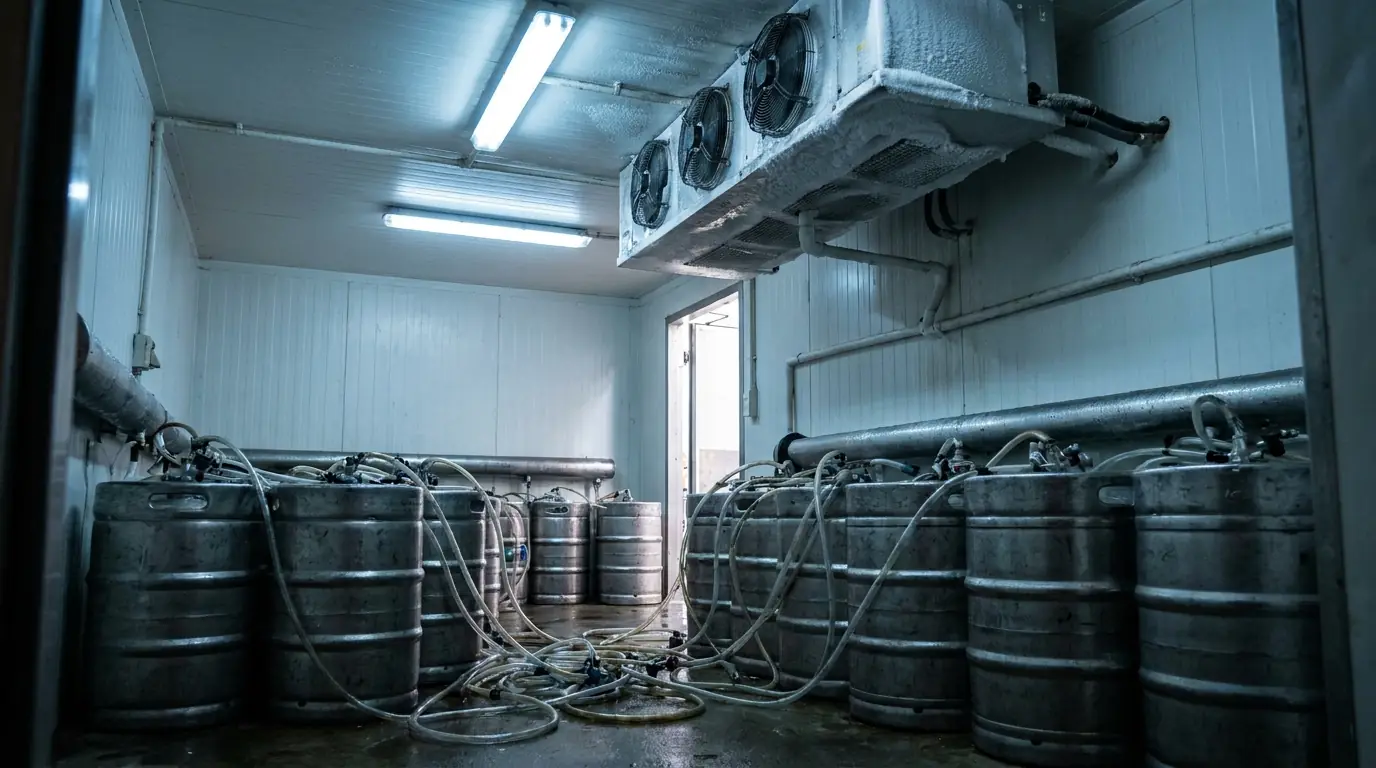
Most of these sites also run other refrigeration, so one call covers reach-in, display and underbench fridge repairs and ice machine repairs too.
Coolroom repairs across Perth
Cool room and cold room repairs are carried out across the Perth metropolitan area. Regular work runs across these regions:
- Northern suburbs: Joondalup, Wanneroo, Wangara, Malaga, Osborne Park and Balcatta.
- Central: Perth CBD, Northbridge, Subiaco, Leederville and Victoria Park.
- Eastern suburbs: Midland, Bayswater, Belmont, Welshpool and Kewdale.
- Southern suburbs: Canning Vale, Jandakot, Cockburn, Fremantle and Rockingham.
If your site sits outside the metro area, call and ask. We will tell you honestly whether we can get there and when.