













Commercial refrigeration repair from a Perth local
Commercial fridge repairs are the bulk of what we do, from a single bottle fridge behind a bar to a run of supermarket multidecks. When a fridge or freezer stops holding temperature you need someone in Perth who can be at the back door today, not a call centre in another state.
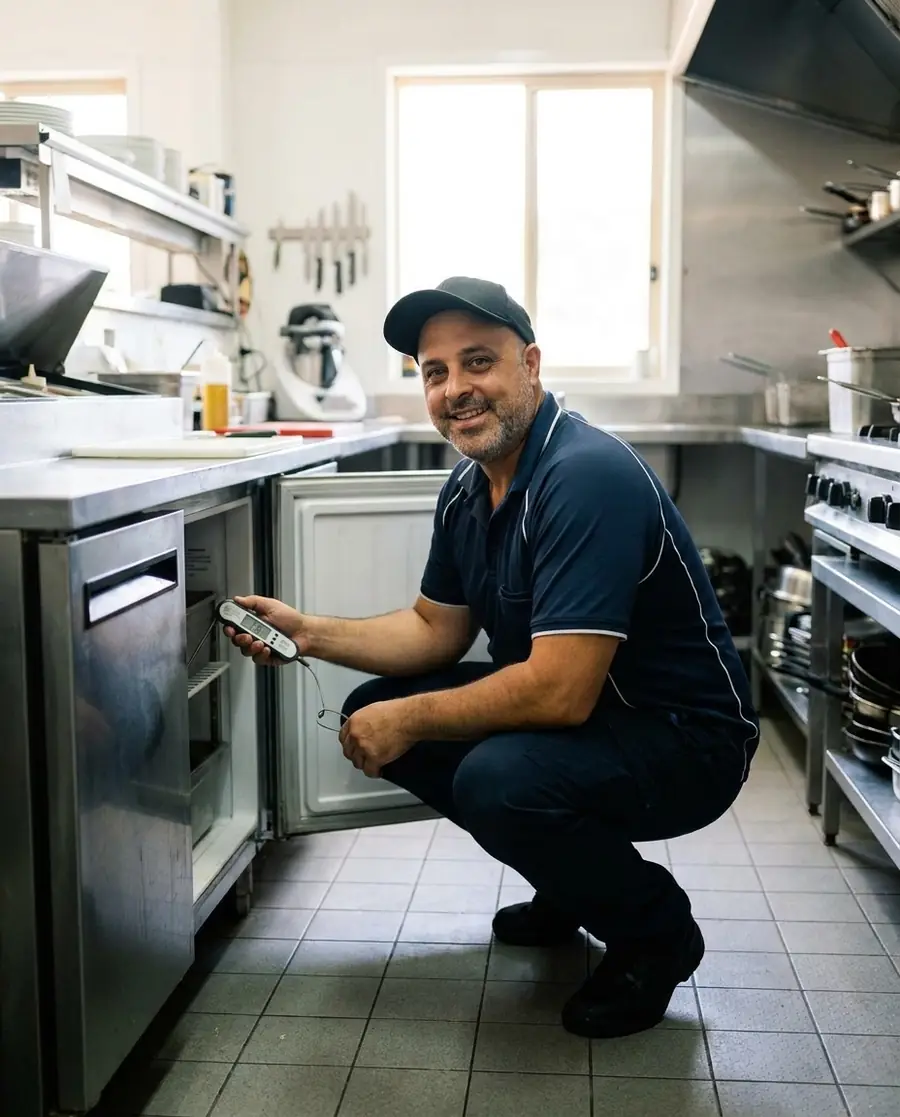
Every job is handled by Sam Celesti, our lead technician, who has more than 20 years in commercial refrigeration. We hold an ARCtick refrigerant handling licence (AU55592), and we are one company with no subcontractors, so the person who quotes the job is the person who fixes it.
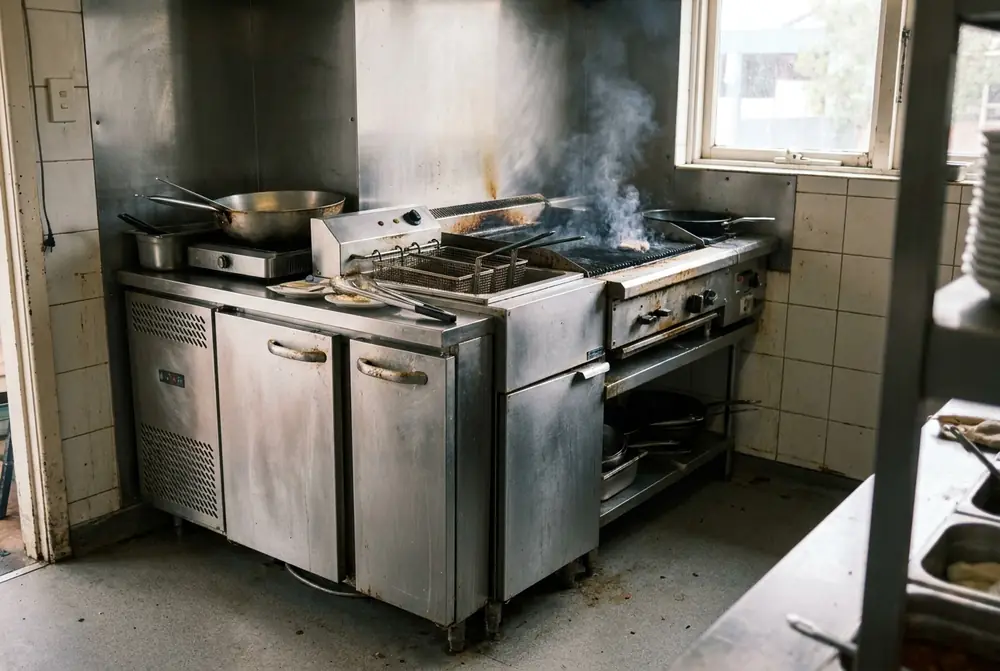
Perth is hard on refrigeration. Summer days over 40°C, kitchens that run hotter still and condensers jammed under benches all make a fridge work longer for less result. Most of the breakdowns we see in January and February start as a fridge that was already struggling in spring. If your problem is a walk-in rather than a cabinet, see our cool room repairs page instead.
Fridges and freezers we repair
We work on self-contained and remote commercial refrigerators and freezers of every common type found in Perth hospitality, retail and healthcare.
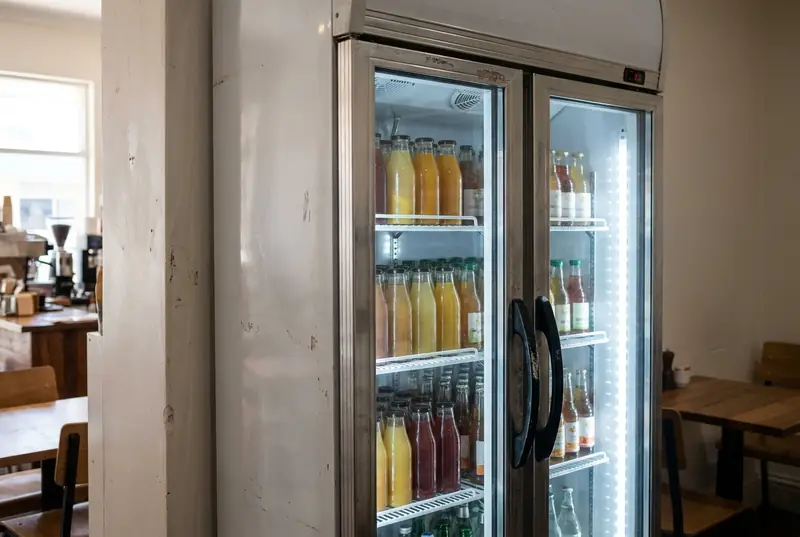 Upright and glass door display fridges Single, double and triple door merchandisers. Door heaters, gaskets and fan motors are the frequent repairs.
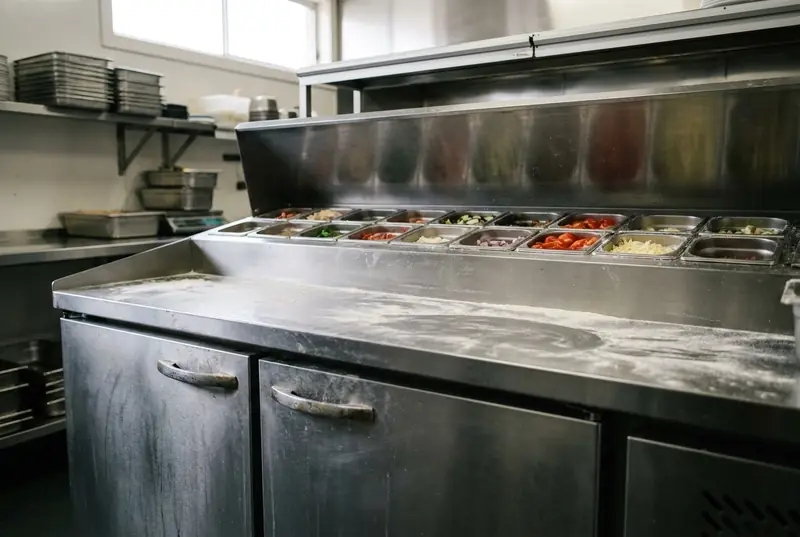 Underbench and prep fridges Pizza and sandwich prep tables, saladettes and kitchen underbench units that sit beside ovens and fryers all shift.
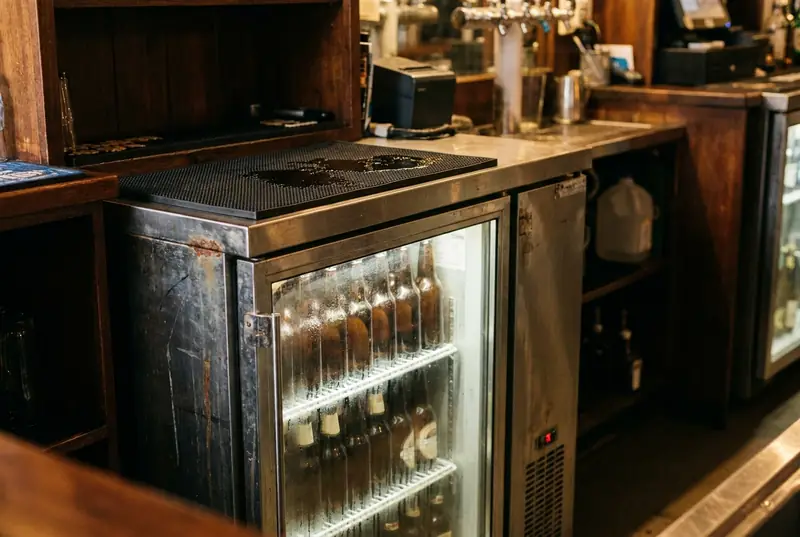 Bar and bottle fridges Under-counter bottle coolers, keg fridges and glass door units that cop heat and spilt drinks every night.
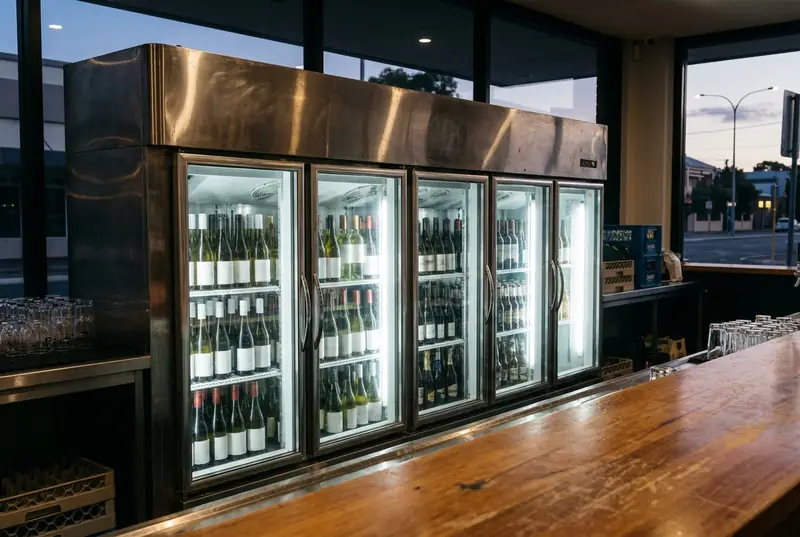 Back bar refrigeration Long multi-door back bar runs where one failed fan can warm an entire section of beer and wine.
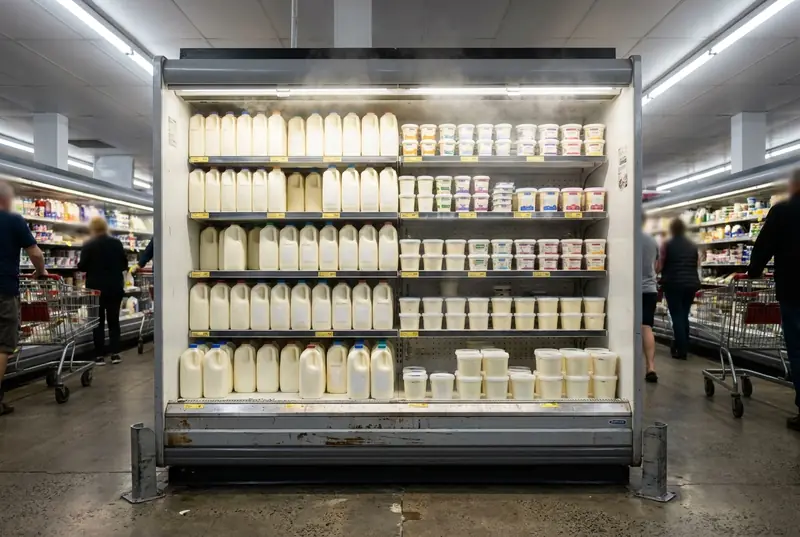 Multideck and open display cases Supermarket and deli cases that depend on an air curtain, clean coils and correct defrost cycles.
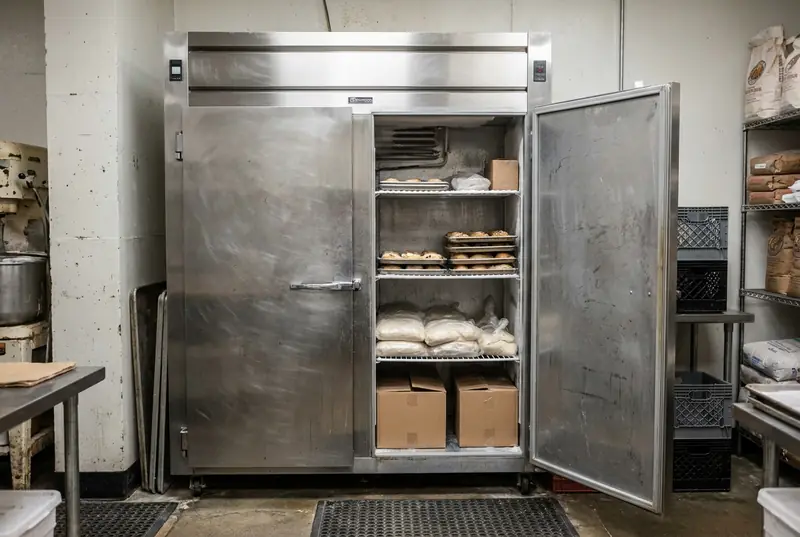 Upright and chest freezers Storage freezers for kitchens, butchers and bakeries, including iced up evaporators and defrost faults.
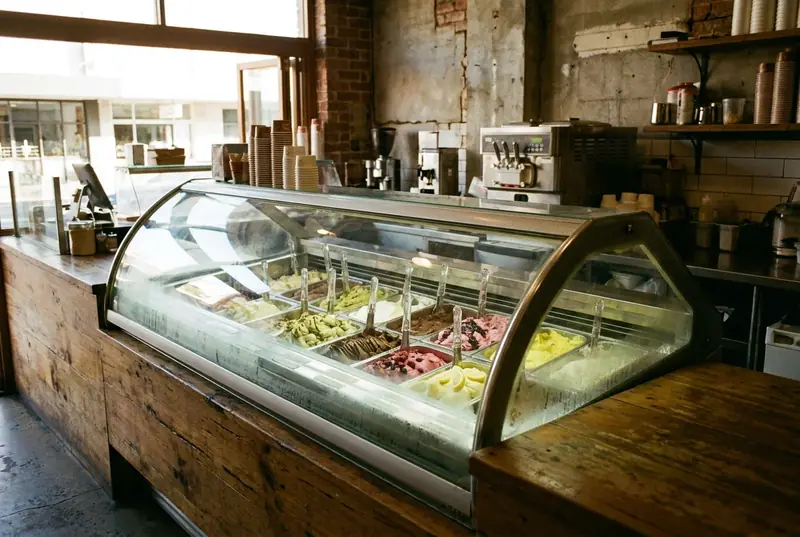 Ice cream and gelato display Scooping cabinets and curved glass gelato displays that need a tight, steady temperature to keep texture right.
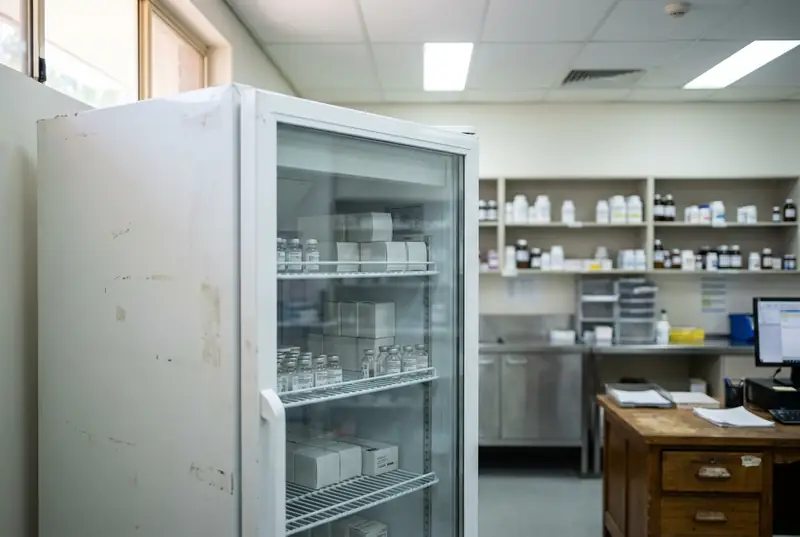 Pharmacy and vaccine fridges Medical grade units where holding 2°C to 8°C is the whole point, and a fault needs fixing fast.
Behind the bar we also look after the ice. If your ice maker is part of the problem, our ice machine repairs service covers it on the same visit.
Fault finder: what your fridge is telling you
Most fridge and freezer failures give a warning first. This table matches the common signs to their likely cause and the safe thing to do before we arrive.
| What you notice | Likely cause | What to do now |
|---|---|---|
| Fridge is warm but you can hear the fan running | Compressor not starting, start relay or capacitor failed, or the unit is low on refrigerant | Leave it switched on so the fault can be traced, move high risk stock and call us |
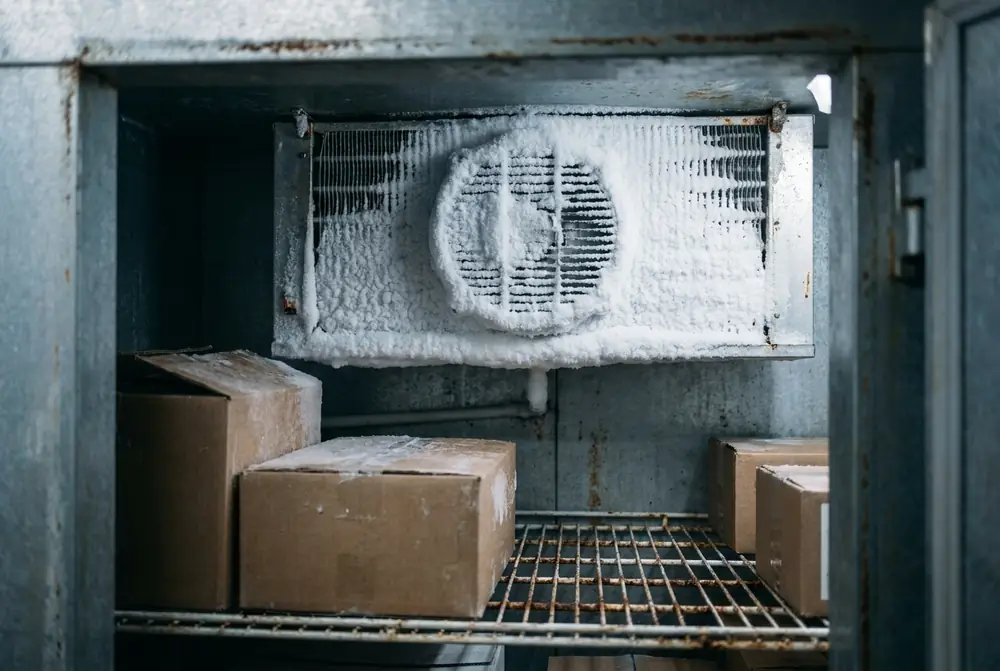
| Thick frost or ice on the back wall or evaporator | Failed defrost heater, timer or controller, or a door seal letting in humid air | Keep the door shut and do not chip at the ice, which can puncture the coil |
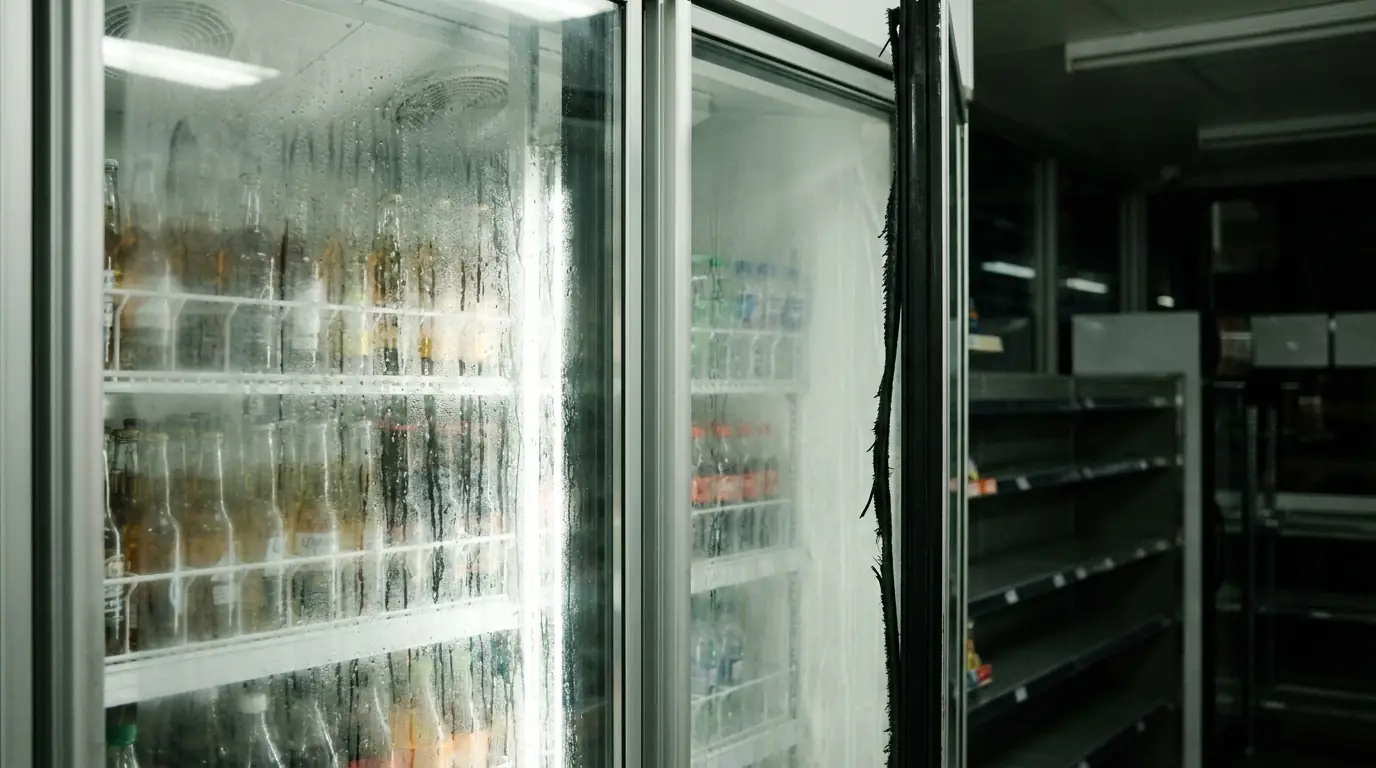
| Condensation or fog on the glass doors | Door heater out, worn gasket or a door that is not closing fully | Check nothing is stopping the door closing and wipe the gasket clean |
| Freezer running but stock is soft | Iced up evaporator, dead evaporator fan, slow refrigerant leak or failing compressor | Probe the stock, move anything that has started to soften to another freezer and call us |
| Fan is loud, grinding or ticking | Worn fan motor bearings, a blade hitting ice or a loose shroud | Note whether the noise is inside the cabinet or at the condenser, then book a visit |
| Fridge keeps tripping the power | Compressor winding fault, water in wiring or a shorted heater or fan | Do not keep resetting it. Unplug the fridge and leave it off until we test it |
| Water pooling under the cabinet | Blocked drain line, cracked drip tray or a defrost problem | Mop up for safety and keep the area dry, then let us clear the drain |
| Runs nonstop and never cycles off | Dirty condenser coil, failing condenser fan or low gas | Give the unit breathing room and clear boxes from the vents |
| Display shows an error code or a reading that looks wrong | Faulty probe, controller fault or a settings change | Photograph the display, check with a separate thermometer and send us the photo |
What happens after you call
A broken fridge on a Friday afternoon is stressful enough. Here is how the job runs from the moment you get in touch.
- First conversation. You call or send the form and Sam rings back within 30 minutes on quote requests. He asks what the unit is, what the temperature reads and what is inside, then tells you how to protect that stock in the meantime.
- Booking the visit. Jobs where food or medicine is at risk are put ahead of routine work. We give you an arrival window and keep you posted if it moves.
- Finding the fault. On site Sam checks temperatures with his own probes, reads pressures and current draw, and tests fans, heaters and controls until the real cause is clear. Swapping parts on a guess is not how we work.
- Your fixed quote. You hear what failed, why, and the price to fix it. Nothing is replaced until you say yes.
- The repair and a pull-down check. After the fix the fridge is run until it reaches its set point, so you know it is holding before we pack up.
Fix it or replace it?
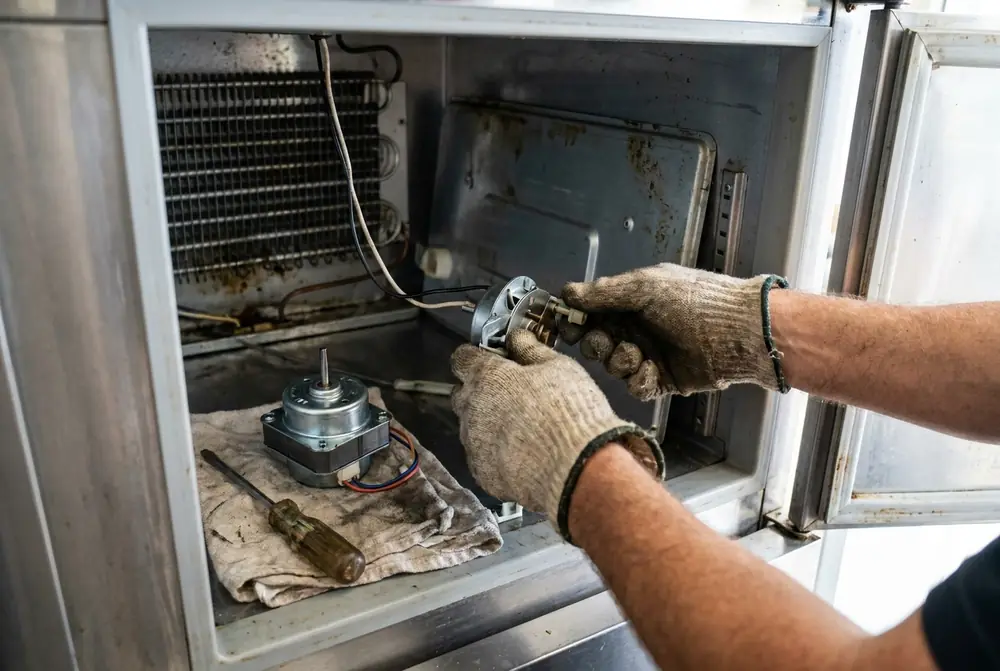
Most commercial fridges are worth repairing. A gasket, fan motor, thermostat or controller is a small part of the price of a new cabinet, and a well built unit can give years more service after the fix.
Replacement starts to make sense when several of these line up:
- The compressor has failed and the fridge is already well into its working life.
- The cabinet is rusting, the insulation is wet or the doors no longer seal against the frame.
- It runs on an older refrigerant that is being phased down in Australia, making regas work dearer each year.
- You are calling us about the same unit every few months.
- The venue has outgrown it and needs more storage than a reach-in can give.
When that last point applies, the answer may be a new cool room rather than another fridge. Either way, Sam will set out the repair price next to the replacement option, so the choice is yours and based on numbers, not a sales pitch.
What a dead fridge costs a venue
The repair bill is rarely the biggest cost of a fridge failure. The real damage is everything that stops while the fridge is down.
- Stock. The Food Standards Code requires chilled food at 5°C or below and frozen food kept frozen hard. Under FSANZ guidance, high risk food left between 5°C and 60°C for up to two hours can go back in a working fridge, between two and four hours it must be used straight away, and after four hours it has to be thrown out.
- Sales. An empty drinks fridge or a dark gelato cabinet is lost trade for every hour it stays that way, and a closed kitchen loses the whole service.
- Staff time. Shifting stock between fridges, borrowing space from neighbours and cleaning up meltwater pulls staff away from customers.
- Compliance. Gaps in your temperature records can draw questions from an environmental health officer, and a vaccine fridge outside range triggers a formal breach report.
Brands and parts we work with
We service SKOPE, Bromic and Williams commercial fridges and freezers, and Sam also supplies and installs new units from the Bromic, SKOPE and Williams ranges when a replacement is the better call.
SKOPE is one of the most common display brands in Australian venues and shops. Inside most cabinets, whatever the badge on the door, you find the same family of parts, and we work with Tecumseh compressors, Danfoss valves and controls, and Carel and Eidis controllers every week. If your unit is a less common make, tell us the model on the data plate when you call and we will confirm we can help.
Stopping the next breakdown
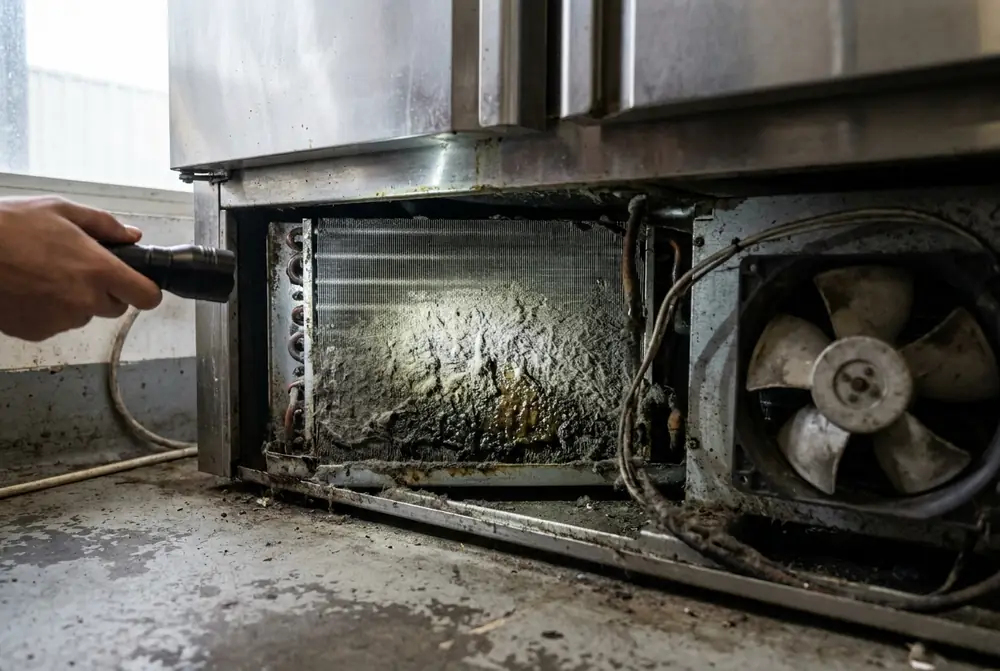
Many fridge failures we attend trace back to the same few things: a condenser coil caked in kitchen grease and dust, a split door gasket, or a cabinet pushed hard against a wall with nowhere to dump heat. Wipe gaskets weekly, keep a hand-width of clear space around the condenser and watch the display for drift.
For venues with several units, scheduled refrigeration maintenance catches worn fans, low gas and dirty coils before they stop a service. It is the simplest way to keep your next call to us a booked visit rather than an emergency.