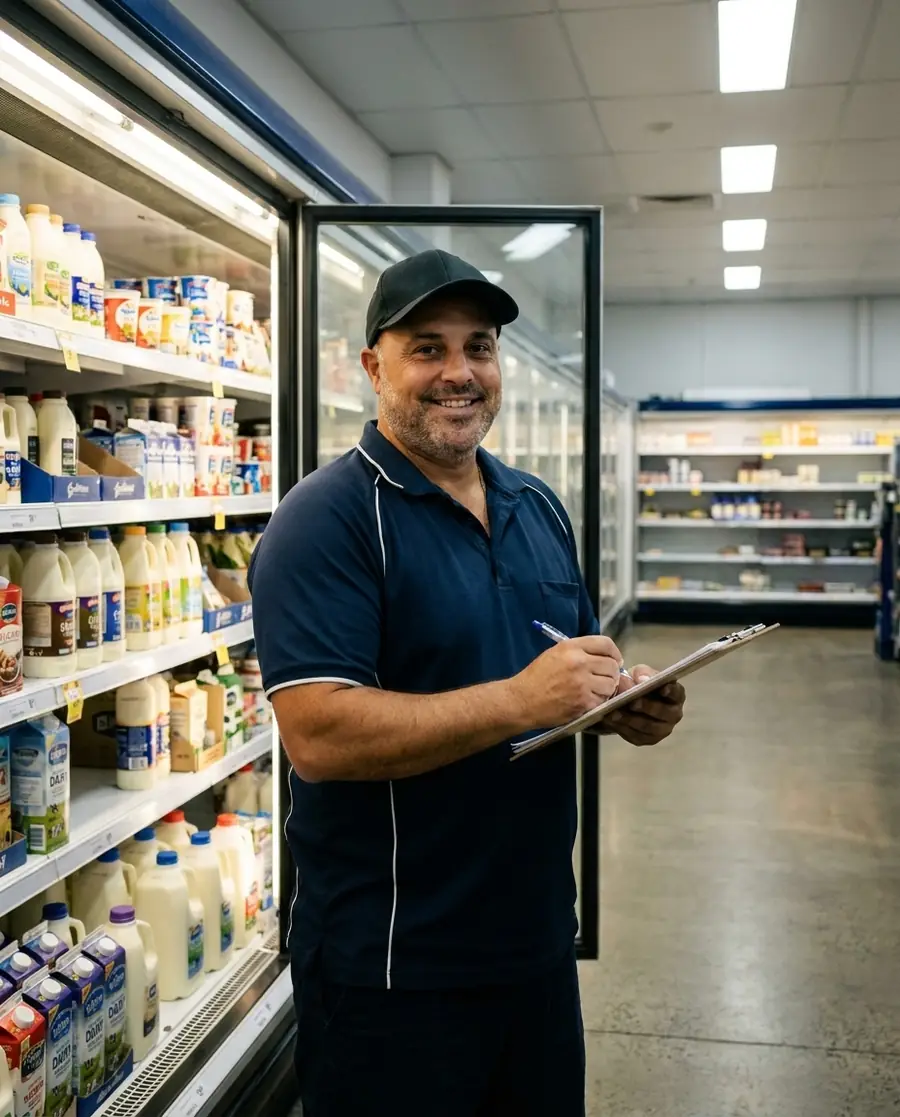













A grocery store runs on refrigeration from the moment the doors open. Dairy, meat, deli lines, frozen goods and cut produce all sit in cases that shoppers can reach, and a warm case means pulling stock off the shelf, not just calling a technician. Supermarket refrigeration repairs are about getting that case, cool room or plant back to temperature and keeping the shelves full.
Sam Celesti has worked in commercial refrigeration for over 20 years and is ARCtick licensed (AU55592). Every store job is done by our own team, never subcontracted. This page covers the retail equipment we repair, what common display case symptoms mean, the food safety rules for chilled display and how we fit work around a trading store.
Supermarket and shop refrigeration we repair
Shop refrigeration ranges from a single drinks fridge at a corner store to long lines of cases fed from a plant room. We repair:
- Multidecks and open display cases. Dairy, produce, meat and beverage multidecks that depend on a steady air curtain, working fans and a clean coil to hold the product cold.
- Glass door freezers and merchandisers. Upright freezer and chiller doors, including door and frame heaters, gaskets, hinges, closers and the fans behind the shelving.
- Island and chest freezers. Coffin style freezers for ice cream and frozen lines, where iced coils and failed defrost are the usual faults.
- Deli, butcher and seafood counters. Serve over cases where staff work from behind and the product sits under curved glass, often with tight temperature needs.
- Store cool rooms and freezer rooms. Back of house produce, dairy and meat rooms that keep the floor stocked. See our produce, dairy and meat cool room repairs for room faults in detail.
- Plant rooms and remote condensing units. The compressors, condensers, valves and controls that feed cases from elsewhere in the building.
- Night blinds and case controls. Blinds that stick or tear, case controllers, probes and alarms that stop reporting the right temperature.

Display case symptoms and what they usually mean
Display cases tend to show the same handful of warning signs. Staff who know what each one points to can protect stock sooner and give us better information on the phone.
| What staff notice | Usual cause | What to do now |
|---|---|---|
| Top shelves warm, bottom shelf still cold | Air curtain broken by overstocking, blocked return grille, a stopped evaporator fan | Pull stock back behind the load line, clear the front grille, then probe the top shelf again after half an hour |
| Frost or ice on the honeycomb, rear panel or coil | Failed defrost heater or termination probe, defrost settings changed, moist air from a nearby door | Leave the ice alone, note when the case last defrosted and call. Never chip at a coil |
| Glass doors fogged or ice in the door frame | Door or frame heater failed, torn gasket, door not closing fully | Make sure nothing is propping the door, check the gasket for splits and book a repair |
| Water pooling at the front of the case or on the aisle floor | Blocked case drain, frozen drain line, drain heater failure, cracked waste tray | Put out a wet floor sign, mop up and keep shoppers away from the spill, then call |
| Freezer case stock soft or frosted on the packs | Iced coil, failed fan, defrost fault, low refrigerant from a slow leak | Move softened product to a working freezer room and treat it under your food safety plan |
| Several cases warm at the same time | Fault at the shared condensing unit or plant room: compressor, condenser fan, tripped breaker, leak | Check the switchboard for a trip, then call straight away, because the whole line is at risk |
| Case alarm or a code on the controller | High temperature alarm, probe fault, defrost timeout, pressure switch trip | Photograph the display, write down the code and the time, and avoid resetting it repeatedly |
Keeping displayed food at 5 °C or below
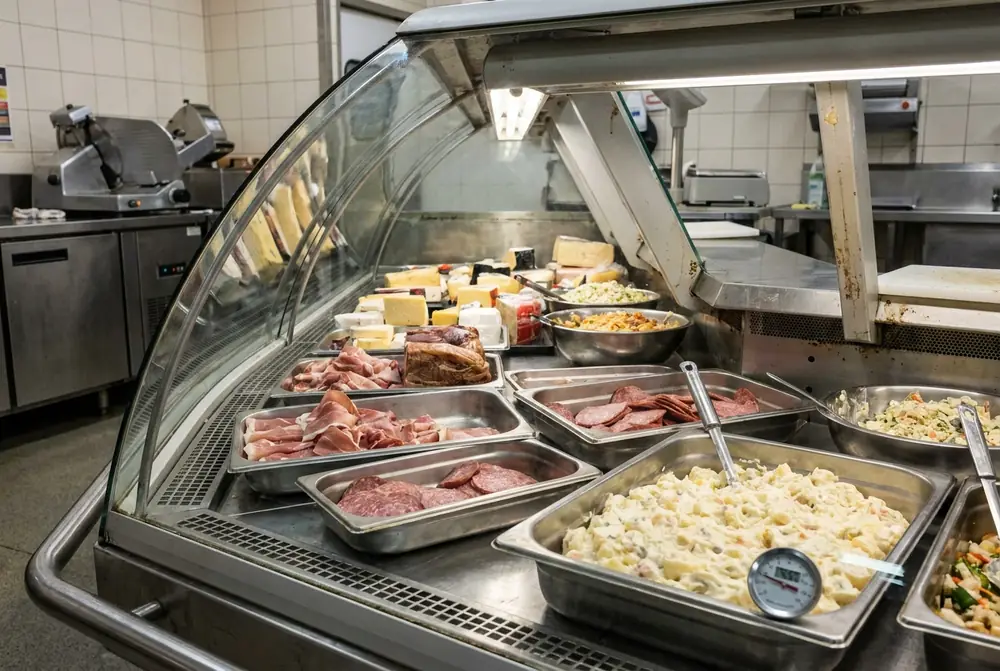
Food Standards Australia New Zealand guidance on displaying food says potentially hazardous food should be displayed at 5 degrees C or below, or 60 degrees C or above. Frozen food on display must stay frozen hard. A business can only use a different temperature if it can show the food remains safe at that temperature.
- Probe the product, not the air. The figure on a case display usually measures air at one point in the cabinet. FSANZ suggests probing into the thickest part of the food, or running the probe along a sealed pack.
- Start with the warmest spots. Top shelves, the front edge and the ends of a run near entry doors warm up first.
- Move the high risk lines first. Fresh meat, seafood, dairy, cooked chicken and prepared meals go into a working cool room before drinks and whole fruit.
- Keep records. FSANZ recommends recording the times and temperatures that food is displayed at. A daily log also shows a case drifting long before it fails outright.
Why open cases lose temperature
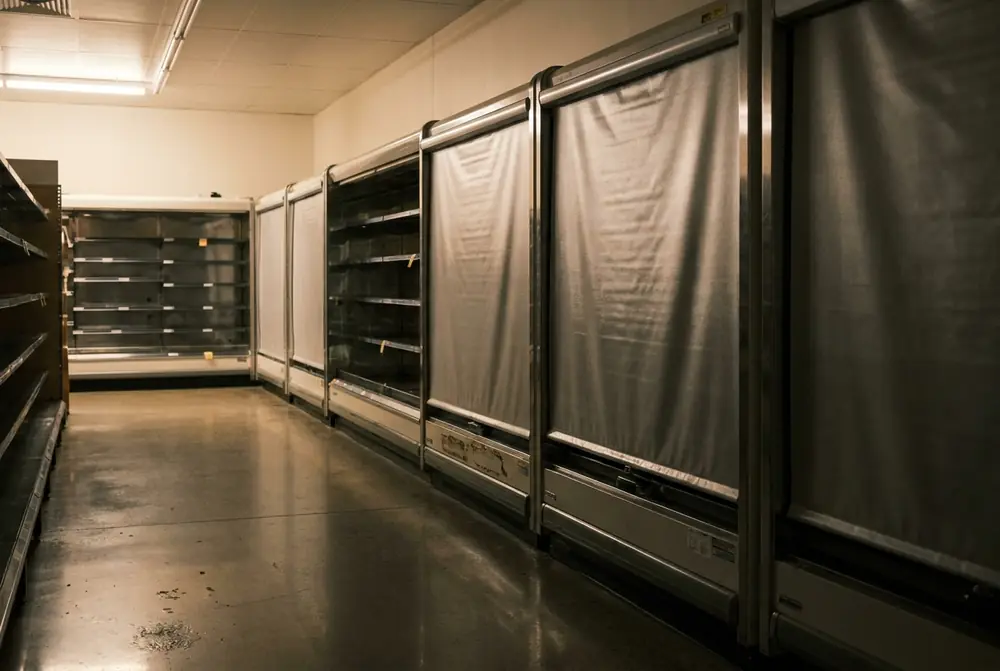
An open multideck has no door. It holds temperature with a sheet of cold air blown from the top of the case down to a return grille at the front, and anything that disturbs that sheet lets cold spill into the aisle.
- Overstocking. Product stacked above the load line or hanging over the shelf edge breaks the curtain.
- Blocked grilles. Price tags, packaging and spilt product over the return or discharge grille stop the air reaching where it should.
- Store air movement. Air conditioning outlets aimed at a case, open entry doors and fans near the aisle all push warm air through the curtain.
- Night blinds left up. Blinds reduce the load overnight when the store is closed. A blind that sticks or is never pulled down makes the case work harder around the clock.
- Dirty coils and missed defrosts. Dust, food debris and ice on the coil cut airflow, so the case runs longer and still sits warm.
Many of these are things staff can check daily. The rest are picked up on a service visit, and our refrigeration maintenance checklist sets out what to look at and when.
Plant rooms, racks and remote condensing units
Larger stores rarely have a compressor inside each case. Instead, refrigerant is piped from a plant room, a rooftop unit or a set of remote condensing units out the back. This keeps heat and noise off the shop floor, but it also means one fault in the plant can warm several cases, or a whole aisle, at once.
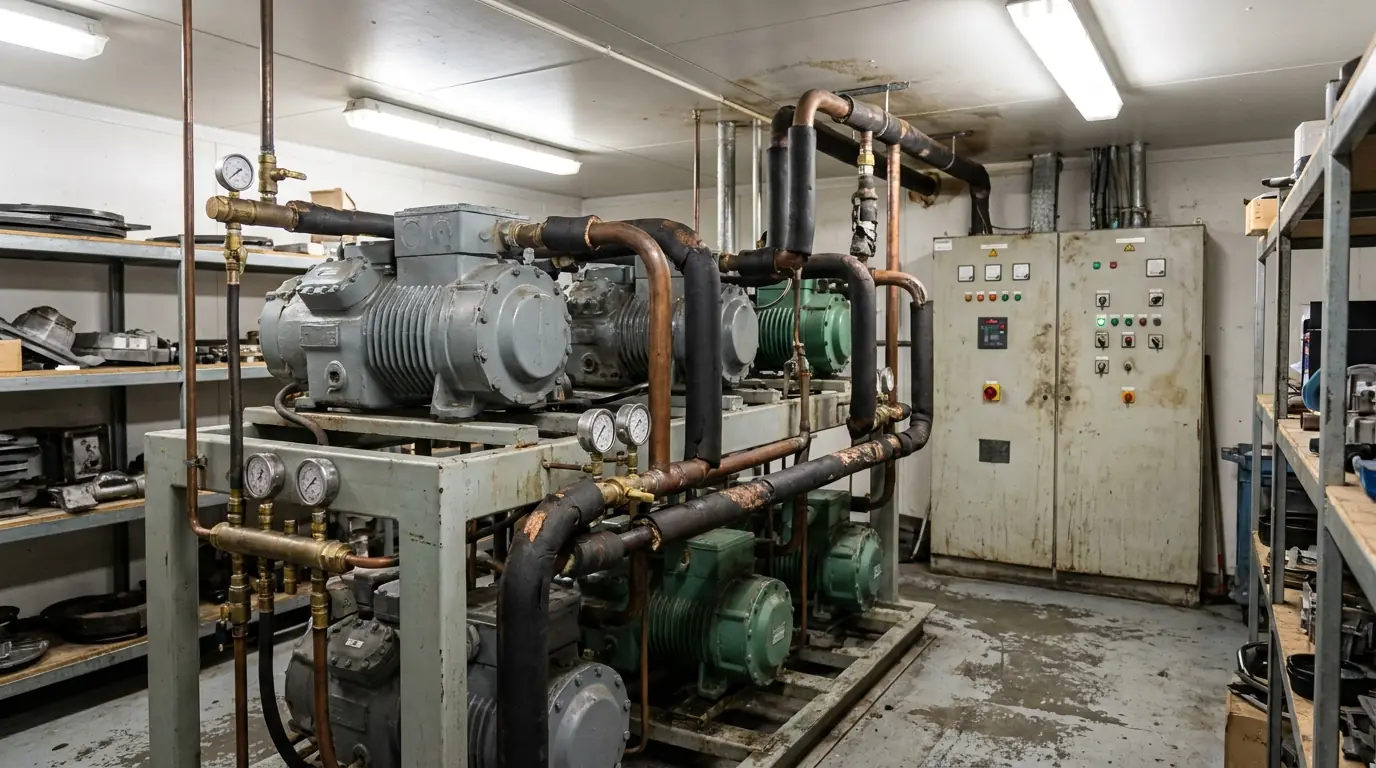
When the problem is in the plant, Sam checks compressor operation and electrical supply, suction and discharge pressures, condenser airflow, refrigerant charge and leaks, and the controls that bring compressors on and off. The case end gets checked too: valves, fans, defrost and the case controller. Brands we see in this equipment include Bitzer, Danfoss, Tecumseh, Carel, Eidis and Cabero.
Working around trading hours
Pulling a multideck apart in the middle of a busy afternoon is nobody's first choice. When stock is at risk, the job comes first: emergency work is prioritised and same-day emergency callouts are available across Perth, 7 days a week. If you send a quote request through the form, expect a call back within 30 minutes.
For planned work, such as replacing a fan motor that is getting noisy or a gasket that has started to split, ask us about timing that suits your store. Tell us your trading hours and busiest days when you book. Regular scheduled refrigeration servicing for your store also moves most repairs out of the emergency column and into a planned visit.
Stores we look after
Sam repairs retail refrigeration for:
- Supermarkets, with long case lines, freezer aisles and back of house cool rooms.
- IGAs and independent grocers, where the owner is often the one taking the call when a case alarms.
- Butchers, with meat display counters and cool rooms holding carcass and cut stock.
- Delis, where curved glass counters hold cured meats, cheeses and prepared food.
- Convenience stores, with drinks fridges, glass door freezers and small cool rooms behind the wall.
Most stores also run refrigeration beyond the sales floor. One call covers upright, underbench and bar fridge repairs in staff and prep areas, and ice machine repairs for seafood displays and bagged ice.