













Every business with a walk-in cool room, a freezer room or a row of commercial fridges reaches this point eventually. The equipment has broken down again, the technician has a price for the fix, and someone asks whether the money would be better spent on something new.
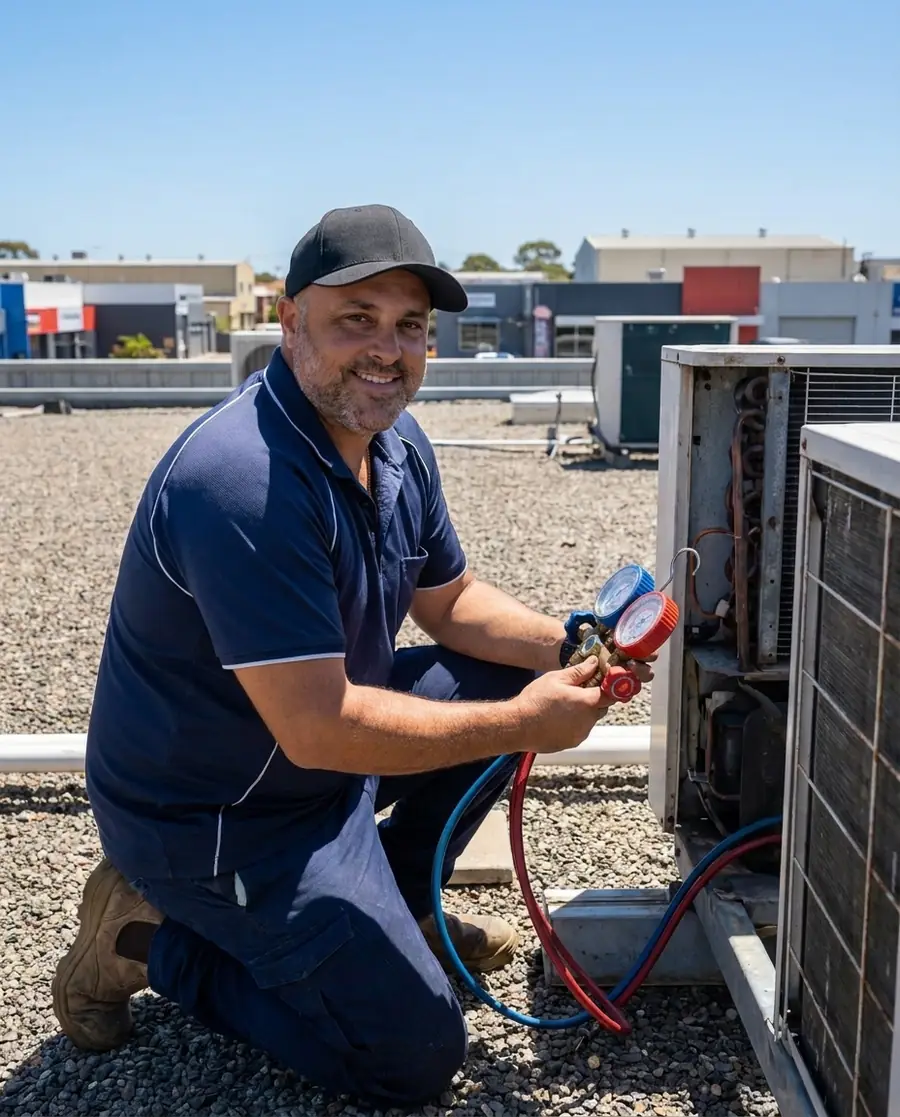
This guide is written by Sam Celesti, an ARCtick licensed technician (AU55592) with more than 20 years in commercial refrigeration around Perth. It covers the signs on each side and what the HFC phase-down means for older R404A equipment.
Two decisions, not one
A cool room is really two things. There is the room: insulated panels, floor, door, frame and seals. Then there is the refrigeration system that keeps it cold: a condensing unit outside, an evaporator inside, pipework, valves and a controller. Those parts age at very different rates, so they should be judged separately.
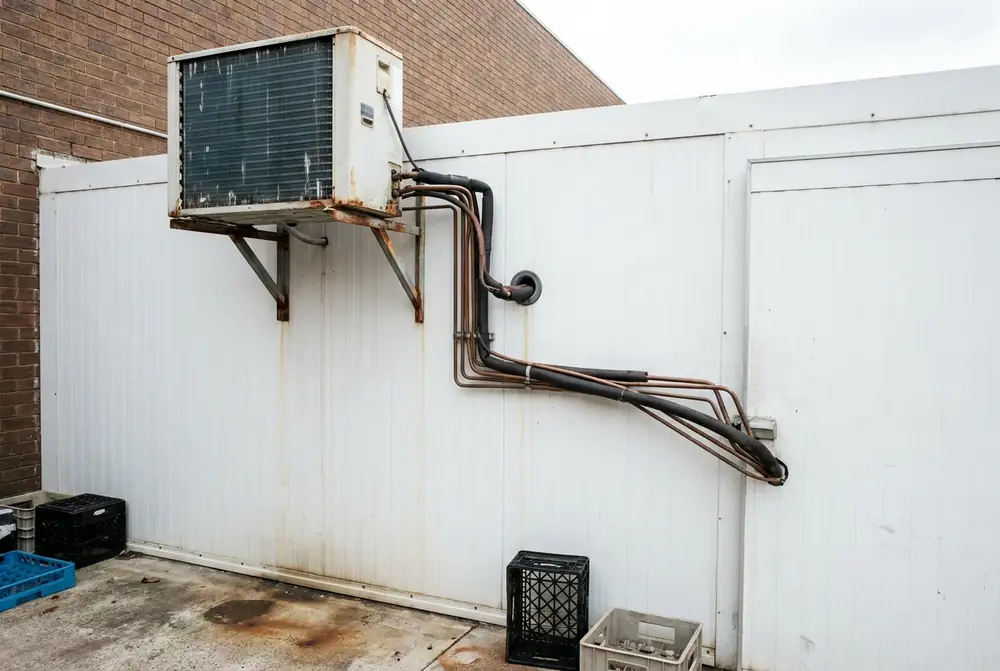
Panels that are dry, straight and well sealed can keep working through more than one refrigeration system. Equally, a newer condensing unit fitted to a room with wet insulation will struggle no matter how well it runs. Asking "repair or replace the cool room?" usually means asking two narrower questions: is the refrigeration worth keeping, and is the room worth keeping?
Reach-in and display fridges work the same way on a smaller scale. A cabinet with a sound body, hinges and shelving may only need its refrigeration components attended to, while a rusted or cracked cabinet is hard to justify repairing however good the compressor is.
Repair or replace: the signs at a glance
No single sign decides it. Look for where most of your answers fall.
| What you are seeing | Leans towards repair | Leans towards replace |
|---|---|---|
| Fault history | First significant fault in years, or a clear one-off cause | Several different faults in a short period, each one a new callout |
| Compressor | Start components or contactor at fault, compressor tests sound | Compressor confirmed failed on a system that is also worn elsewhere |
| Refrigerant | Single leak found and fixed, system holds pressure afterwards | Repeated leaks from corroded coils or pipework on an older system |
| Parts | Standard fans, valves, controllers and seals readily available | Key parts discontinued, or only fit with major modification |
| Room condition | Panels dry and straight, floor level, door sealing | Ice inside freezer walls, bulging or punctured panels, cracked floor |
| Performance | Holds temperature once the fault is fixed | Runs constantly and struggles on hot days even after repair |
| Business needs | Room still suits your stock and layout | Room is too small, in the wrong place or set for the wrong temperature |
When the compressor fails
A compressor failure is the moment most owners start thinking about replacement, because it is usually the largest single repair on a refrigeration system. Before anything else, the diagnosis has to be right. A compressor that will not start may have a failed relay, capacitor, contactor or overload, all far smaller jobs than a new compressor. Winding resistance, current draw and system pressures show which it is.
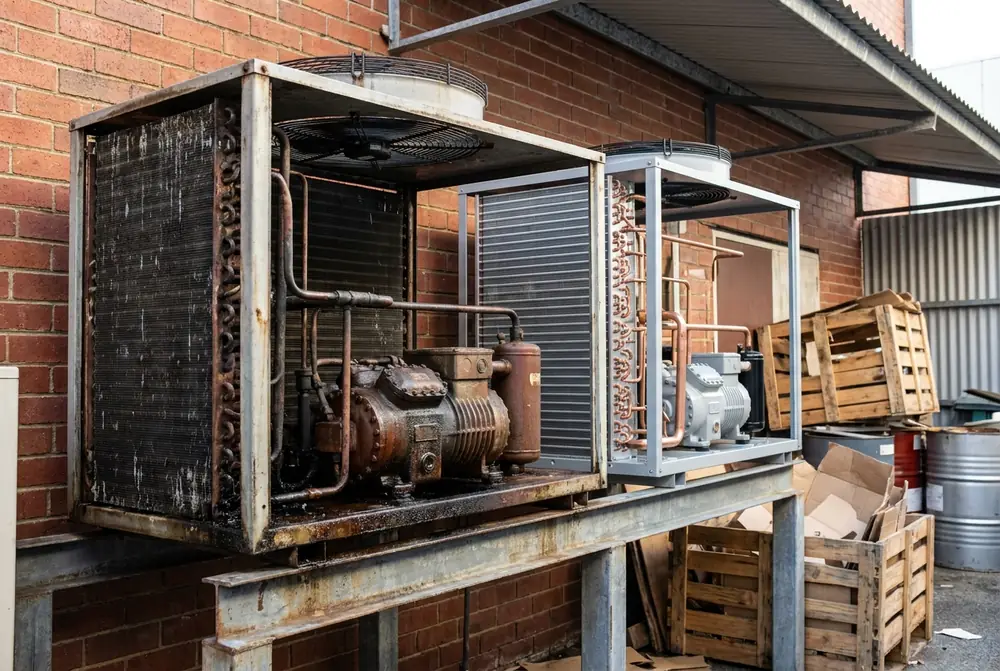
If the compressor really has gone, look at the rest of the system before deciding. A new compressor on a unit with sound coils, healthy fans and a reliable controller can give years of further service. The same compressor on a unit with corroded condenser fins, a tired evaporator and a history of leaks is money spent on the newest part of an old machine.
Refrigerant, the HFC phase-down and R404A
Many older cool rooms and freezer rooms in Perth run on R404A, a hydrofluorocarbon (HFC) refrigerant with a high global warming potential. Australia has been phasing down HFCs since 1 January 2018. According to the Department of Climate Change, Energy, the Environment and Water (DCCEEW), the phase-down works through a reducing quota on imports of bulk HFC gas, with an 85% reduction reached by the end of 2035 and a smaller ongoing import limit from 2036.
Here is what DCCEEW says that means for equipment owners:
- Existing equipment is not affected. You are not required to replace a system because it uses an HFC.
- Servicing gas should remain available. The department designed the pace of the phase-down to match demand and the natural replacement of equipment at end of life.
- Any future bans would apply to new equipment only. The department has consulted industry on further measures for commercial refrigeration, including R404A, but anything adopted would not apply to systems already installed.
- Lower impact alternatives already exist. DCCEEW lists ammonia, carbon dioxide, hydrocarbons and hydrofluoro-olefins (HFOs) among them.
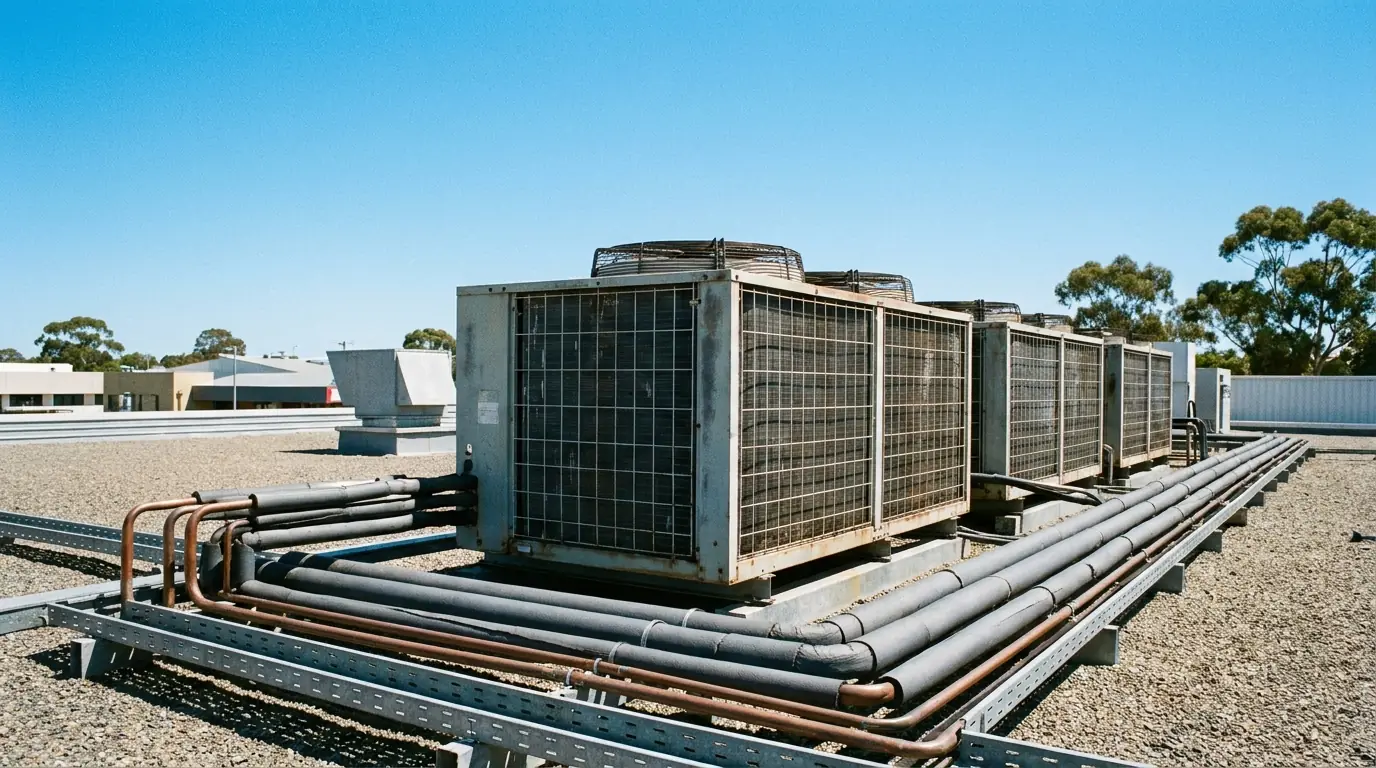
Federal rules in force since 1 January 2020 also say a system cannot be charged with a refrigerant of higher global warming potential than it was designed for. Charging with a lower one is allowed, and DCCEEW gives R404A to R452A as an example. Whether a conversion suits a particular system is a technical question about the compressor, oil, valves and pipework, and it must follow the relevant standards and codes of practice.
Anyone handling refrigerant during a repair, regas, conversion or decommissioning must hold a refrigerant handling licence issued by the Australian Refrigeration Council, the body behind ARCtick. Handling refrigerant without one is an offence, and you can check a technician's licence on the ARC website before work starts.
In short, a sound R404A system can reasonably be kept running. One that leaks repeatedly or needs a major repair has another factor on the replace side.
Repeat faults and parts availability
One breakdown says little about a system. A pattern says a lot. A fan motor this month, a leak two months later and a controller fault after that suggest a unit wearing out on several fronts at once, and each fix only buys time until the next part goes.
Parts matter too. Fans, contactors, valves and seals are common items, but some older or unusual units rely on components that are discontinued or only fit with modification. When a part is specific to your equipment, Sam will tell you before ordering it, so a hard-to-source part can be weighed against a new unit.
A regular maintenance plan is the most reliable way to stretch the life of a system you intend to keep, and our refrigeration maintenance checklist covers the checks your own staff can do between visits.
The room itself: panels, floors and doors
Cool room panels are a foam core sealed inside metal skins. While the skins and joints stay intact, the insulation stays dry and does its job. Once moisture gets in through a puncture, a failed joint or a poorly sealed penetration, the insulation loses performance, and in a freezer room that moisture turns to ice inside the wall.
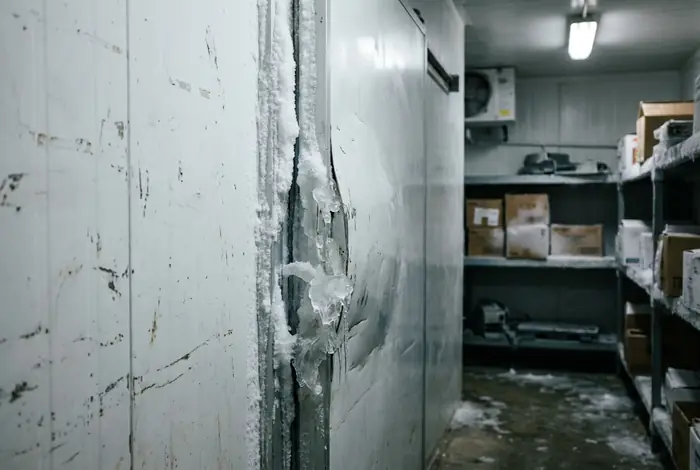 Ice in freezer walls. Frost patches on the outer skin, bulging panels or ice around joints usually mean wet insulation. Local damage may be repairable; widespread ice usually is not.
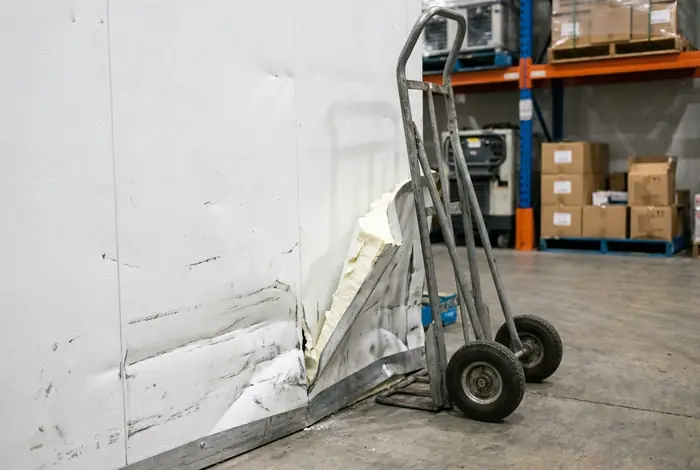 Damaged panels. Forklift and trolley impacts, corrosion and lifted skins let heat and moisture in. A single panel can sometimes be replaced, depending on the construction.
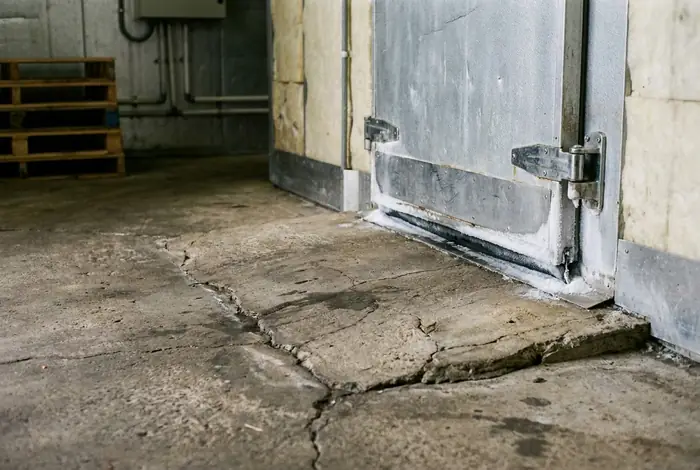 Floors. A cracked, sunken or heaving floor, particularly under a freezer room, is a structural problem rather than a refrigeration one.
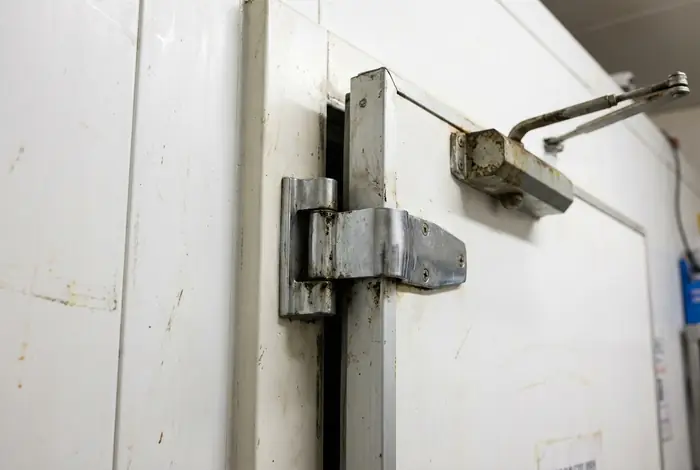 Doors and frames. Seals, hinges, closers and frame heaters are routine repairs. A frame that is out of square on a tired room is harder to justify fixing.
If the panels and floor are sound, replacing only the refrigeration side is usually the first option worth pricing. If they are not, a new room may cost less over its life than chasing faults in an old one. Either way, we can quote on a new condensing unit or a new cool room built to suit.
Energy use and changing needs
Refrigeration runs around the clock, so efficiency matters even though it is hard to see on a single bill. The general principle is simple: anything that makes the system run longer to hold the same temperature costs energy. Dirty condenser coils, iced evaporators, worn door seals, wet panel insulation and a low refrigerant charge all push run times up.
Where the equipment itself is the problem, newer systems are generally designed around lower impact refrigerants and current components, and that is worth factoring in when a big repair is on the table.
Finally, consider whether the room still fits the business. A kitchen that has doubled its covers, a grocer adding a meat or dairy line, or a site that now needs freezer space rather than chiller space may find that replacing like for like is the wrong answer. If you are unsure what temperature the room should be holding for your stock, our cool room temperature guide sets out the food safety basics.
How we help you decide
When you call about a breakdown, the first job is always to find the actual fault. Once Sam knows what has failed, he looks at the rest of the system and the room, then explains plainly where it sits. You get a fixed quote before any work starts, and where replacement is a real option you get a fixed quote for that too, so the comparison is on paper rather than guesswork.
When the answer is a new reach-in, underbench or display unit rather than a repair, Sam can supply and install one from the Bromic refrigeration range and service it afterwards.
Sam's own team does every job, with no subcontractors, across restaurants, supermarkets, medical facilities, hotels, bars and industrial sites. For a walk-in room, start with cool room and freezer room repairs. For reach-in, display and underbench units, see commercial fridge repairs.