














A pharmacy or medical practice depends on refrigeration in a way most businesses do not. When a vaccine fridge drifts out of range, the cost is not only the stock: there are reports to make, patients to rebook and sometimes doses to replace. When a kitchen cool room in an aged care home fails, residents' meals are on the line.
Sam Celesti has worked on commercial refrigeration in Perth for more than 20 years and holds an ARCtick licence (AU55592). His team handles the refrigeration side of the problem: diagnosing the fault, repairing or servicing the equipment, and checking that it holds temperature again. We do not give clinical advice. Decisions about vaccines and medicines after a temperature problem belong to your health department, the product manufacturer and your own protocols, and this page points you to them.
Health sites we work with
Medical facilities are one of the groups we already work for, alongside restaurants, supermarkets and hotels. On a typical health site there are several kinds of refrigeration, each with different stakes.
- Community pharmacies. Vaccine and medicine fridges behind the counter, plus drinks fridges and display cabinets out front.
- GP clinics and medical centres. One or more vaccine fridges in the treatment area, often busiest during the flu season, and a staff room fridge that gets far less attention.
- Dental and vet clinics. Fridges for temperature-sensitive products and, in vet practices, vaccines for animals, with storage directions set by the product information.
- Labs. Refrigeration for samples and reagents. Ask us about your specific equipment, since some lab units are specialist items serviced by their makers.
- Aged care homes. Commercial kitchens with walk-in cool rooms and freezer rooms, reach-in fridges, ice machines and a medication room fridge.
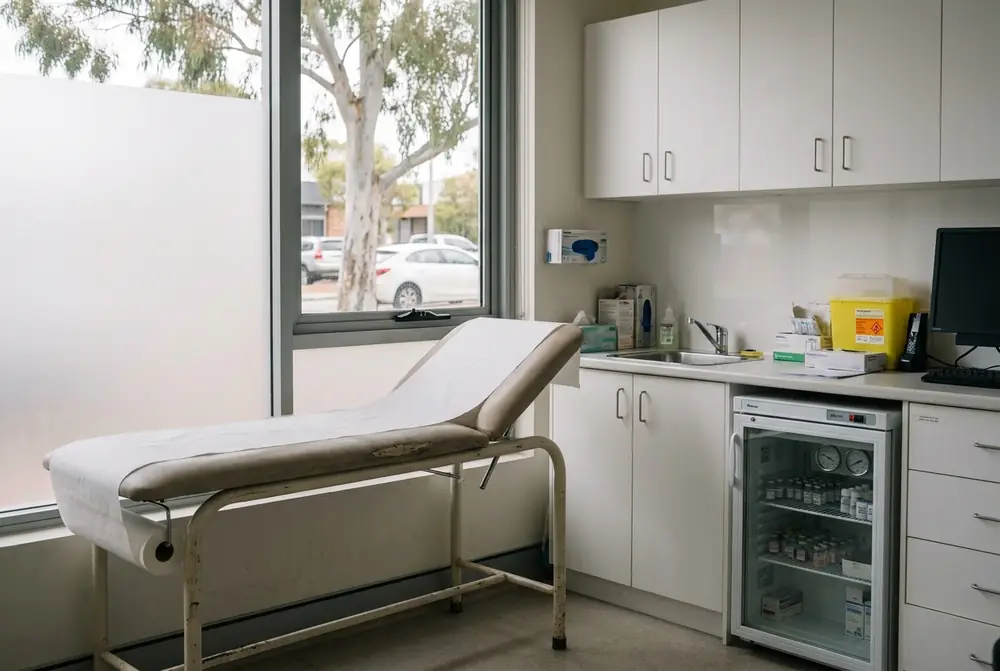
What the vaccine storage guidelines expect
The Australian Government's National Vaccine Storage Guidelines, known as Strive for 5 and now in their 4th edition, set out how immunisation providers must store vaccines. The core rule is a storage range of +2 to +8 °C, with +5 °C as the optimal temperature, which is where the name comes from. Temperatures outside that range count as a cold chain breach, and the guidelines note that freezing can damage many vaccines without leaving any visible sign.
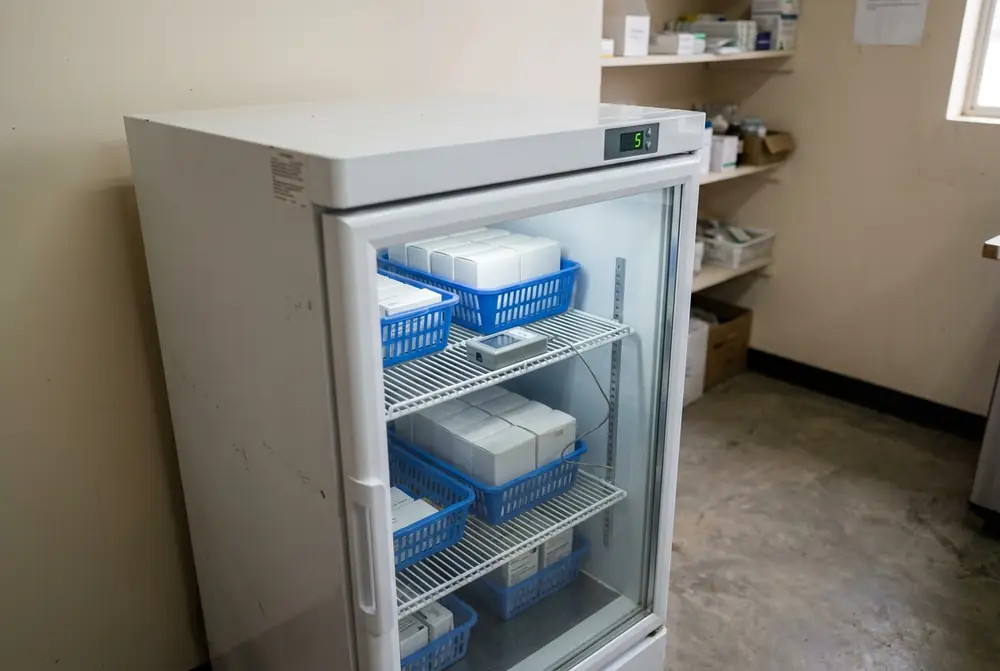
The guidelines say vaccines must be kept in a purpose-built vaccine refrigerator, often shortened to PBVR. They are explicit that domestic refrigerators, including bar fridges, commercial fridges and industrial fridges, must not be used for vaccines, because they tend to freeze them. That rule matters to a refrigeration business: we will not suggest a commercial fridge as a stand-in, however well it is running.
Among the minimum features the guidelines list for a PBVR:
- Designed specifically to store vaccines between +2 and +8 °C.
- An audible alarm that sounds outside that range, with a visual temperature display.
- A door left open alarm.
- A thermometer showing current, minimum and maximum temperature.
They also say a PBVR must be serviced every 12 months and that records of maintenance and services should be kept.
Vaccine fridges: repair, service or back to the manufacturer
Not every vaccine fridge fault is a job for a general refrigeration technician. Many PBVRs carry a manufacturer warranty, and some makers want warranty work done by their own service agents. Other units are out of warranty and the fault is a familiar refrigeration one, such as a failing fan, a worn door seal or a dirty condenser. The right call depends on the brand, the age of the unit and what has gone wrong.
So the honest answer is: ring us with the make, model and age of the fridge and a description of what it is doing, and ask us whether your unit is one we repair or one that should go back to the manufacturer. If it should go back, we will say so rather than take a job that could affect your warranty.
Some problems sit outside the fridge itself, and the guidelines name several of them. A PBVR should be out of direct sunlight, have the airflow around it that the manufacturer specifies and stay away from outside walls that swing between hot and cold. Exposed condenser coils on the back should be kept free of dust. A fridge squeezed into a hot cupboard will struggle whatever brand it is.
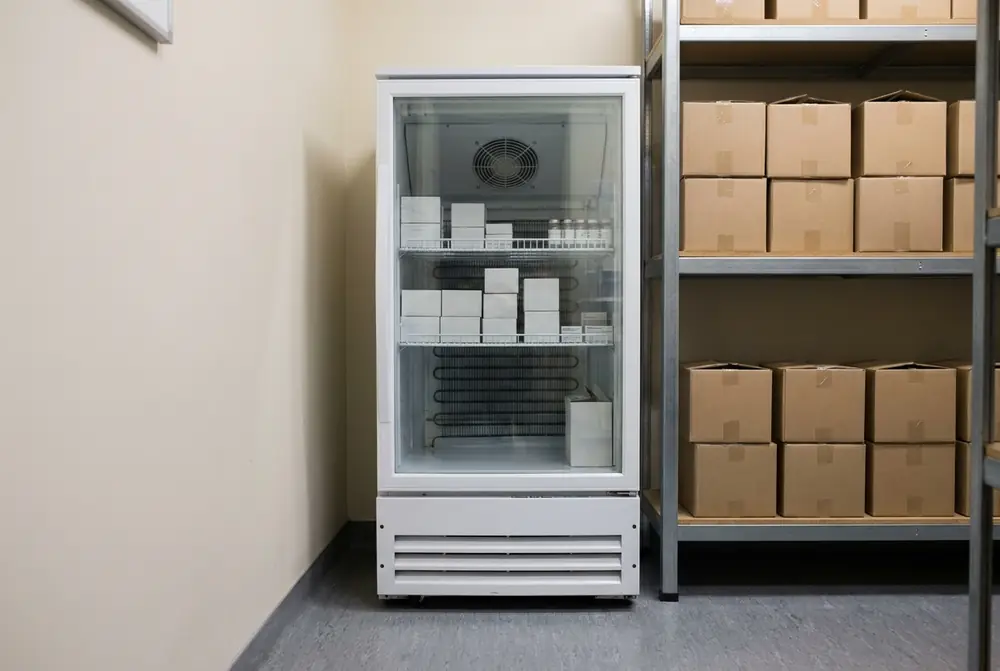
If your vaccine fridge fails or alarms
Vaccines first, refrigeration second. Follow the National Vaccine Storage Guidelines and WA Health for any cold chain breach. We repair fridges; we do not advise on whether vaccines can be used.
The cold chain breach protocol in the national guidelines sets out these steps:
- Keep the vaccines in a vaccine fridge at +2 to +8 °C, using your back-up plan to move them to another PBVR or a cooler if needed.
- Label them "Do not use / Do not discard".
- Contact your state or territory health department as soon as possible.
- Do not discard any vaccine until the health department tells you to.
- Fix the problem and take steps to stop it happening again.
For privately purchased vaccines, the guidelines say to contact the manufacturer for advice. In Western Australia, WA Health says cold chain breaches should be reported immediately. Metropolitan providers use the Boorloo Public Health Unit cold chain breach form and regional providers use the CCB and vaccine wastage form, and vaccines should not be thrown out unless a WA Health representative says so. Check the WA Health cold chain management page for the current forms.
Step five is where we come in. Once the stock is safe and reported, call us about the fridge, or the manufacturer if it is under warranty.
Temperature monitoring and the records that matter
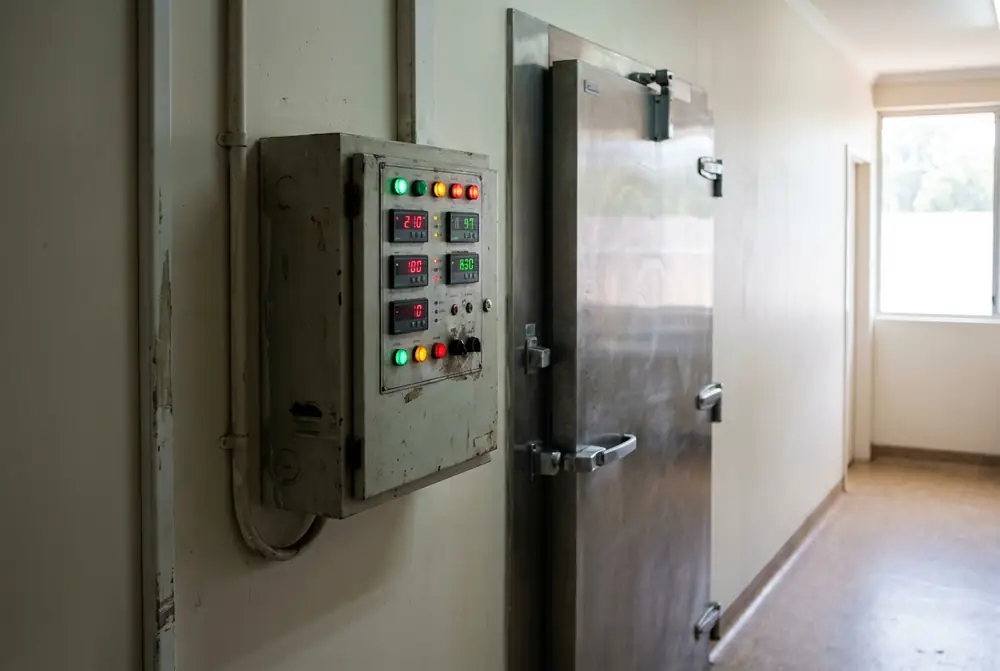
Monitoring is what turns a silent failure into one you catch early. The national guidelines ask providers to check and record the current, minimum and maximum temperature of each vaccine fridge twice a day, and to download and review the data logger report at least weekly. Each fridge needs its own temperature chart.
When a breach is reported, the health department asks for more than temperature readings. The information list in the guidelines includes the brand and size of the fridge, the date it was last serviced and whether it has had recent maintenance issues. That is why every service visit and repair should leave paperwork you can file with the fridge's logbook.
If you are weighing up data loggers, back-to-base alarms or automated monitoring, talk to us about what suits your site and what we can set up or check. Our refrigeration maintenance checklist also covers the routine checks staff can do between visits.
Medical cool rooms and the other fridges on site
Health sites rarely run vaccine fridges alone. Larger practices, hospitals and aged care homes often have walk-in rooms for stock or food, and they fail in the same ways as any other room: refrigerant leaks, iced evaporator coils, failed fans, worn door seals and drifting controllers. Our walk-in cool room repairs cover those faults, and the target temperature is whatever your stock and protocols require.
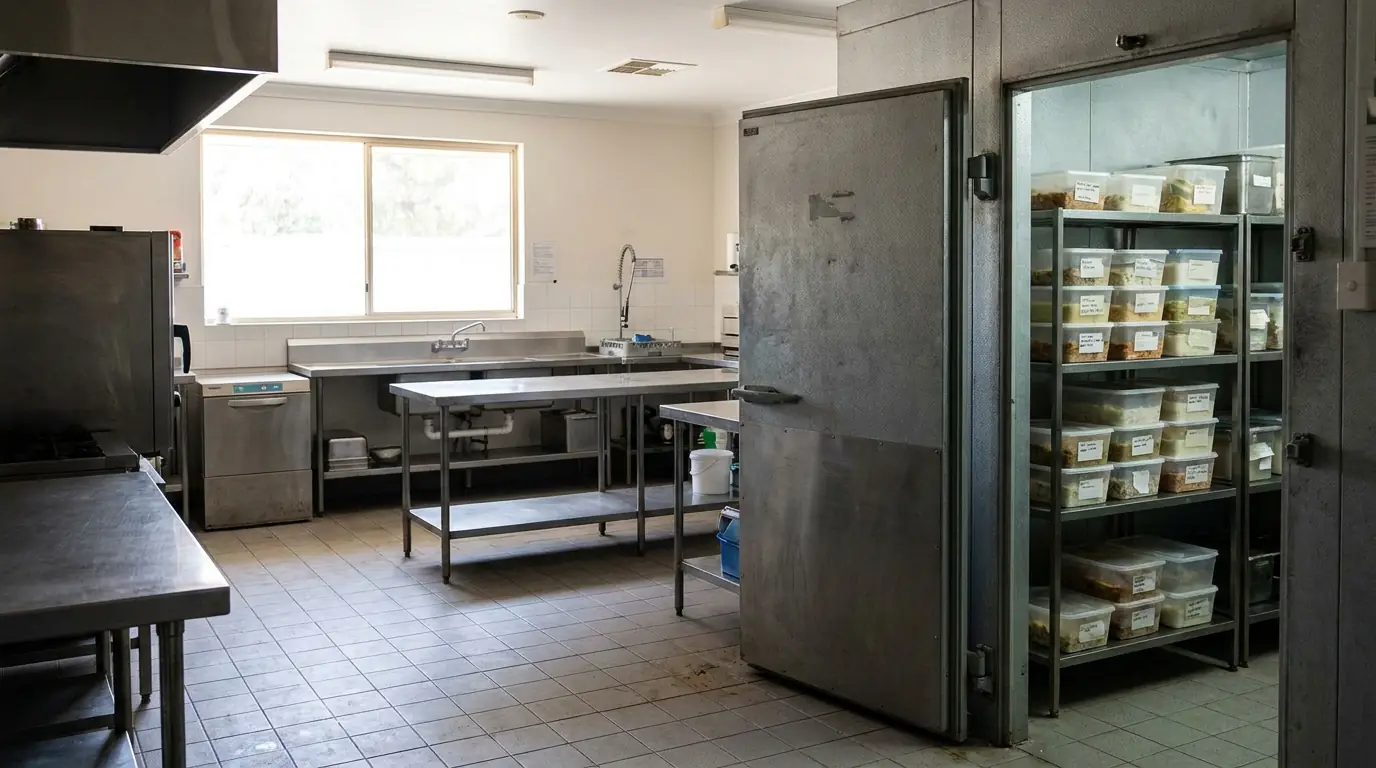
Kitchens in aged care homes and hospitals work to food safety rules, under which chilled food must be held at 5 °C or below. Our cool room temperature guide explains how to read and record room temperatures properly.
Then there are the reach-in fridges, underbench units, drinks fridges in pharmacies and ice machines in aged care. These are standard commercial equipment and squarely what we work on every week. See our reach-in and underbench fridge repairs and ice machine repairs pages for more detail.
Planning work around patients and stock
Refrigeration work on a health site needs a little more planning than it does in a café. A few points from the guidelines shape how we schedule it:
- Have alternative storage ready. The guidelines say to report breakdowns immediately and arrange alternative monitored storage for vaccines during repairs.
- Allow time to stabilise. After a failure, a maintenance service or a power outage, the guidelines say to monitor a PBVR for at least 48 hours before putting vaccines back in.
- Know how the fridge behaves without power. The guidelines suggest asking the PBVR manufacturer how the unit holds temperature during an outage and writing it into your power failure plan.
For cool rooms and other equipment, routine visits can be booked around clinic sessions so the work does not interrupt patients. A regular scheduled refrigeration maintenance plan catches slow faults, like a fouled condenser or a tired fan motor, before they become an alarm on a Monday morning.
We work seven days a week, emergency jobs are prioritised and same-day emergency callouts run across Perth. Every job comes with a fixed quote before any work, and one company does it all, with no subcontractors.