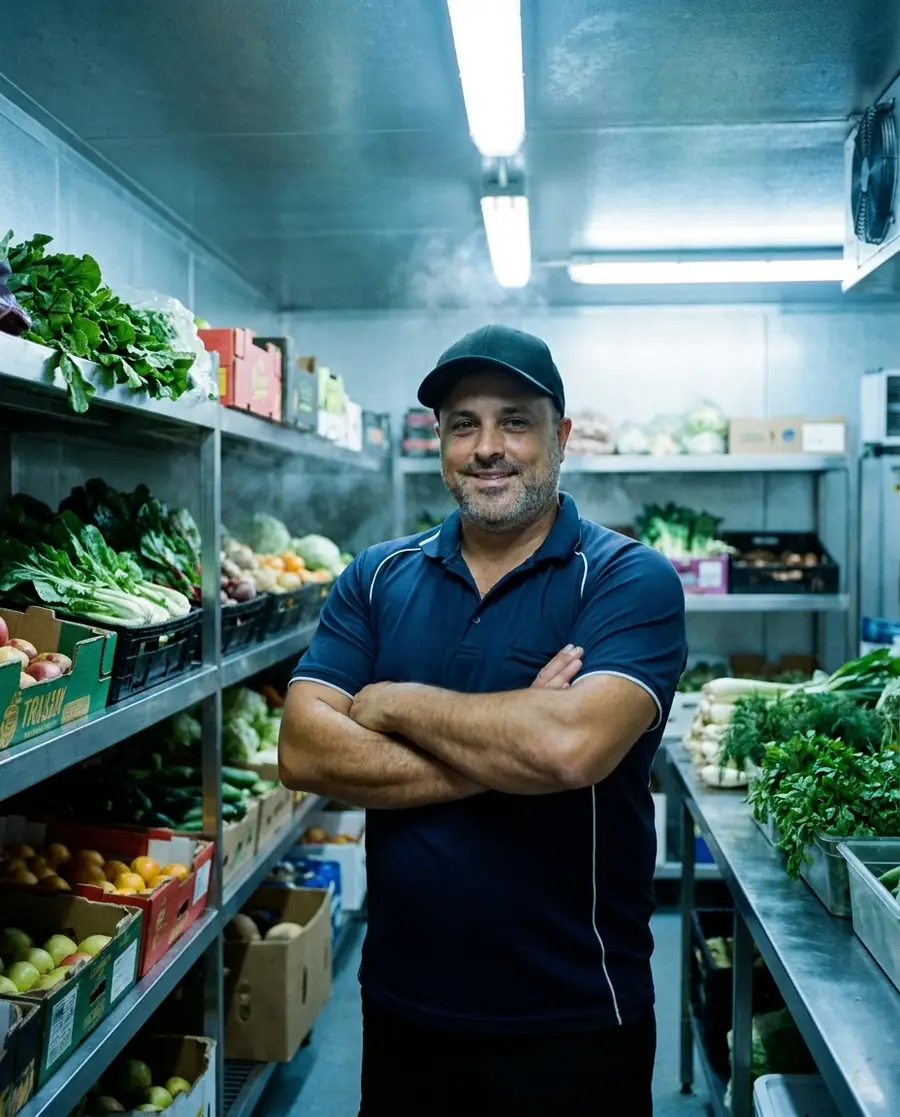














Cool rooms that work through a production shift
For cool room repairs in Balcatta, Sam Celesti handles the job from the first phone call to the final temperature check. Sam has spent 20+ years in commercial refrigeration, holds an ARCtick licence (AU55592), and looks after cool rooms and freezer rooms for the suburb's food makers, wholesalers and trade businesses. Balcatta is about 10 km from the Perth CBD, and most of its refrigeration sits in the industrial area spread along Erindale Road, Balcatta Road and the side streets between them.
What sets Balcatta apart is how many of those rooms belong to businesses that make food rather than just store it. That changes how a cool room fails.
Moisture, door traffic and iced-up coils
A storage cool room in a warehouse might see its door opened a few dozen times a day. A cool room behind a bakery, a smallgoods producer or a pasta kitchen can be opened every few minutes for an entire shift, often with trolleys of product that are still warm and giving off moisture. All that humid air ends up on the evaporator coil as frost.
The defrost cycle is supposed to clear it. When a defrost heater burns out, a termination sensor reads wrong, or the drain line freezes and backs up, the frost builds faster than it melts. Airflow drops, the coil turns into a block of ice, and the room warms up even though the compressor is running flat out. Producers often notice it as a room that is fine at the start of the day and several degrees warm by early afternoon.
The repair might be a heater, a sensor or a heated drain line. It might also be a change to defrost timing, a strip curtain to cut warm air at the doorway, or a conversation about whether the room was ever sized for warm product.
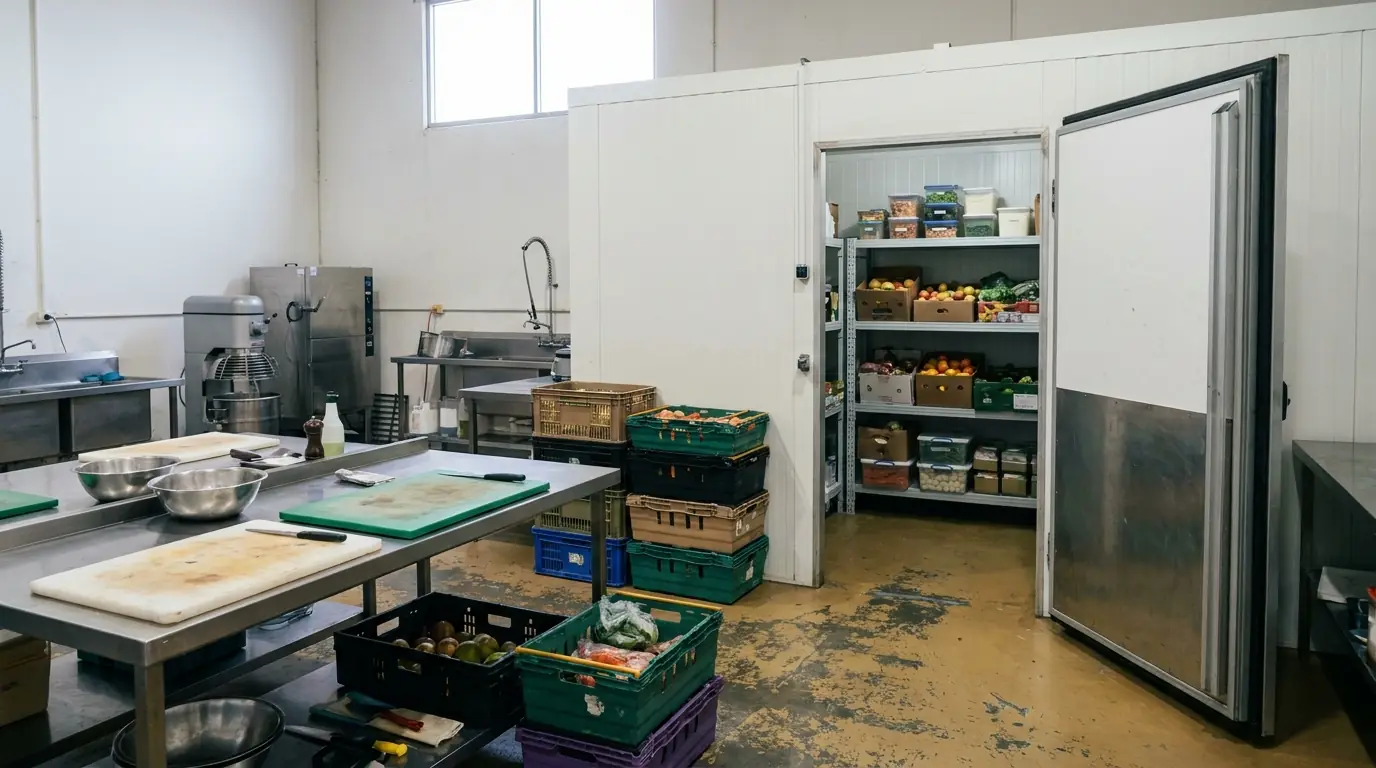
Balcatta businesses and the equipment they rely on
The industrial area mixes manufacturing with trade and wholesale, and the refrigeration is just as varied:
- Bakeries and pastry kitchens with dough retarders, walk-in cool rooms and freezer rooms for frozen stock.
- Smallgoods and meat processors running cool rooms near 0°C and freezer rooms well below that.
- Food and drink wholesalers with larger walk-ins for pallet stock and chilled deliveries.
- Hospitality suppliers and caterers holding prepared food overnight before it goes out to venues.
Typical faults here are iced evaporators, worn door gaskets and hinges on heavily used doors, fan motors that fail from long run hours, and refrigerant leaks on older pipework. Sam services Bitzer, Danfoss, Tecumseh, Carel, Eidis and Cabero equipment, plus most other major brands.
Before Sam gets there
- Pause production into the room. Stop loading warm product until the cause is known; it only adds heat and frost.
- Read the controller. Note the displayed temperature and any alarm or fault code, and check whether it says it is in defrost.
- Separate the high-risk stock. Meat, dairy and cooked product matter most. FSANZ guidance says potentially hazardous food should sit at 5°C or colder; under 2 hours above that it can go back under refrigeration, 2 to 4 hours means use it now, and 4 hours or more means throw it out.
More help for Balcatta producers
Iced coils are only one part of Sam's cool room repair work around Perth. If Sam traces a slow loss of gas to old pipework, leak detection and regas fixes the leak before recharging. And for producers who have outgrown their room, a new cool room or freezer room build sized for warm product can end the cycle of breakdowns. Every job starts with a free phone assessment of the symptoms and a fixed quote before work begins.