












Cool room repairs in Bibra Lake
For cool room repairs in Bibra Lake, call Sam Celesti. He is an ARCtick licensed technician (AU55592) with more than 20 years in commercial refrigeration, and he works for manufacturers, distributors and food businesses throughout the suburb, about 17 km from the Perth CBD. Sam diagnoses the fault, gives you a fixed quote and carries out the repair himself. There is no call centre and no subcontractor in between.
Food production in the Bibra Lake industrial estate
Most people know Bibra Lake for the lake, the regional park and Adventure World. The other side of the suburb is one of the larger industrial estates south of the river, and a good share of it handles food. Bakeries, meal makers, meat and smallgoods processors, ice cream and dessert producers, beverage companies and food distributors all operate there, along with transport yards and trade businesses.
Their refrigeration is heavier than a typical café or shop:
| Business | Typical equipment | Common faults |
|---|---|---|
| Bakeries and meal producers | Blast chillers, cool rooms, retarders | Slow pull-down, evaporator fan failure, iced coils |
| Meat and smallgoods | Cool rooms held near 0°C, freezer rooms | Temperature swings, defrost faults, drain line freezing |
| Frozen desserts and ice cream | Low temperature freezer rooms, blast freezers | Compressor overheating, door heater failure, ice on floors |
| Distributors | Large walk-in cool rooms with dock access | Torn seals, strip curtain damage, refrigerant leaks |
When the freezer room is part of the production line
The local angle in Bibra Lake is that refrigeration is not storage at the end of the day, it is a step in the process. Product comes off the line hot, goes into a blast chiller or blast freezer to drop through the danger zone quickly, then moves to a holding freezer room before dispatch. If the blast unit is slow, product queues up at room temperature. If the holding room is warm, finished stock that has already passed through the blast stage starts to soften.
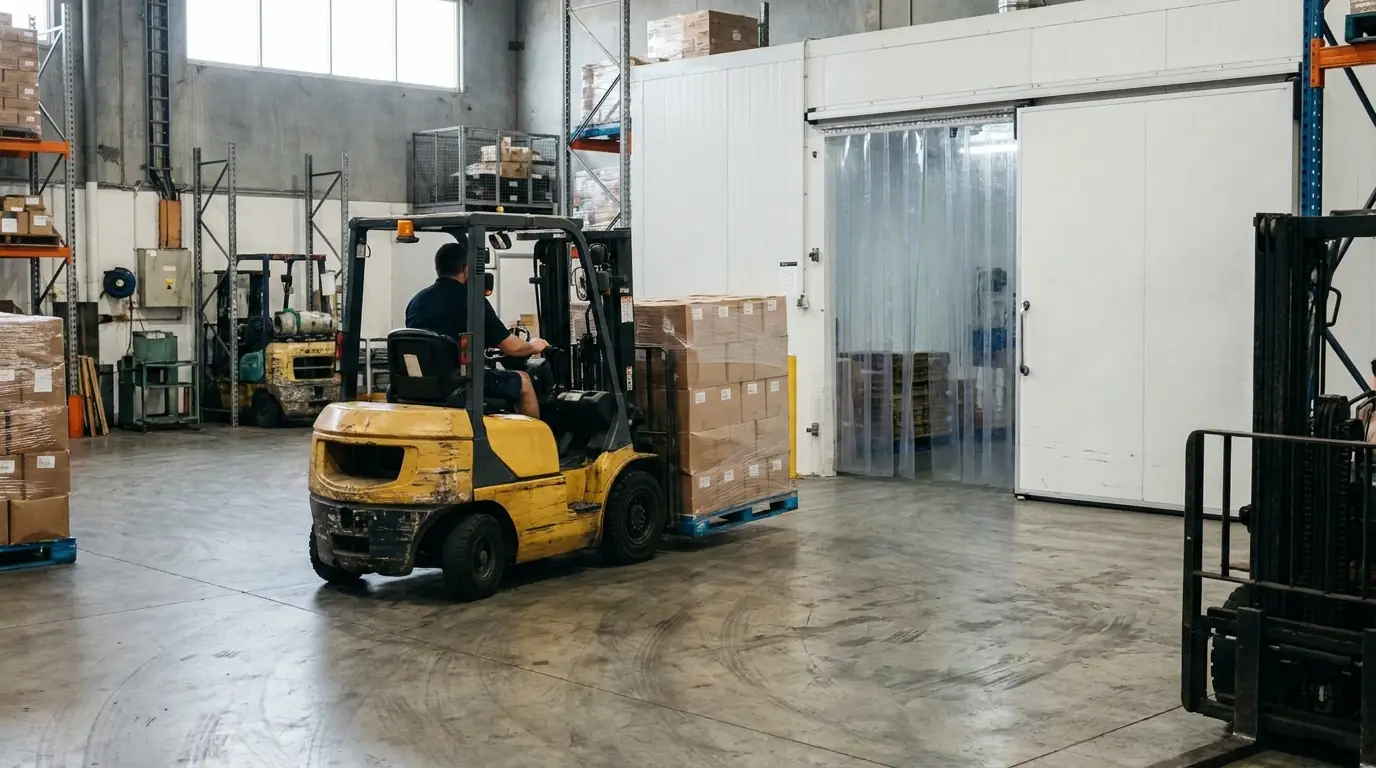
That chain means a fault in one unit backs up the whole site. It also means the equipment sees punishing conditions: doors opened constantly by forklifts and pallet jacks, warm product loaded in faster than the system was designed for, and defrost cycles squeezed between production runs. Ice builds on evaporators, door seals freeze and tear, and compressors run long hours in summer. Sam looks at the whole chain when he attends, because the unit that failed is not always the one causing the trouble.
Keeping the line running
Production refrigeration rewards planned servicing. A maintenance visit checks coils, fans, defrost heaters, door heaters, seals, refrigerant charge and controller calibration before a fault stops a shift. Where gas is being lost, Sam can trace the leak and recharge under our leak detection and regas service. If you are expanding and the existing rooms cannot keep up, he can advise on a new cool room or freezer room build. You can also read more about cool room repair work around Perth.
If a room fails mid-shift
Stop loading warm product into a unit that is not pulling down. It will only make the room warmer and put more stock at risk. Hold product on the line or redirect it to another room if one has capacity.
Check the obvious electrical items: is the condensing unit running, has a breaker tripped, is the controller showing an alarm or a high temperature? Photograph the display and any code before resetting anything, as it helps with diagnosis.
Log product temperatures with a probe and record the time. Food that should be held at 5°C or colder and has been between 5°C and 60°C for less than 2 hours can be refrigerated again; 2 to 4 hours means use it immediately; 4 hours or more and it must be discarded. Your HACCP records will need those readings later.